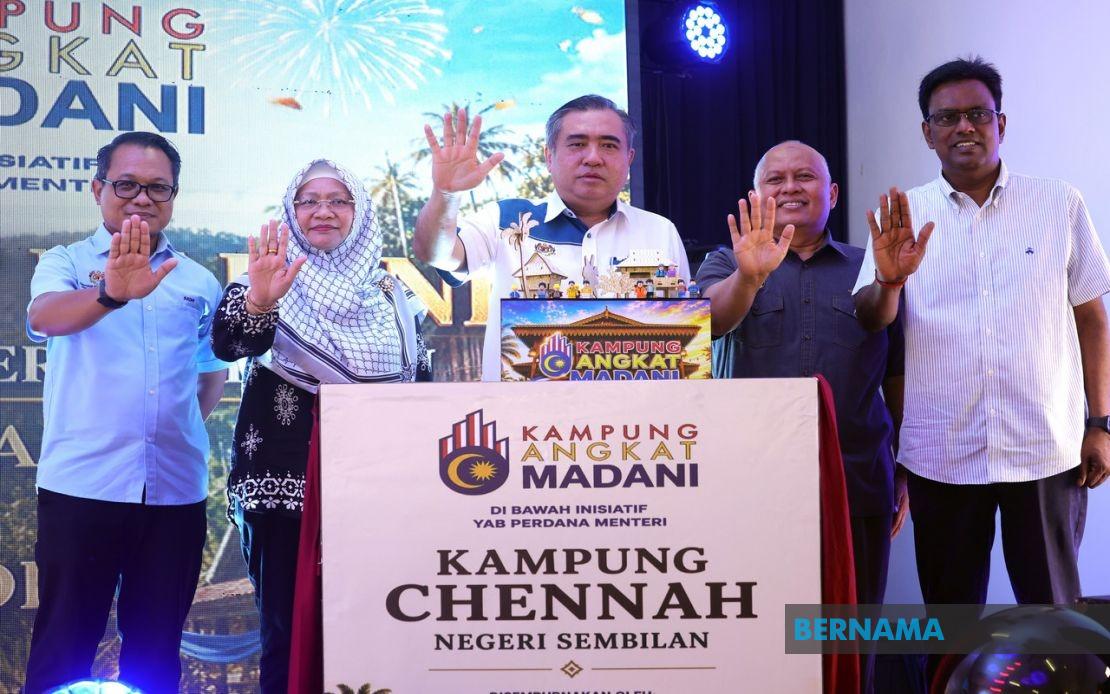
Malaysia's Transport Minister Anthony Loke Siew Fook has moved to dispel any suggestions that the Kampung Angkat MADANI programme is timed strategically around the ongoing state election, insisting instead that the rural development initiative represents a longstanding government commitment established well before campaigning commenced. Speaking in Jelebu after launching the Land Public Transport Agency's component of the programme at Kampung Chennah, Loke emphasised that the initiative has operated since its inception two years ago and continues to be deployed systematically across communities nationwide without regard to electoral calendars.
The initiative is being implemented through a phased approach designed to ensure that villages facing infrastructure deficits and limited socio-economic opportunities receive targeted, substantial support from multiple government agencies. Rather than a sudden push, Loke explained that the programme represents an ongoing commitment to identify and address the concrete needs of communities, particularly those isolated from urban centres where such government attention might be less visible. The Transport Minister highlighted his own participation in rolling out the programme during the previous year, including work in an Orang Asli village in Lenggeng, to underscore the programme's continuity and routine nature across diverse communities throughout Malaysia.
Loke's clarification appears designed to preempt criticism that could arise from government visibility in constituencies currently holding elections, a particularly sensitive issue given Malaysia's administration guidelines restricting official programme announcements during campaign periods. The minister stressed that the government is strictly adhering to protocols introduced by the Prime Minister as part of broader efforts to reshape administrative culture and ensure electoral propriety. These restrictions prevent government programmes and official events from occurring in constituencies actively campaigning, effectively placing limits on ministerial participation in their constituencies during campaign periods, though ministers continue to discharge their routine duties.
According to Loke, the timing of the Kampung Chennaah launch predates the formal commencement of the election campaign, placing it within the permissible period for such activities. The ministry had scheduled this particular village for development support well in advance based on objective criteria rather than electoral considerations. Kampung Chennah was selected specifically because of its remote geographical location and the community's demonstrated need for enhanced basic amenities and supporting infrastructure that would materially improve residents' daily lives.
The allocation of RM500,000 to Kampung Chennah will fund five distinct development projects intended to deliver immediate, tangible benefits to the village population. These projects encompass upgrading the library building, refurbishing the futsal court, and improving the drainage system surrounding the mosque—interventions addressing education, recreation, and religious facility quality simultaneously. The government has set an expectation of completion within two to three months, with Loke's ministry committed to close oversight of implementation progress to maintain project schedules and quality standards.
Loke's remarks reflect a broader positioning of the Transport Ministry as extending beyond its traditional portfolio of port, airport, railway, and public transport system regulation and development into active community engagement and social welfare improvement. This framing suggests an evolving conception of ministerial responsibility that encompasses direct contributions to rural and peripheral community wellbeing as integral to governmental purpose. The approach acknowledges growing expectations among Malaysian constituencies for government agencies to demonstrate commitment to community welfare improvement beyond their core regulatory functions.
The Kampung Angkat MADANI programme itself represents a structured attempt to systematically identify and address infrastructure and development gaps affecting rural and remote communities across Malaysia. By operating through phased implementation across multiple locations over an extended period, the programme aims to ensure equitable distribution of development resources rather than concentrating support within particular regions or constituencies. The multi-agency coordination required for effective implementation suggests recognition that rural development challenges typically demand cross-sector government responses rather than isolated ministerial interventions.
Loke's emphasis on pre-election scheduling and adherence to administrative guidelines demonstrates heightened sensitivity to perceptions of electoral impropriety in government programme delivery, reflecting broader concerns about maintaining public confidence in governmental institutions' impartiality during electoral contests. Malaysia's electoral environment has become increasingly scrutinised regarding potential misuse of government resources for partisan advantage, making transparent justification of programme timing and selection criteria increasingly important for political legitimacy.
The selection process for participating villages apparently relies on objective assessment of infrastructure requirements and economic development needs rather than political considerations, though the difficulty of entirely divorcing development priorities from electoral geography remains evident. Kampung Chennah's inclusion based on remote location and infrastructure gaps represents a defensible selection methodology that could apply across numerous constituencies regardless of electoral status, yet the visibility of ministerial engagement during election periods inevitably invites closer scrutiny.
For rural communities like Kampung Chennah, such government intervention programmes provide valuable external resources for infrastructure improvements that local resources alone could rarely achieve. The combination of library upgrades, sports facility improvements, and drainage infrastructure represents recognition that rural development requires attention to educational, recreational, and essential public health infrastructure simultaneously. The two to three month implementation timeframe demonstrates commitment to rapid delivery rather than indefinite project timelines that might otherwise characterize such government interventions.
Loke's defence of the programme's timing and independence from electoral considerations underscores ongoing efforts by Malaysian government officials to maintain institutional credibility during highly charged electoral periods. By emphasising pre-planned scheduling, objective selection criteria, and strict adherence to administrative guidelines prohibiting campaign-period government programme launches, the minister seeks to demonstrate that rural development priorities operate according to established protocols rather than responding opportunistically to electoral calendars. Whether such clarifications fully satisfy public skepticism regarding the relationship between government programme visibility and electoral timing remains a recurring challenge for Malaysian governance.
The broader Kampung Angkat MADANI initiative reflects Malaysia's continued effort to ensure that peripheral and disadvantaged communities receive development attention comparable to more urbanised areas. Such programmes become increasingly important as Malaysia's economic development concentrates in urban centres, potentially exacerbating infrastructure and economic disparities affecting rural population groups. Systematic, phased programmes designed to address rural infrastructure gaps thus represent important policy mechanisms for maintaining inclusive development across Malaysia's geographically and economically diverse landscape.

