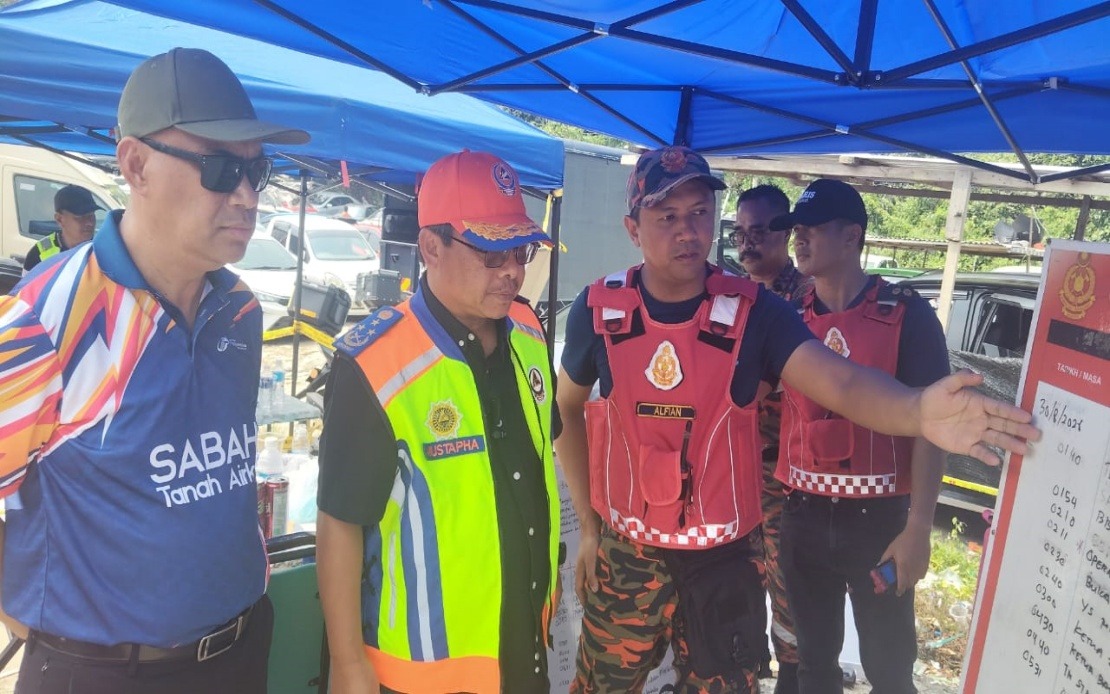
A devastating fire that swept through Kampung Lok Buta in Kota Kinabalu early Friday morning has claimed the lives of three children and left more than 200 families homeless, prompting immediate deployment of temporary relief shelters by state authorities. The two relief centres, established at Dewan Kampung Likas and Dewan Damai, are now serving as coordination hubs for displaced residents whilst government officials work to assess the full extent of the disaster and mobilise assistance.
The identities of those who perished in the blaze have been released as Nana Abdullah, 4, her brother Mohd Asrul Abdullah, 6, and their cousin Nurfarahdilah Mohd Tajihah, 8. The deaths highlight the particular vulnerability of young children in fire emergencies, raising questions about fire safety infrastructure and emergency response protocols in densely populated residential areas like Kampung Lok Buta. The tragedy underscores broader concerns about informal settlement communities in Malaysia's urban centres, where housing density and limited escape routes can transform routine fire incidents into catastrophic events.
Mustapha Sakmud, Minister in the Prime Minister's Department responsible for Sabah and Sarawak affairs, visited the affected area on Friday to oversee the relief operation personally. Speaking to media representatives, Mustapha stressed that the relief centres would facilitate systematic registration of all displaced persons, coordinate distribution of emergency donations, and serve as a central point for government agencies to deliver targeted assistance. His presence signalled the federal government's recognition of the incident's severity and commitment to providing comprehensive support during the immediate recovery phase.
The Kota Kinabalu City Hall (DBKK) has formally declared the Kampung Lok Buta area a disaster zone, a designation that unlocks access to emergency funds and expedites bureaucratic procedures typically required for relief distribution. This administrative action is crucial for enabling rapid mobilisation of resources and simplifying the often cumbersome process of delivering aid to affected communities. For residents facing sudden homelessness, such declarations can mean the difference between weeks of administrative delays and immediate access to emergency shelter and provisions.
Recognising that educational disruption compounds the trauma experienced by fire victims, Mustapha emphasised the importance of identifying and supporting affected students to prevent the disaster from derailing their academic progress. He indicated plans to brief the Ministry of Education about affected pupils from primary and secondary schools as well as those enrolled in higher education institutions and TVET programmes, ensuring that comprehensive academic support measures could be implemented. This multifaceted approach reflects understanding that disaster recovery extends beyond immediate material relief to encompass continuity of essential services like education.
The minister signalled that forthcoming discussions with DBKK and relevant agencies would focus on formulating targeted assistance strategies for fire-affected residents. He indicated that a Malaysia Agreement 1963 (MA63) Implementation Action Council meeting, to be attended by Prime Minister Datuk Seri Anwar Ibrahim and Sabah Chief Minister Datuk Seri Hajiji Noor, would provide an opportunity for DBKK mayor Datuk Seri Dr Sabin Samitah to brief the nation's top leaders on the situation and outline requirements for comprehensive recovery efforts.
Mustapha, who represents Sepanggar as Member of Parliament, committed to extending immediate financial assistance to the families of the three deceased children. Such direct support mechanisms, whilst insufficient to repair the loss experienced by grieving families, represent government acknowledgment of their particular vulnerability and demonstrate official commitment to tangible aid delivery. The provision of emergency financial assistance to bereaved families has become standard practice in Malaysia following major disasters, though questions persist about whether assistance levels adequately reflect the depth of loss.
The Kampung Lok Buta fire occurs within a broader context of fire incidents affecting Malaysian residential communities, where informal and densely populated settlements face disproportionate risk. Urban areas like Kota Kinabalu, characterised by rapid population growth and housing development that sometimes outpaces regulatory oversight, require enhanced fire prevention infrastructure and emergency response capabilities. The incident raises questions about enforcement of building codes, availability of emergency exits, and community-level fire safety awareness programmes in vulnerable settlements.
Disaster management coordination at the local level has proven critical in initial response phases, with DBKK mayor Dr Sabin Samitah, acting as District Disaster Management Committee chairman, playing a central role in relief operations. The established dual-centre relief model allows for geographic distribution of services, reducing congestion and improving accessibility for displaced residents scattered across multiple neighbourhoods. Such operational frameworks, refined through experience with previous disasters, represent institutional learning that improves response effectiveness.
The tragedy reflects systemic vulnerabilities affecting Malaysia's urban poor and working-class communities, where housing conditions, fire safety standards, and emergency response capacities remain inconsistent. Kampung Lok Buta's status as a kampung settlement suggests a community of modest means where residents may lack resources for comprehensive fire prevention measures and may struggle to rebuild independently. Recovery processes for such communities often extend far beyond immediate relief periods, requiring sustained government attention and community-based reconstruction initiatives.
Moving forward, the disaster presents opportunities for comprehensive review of fire safety protocols across Kota Kinabalu's residential areas and similar settlements throughout Sabah and the broader region. Lessons from this incident could inform development of enhanced building standards, improved emergency response procedures, and community education programmes aimed at preventing similar tragedies. The involvement of federal and state leadership suggests that response and recovery will extend beyond local administration to encompass regional and national policy discussions.

