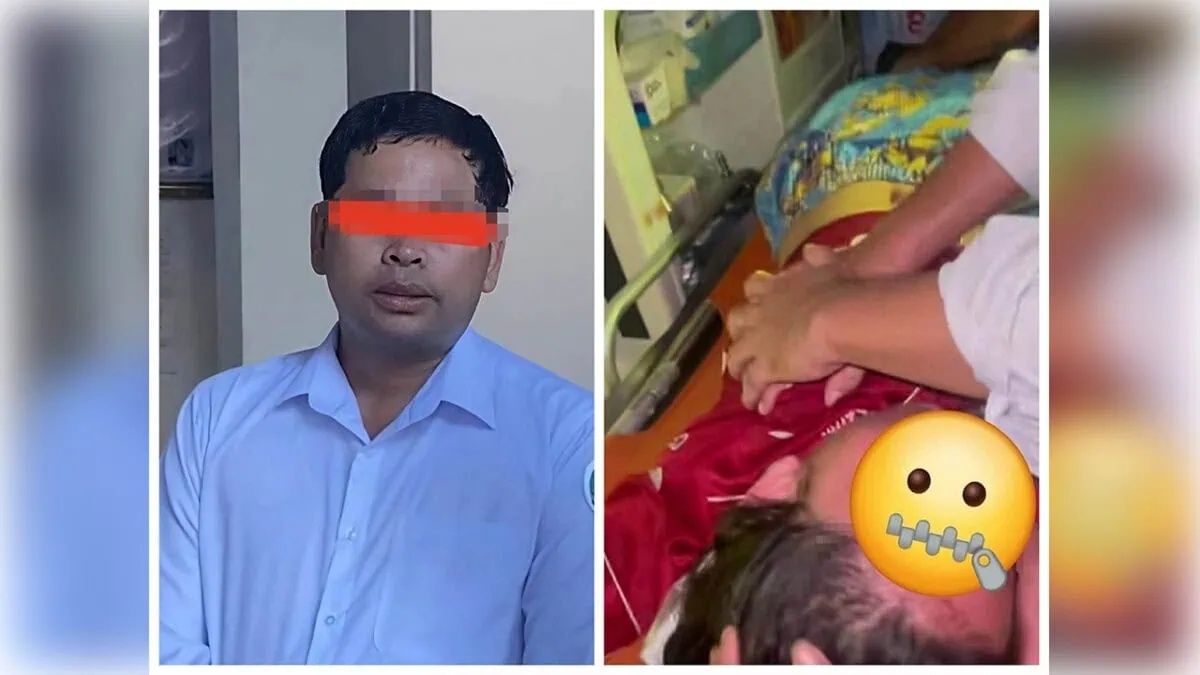
The removal of a senior healthcare administrator in Cambodia's Kandal Province signals intensifying public demand for accountability in medical practice, with authorities now investigating whether emergency treatment protocols were properly followed during treatment of a 17-year-old patient whose care became the subject of widespread social media criticism this week.
Provincial Governor Kuoch Chamroeun issued an administrative order on Tuesday, August 4, stripping Chhun Phally of his position as chief of Setbo Health Centre and reassigning him to serve as a general health official under provincial administration. The decision took immediate effect, marking a swift response to the viral incident that had galvanised public concern over patient treatment standards and personal dignity safeguards in healthcare facilities.
The controversy erupted after video footage showing Phally's emergency response to the teenage girl circulated extensively across social media platforms. The girl had arrived at the health centre experiencing seizures and respiratory distress, prompting intervention by the centre's leadership. Her family member, seeking to keep relatives informed of her medical condition, recorded the treatment but did not anticipate the footage would reach a broader audience or generate significant criticism.
Online commentators rapidly mobilised around the video, with many questioning whether the medical procedures aligned with established professional standards. Beyond technical concerns about resuscitation methodology, numerous observers raised allegations that the patient's handling breached accepted protocols for dignity and consent during emergency medical situations. The volume and nature of social media criticism created mounting pressure on provincial authorities to respond, despite the initial absence of formal complaints or official investigations.
While Kuoch Chamroeun's administrative order did not explicitly state grounds for the reassignment, the timing and context made clear that public sentiment had driven the decision. This responsiveness to viral social media campaigns reflects how Southeast Asian governments increasingly navigate accountability pressures generated through digital platforms, though it also raises questions about whether swift administrative action adequately addresses underlying systemic issues versus providing performative responses to temporary controversies.
Acknowledging the broader implications, the Kandal provincial health department has initiated a formal investigation to determine whether Phally's actions violated professional medical standards or constituted misconduct. Acting Provincial Health Director Kiem Piseth signalled that the inquiry would examine both technical aspects of the emergency treatment and interpersonal dimensions of patient care. His statement indicated that conclusions supporting misconduct allegations would trigger responses extending beyond administrative reassignment, potentially including criminal prosecution if evidence of sexual harassment emerged from the investigation.
Chhun Phally subsequently issued a public apology, emphasising that preserving the patient's life remained his sole motivation during the medical emergency. He acknowledged that his actions may have generated misunderstanding among observers but rejected characterisations of inappropriate or harassing conduct. The statement attempted to reframe the incident as a tragic collision between emergency medical necessity and privacy expectations, though this narrative appeared to gain limited traction against accumulated social media criticism.
For Malaysia and other Southeast Asian nations grappling with healthcare quality and ethics questions, the Kandal incident illustrates broader challenges confronting the region's medical systems. Healthcare workers across the region often operate in resource-constrained environments where emergency protocols and formal training may not align with international best practices. The case demonstrates how social media connectivity now exposes such gaps to public scrutiny rapidly and extensively, generating accountability pressures that bureaucratic institutions sometimes struggle to address constructively.
The Kandal situation also reflects recurring tensions between patient privacy protections and family members' legitimate needs to stay informed during medical crises. The relative's decision to record treatment for family notification purposes collided with emerging norms around healthcare privacy and dignity, yet highlighted the practical communication challenges that persist in many Southeast Asian healthcare settings where formal notification procedures may be underdeveloped.
Professional medical standards in developing healthcare systems remain unevenly implemented across the region, where training intensity, supervision quality, and adherence to international protocols vary substantially by institution and jurisdiction. Cambodia's health system, while gradually strengthening, continues confronting capacity constraints that affect both technical expertise and cultural competence in patient interaction. This broader context does not excuse potential misconduct but situates the Kandal incident within systemic vulnerabilities requiring sustained institutional reform beyond individual accountability measures.
The investigation outcome remains pending, with authorities yet to announce conclusions or determine whether additional disciplinary or legal proceedings will follow the administrative reassignment. The case has already catalysed discussion across Cambodia regarding professional ethics frameworks, patient safeguarding mechanisms, and the role of social media in driving institutional accountability. How provincial authorities ultimately conclude this investigation and what systemic reforms follow will likely establish precedents affecting how similar incidents are handled throughout Cambodia's healthcare administration in the coming years.

