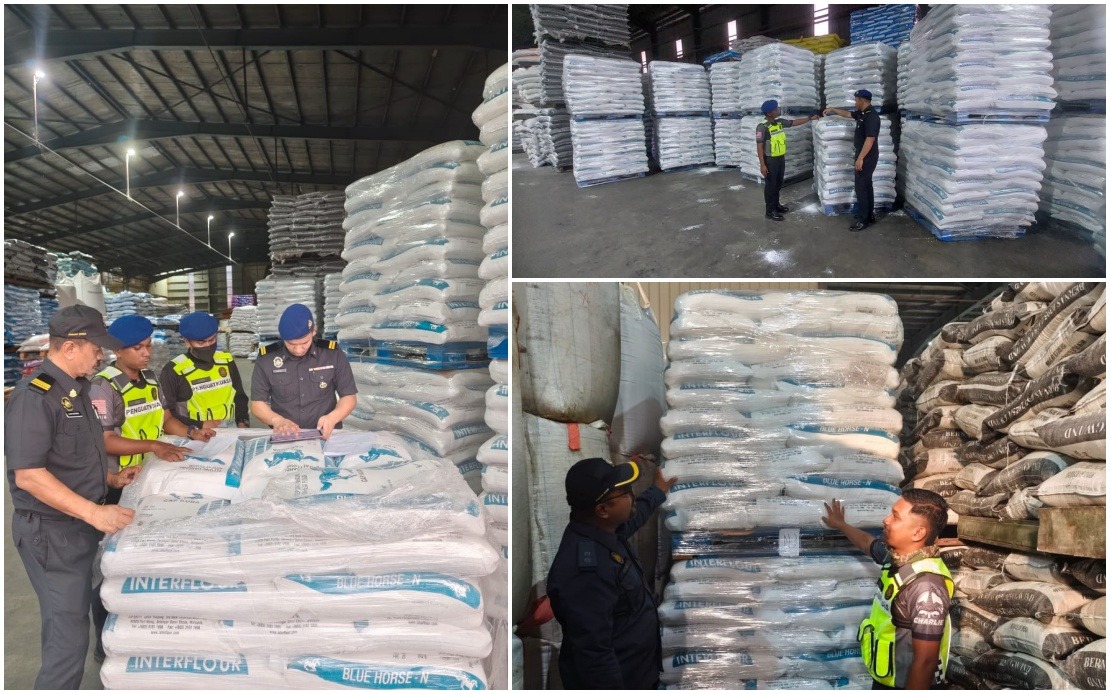
The Ministry of Domestic Trade and Cost of Living (KPDN) Kedah branch has intensified enforcement efforts against unauthorised commodity storage following a major raid on an animal feed processing factory in the Kuala Ketil Industrial Area. Acting on suspected violations of flour storage regulations, four enforcement officers descended on the facility at approximately 4.30 pm on June 15, uncovering significant quantities of wheat flour held without proper authorisation from the Supply Controller.
The enforcement action resulted in the seizure of 53,325 kilogrammes of flour with an estimated market value of RM100,251, marking a substantial intervention in what authorities believe constitutes a breach of supply control regulations. According to Muhammad Nizam Jamaludin, the Kedah KPDN director, the inspection revealed that wheat flour at the facility had been incorporated into the company's animal feed manufacturing processes, raising concerns about potential misuse of controlled commodities.
Central to the investigation is the factory manager's apparent failure to secure necessary permits before stockpiling the flour. The 25-year-old manager, identified as a local resident, could not furnish documentation demonstrating approval from the Supply Controller for maintaining the quantity of wheat flour discovered on premises. This absence of authorisation forms the crux of the suspected violation, as regulations governing commodity storage require explicit clearance for industrial-scale flour holdings, particularly when the material is incorporated into downstream manufacturing activities.
The case has been escalated under Section 21 of the Control of Supplies Act 1961, legislation designed to prevent illicit trafficking and unauthorised diversion of essential commodities. This statutory framework empowers authorities to investigate suspicious storage patterns and enforce compliance among industrial operators. The substantial quantity seized—equivalent to over 53 metric tonnes—suggests the operation may have been undertaken at a scale requiring formal regulatory oversight.
The raid reflects broader regulatory scrutiny of supply chains for essential goods in Malaysia, where flour remains a strategically monitored commodity subject to price controls and distribution guidelines. The KPDN's enforcement posture underscores official concern about potential diversion of subsidised or price-controlled materials into unauthorised commercial channels. When businesses incorporate controlled commodities into manufacturing without proper permits, regulators interpret this as potential circumvention of supply management objectives designed to maintain market stability and protect consumer interests.
For the animal feed sector specifically, this enforcement action carries implications regarding compliance standards across the industry. Feed manufacturers typically source ingredients through regulated channels, and the discovery of extensive unauthorised flour stocks at one facility may prompt wider industry reviews. Competing manufacturers operating with proper authorisation may view such enforcement as levelling the competitive landscape, though the incident also highlights gaps that authorities must address to ensure sector-wide compliance.
The seizure value exceeding RM100,000 indicates this was not a marginal infraction but rather a material storage operation. The flour's incorporation into animal feed production suggests the company had been utilising the commodity in ongoing commercial activity, potentially over an extended period. This pattern distinguishes the case from simple administrative oversights, positioning it instead as a deliberate operation lacking requisite regulatory clearance.
Muhammad Nizam's statement emphasising that firm action would be pursued against parties misusing or diverting subsidised goods signals KPDN's commitment to preventing supply chain leakage. Such messaging serves both as a deterrent to potential violators and reassurance to compliant businesses that enforcement will be consistent and meaningful. The public nature of the seizure announcement amplifies this deterrent effect across industrial circles.
The incident also underscores the interconnected nature of commodity control in Malaysia, where regulations affecting one sector influence downstream operations. Animal feed manufacturers depend on ingredient sourcing, and restrictions on flour procurement channels create operational constraints that non-compliant actors attempt to circumvent through unauthorised stockpiling. KPDN's intervention directly addresses this circumvention strategy by making the risks of unauthorised storage materially tangible.
Moving forward, the investigation and any subsequent legal proceedings will establish precedent regarding enforcement intensity and penalties for supply control violations. Industrial operators across related sectors will monitor outcomes closely, as they signal the practical costs of regulatory non-compliance. The case demonstrates that despite the complexity of enforcing supply controls across geographically dispersed facilities, authorities possess sufficient investigative capacity to identify and act against material breaches.
For Malaysian consumers and regional food security considerations, enforcement against unauthorised commodity storage protects price stability mechanisms and ensures that subsidised or controlled goods reach intended beneficiaries through regulated channels rather than being diverted into alternative supply networks. The seizure represents concrete action safeguarding these policy objectives, reinforcing that supply control enforcement remains operationally active despite ongoing industry challenges.