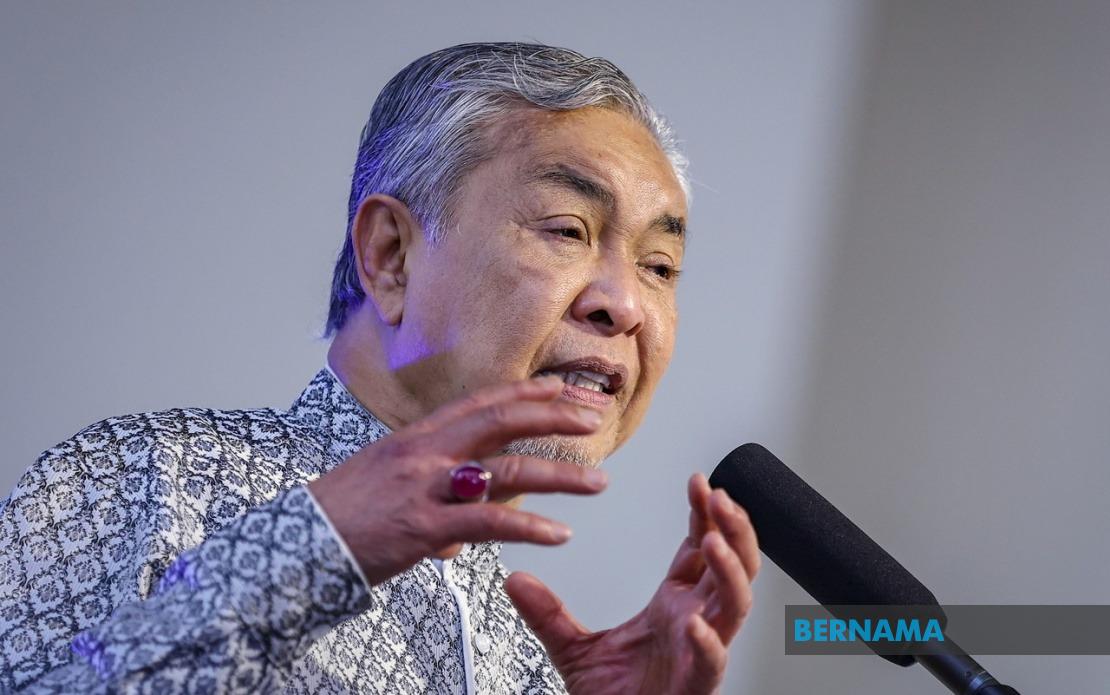
Barisan Nasional chairman Datuk Seri Dr Ahmad Zahid Hamidi has urged political parties to abandon a strategy of dredging up historical grievances during the Johor state election campaign, instead pivoting the contest towards substantive discussions about candidates' capabilities and their concrete proposals for the state's future. Speaking in Johor Bahru on July 3, the Deputy Prime Minister stressed that elevating such disputes would undermine the tone of what should be a respectful political engagement, particularly given the collaborative relationships some contesting parties already maintain at the federal level.
Zahid's intervention reflects growing concern within the ruling coalition that campaign dynamics could deteriorate into personal attacks and unresolved historical disputes that might damage working relationships essential to governing the nation. He noted the apparent contradiction of parties attacking one another on the campaign trail whilst simultaneously serving as cabinet colleagues, a dynamic that creates awkward situations when these rivals must coordinate on national policy matters. The implicit message was that pragmatism and decorum should prevail over the temptation to score points through inflammatory rhetoric about the past.
Central to BN's strategy in the polls is a deliberate repositioning around youth-centric policies rather than traditional appeals to older voter demographics. The coalition's manifesto, crafted under Menteri Besar Datuk Onn Hafiz Ghazi's leadership, prioritizes addressing the concerns of young Johoreans through targeted investments in employment pathways and technical skills development. This pivot acknowledges a fundamental demographic shift: more than half of Johor's voting population now consists of younger citizens with distinct economic anxieties and career aspirations shaped by different conditions than earlier generations.
The emphasis on Technical and Vocational Education and Training reflects a sophisticated understanding of youth unemployment patterns in Malaysia. While Zahid highlighted that the national unemployment rate has declined to 2.9 per cent, he acknowledged that raw joblessness figures mask a deeper problem affecting young people. The real challenge lies in the quality and earning potential of available positions. Many entry-level roles fail to offer the wage progression and professional stability that young workers increasingly demand, particularly as education costs rise and housing affordability worsens across the region.
Barisan Nasional's performance in the previous state election—securing 40 seats out of 56—informs the coalition's current approach of treating itself as an underdog despite controlling the state administration. Rather than projecting confidence, leadership has adopted a posture of urgency and necessity, arguing that BN must prove its continued relevance to voters whose political expectations have evolved considerably. This defensive framing, whilst perhaps diplomatically astute, also reflects genuine uncertainty about how much the Johor political landscape has shifted in recent years.
The coalition's emphasis on skills-based training programmes addresses a structural mismatch in the Malaysian labour market. Technical and vocational pathways have historically been undervalued compared to university degrees, yet they increasingly offer better employment prospects and wage outcomes for many young people. By making this a centerpiece of the BN manifesto, the coalition is signalling a willingness to challenge conventional assumptions about prestige in education and career advancement, a positioning that could resonate powerfully with pragmatic young voters.
Zahid's appeal to young Johoreans carries particular weight because it directly connects abstract political messaging to tangible personal benefit. Rather than asking voters to support BN on the basis of historical governance records or party loyalty, the message is explicitly transactional: choose BN because the coalition will fund and facilitate access to the training that leads directly to better employment outcomes. This approach acknowledges that younger voters are less swayed by party affiliation and more responsive to concrete policy commitments that visibly improve their economic prospects.
The Deputy Prime Minister's comments about avoiding old grievances must be understood within the context of Malaysian federal politics, where coalition partners regularly navigate tensions between electoral competition in individual states and the imperative to maintain unity at the national level. The current configuration of federal government involves parties that contest elections against one another, a reality that requires carefully managed boundaries between campaign aggression and governmental cooperation. Zahid's remarks essentially drew those boundaries explicitly, suggesting that certain topics should remain off-limits during the Johor campaign.
From a Southeast Asian perspective, Johor's election outcome holds significance beyond the state itself. As Malaysia's most economically developed state and a major commercial hub bordering Singapore, Johor's political stability and policy direction influence regional business confidence and economic integration across the Straits. An election result that produces significant policy shifts or political uncertainty could ripple across the region's supply chains and investment calculations. This broader regional dimension adds weight to appeals for campaign maturity and governance focus over partisan point-scoring.
The timing of the election, with polling scheduled for July 11 and early voting on July 7, gives candidates and parties a compressed window to deliver their messages. In such abbreviated campaigns, the temptation to resort to sensational claims about past scandals intensifies as candidates seek quick name recognition and emotional responses from voters. Zahid's preemptive warning suggests that senior BN figures recognize this risk and are attempting to establish campaign norms that privilege substantive discourse, though whether all competing parties will adhere to such norms remains uncertain.
BN's decision to contest all 56 state seats demonstrates confidence in its organizational capacity and candidate slate, even as leadership rhetoric emphasizes the challenging competitive environment. This apparent contradiction—declaring underdog status while fielding candidates in every constituency—suggests a coalition determined to maximize vote share and seat count despite acknowledging genuine electoral vulnerability. The youth-focused manifesto and skills training emphasis represent BN's primary mechanism for converting campaign messaging into actual voter support, making these policy positions central to the coalition's electoral viability in a transformed Johor political landscape.

