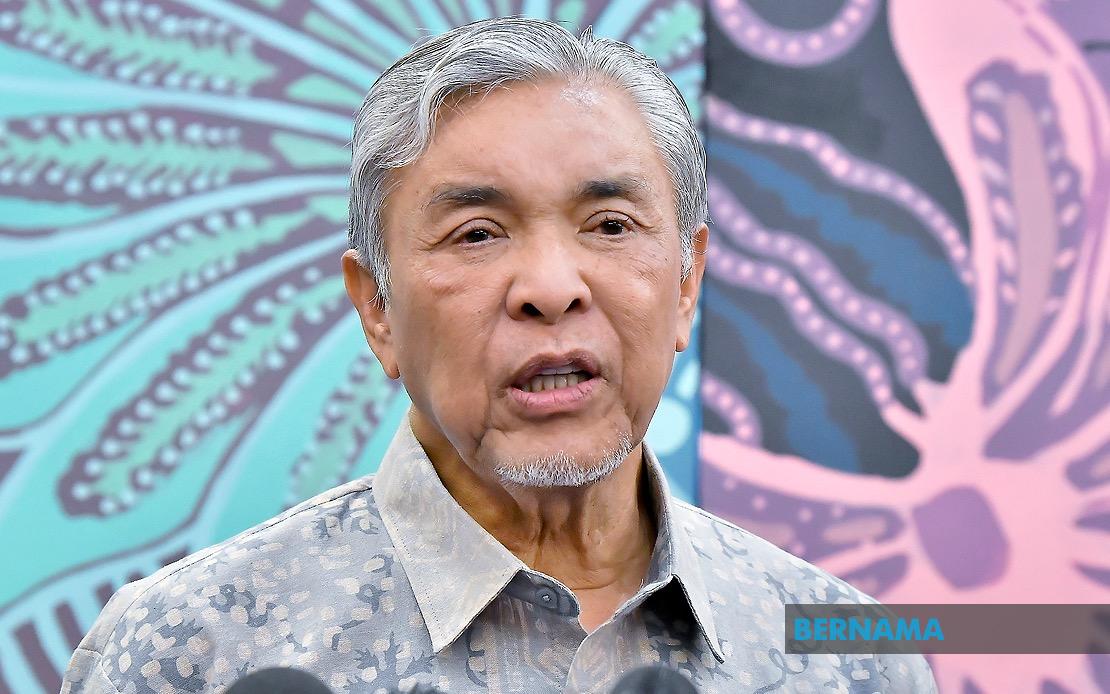
The proposed expansion of the South East Johor Development Authority, known locally as KEJORA, represents a strategic shift toward better coordination of development across south-eastern Johor rather than a territorial land grab, according to Deputy Prime Minister Datuk Seri Dr Ahmad Zahid Hamidi. Speaking at an awards ceremony in Kota Tinggi on July 2, Ahmad Zahid, who oversees rural and regional development matters, sought to address widespread public concern that the agency intended to claim ownership of properties within the targeted expansion zones. His remarks came after months of speculation among residents and local communities about the implications of broadening KEJORA's operational footprint in the region.
The clarification proved timely, as misconceptions about the authority's intentions had circulated within affected districts. Ahmad Zahid emphasised that KEJORA functions primarily as a coordinating body to streamline development efforts, bringing together multiple projects and initiatives under a unified strategic framework. This distinction carries significant weight for landowners and residents who feared losing control of their properties or facing compulsory acquisition processes. By reframing the expansion as a coordination mechanism rather than a land acquisition programme, the government attempted to recalibrate public perception while maintaining momentum behind the initiative.
Central to the government's case for expansion is KEJORA's track record of project delivery. The authority has achieved a 98.3 per cent success rate across implemented initiatives, a figure Ahmad Zahid highlighted repeatedly as evidence of effective management and execution capability. This performance metric becomes particularly relevant when considering that the proposed expansion would bring additional districts under KEJORA's coordinating influence, extending its reach into areas such as Pengerang, which has experienced unprecedented growth driven by mega-scale industrial projects and tourism development. The implication is that KEJORA's proven competence justifies extending its operational scope to manage similar development challenges elsewhere in the region.
Support for the expansion extends beyond government circles. KEJORA commissioned public feedback research across the proposed expansion areas, yielding a 96 per cent approval rate among respondents. This figure lends substantial legitimacy to the proposal, suggesting that communities themselves favour the arrangement. The public consultation process stands in contrast to earlier development initiatives in Malaysia that proceeded with minimal community input, reflecting a more consultative governance approach. Nevertheless, such high approval ratings warrant scrutiny regarding survey methodology, sample representation, and whether all stakeholder concerns received adequate consideration.
The allocation of financial resources underscores government commitment to delivering tangible benefits through KEJORA's expanded mandate. The Rural and Regional Development Ministry has committed approximately RM138 million to the authority specifically for development projects across the region. This substantial investment will support 107 programmes already in implementation phases, with an additional 350 smaller-scale projects planned under the current funding envelope. The sheer number of initiatives suggests a comprehensive development agenda targeting infrastructure, economic activity, and service provision across multiple sectors and communities within KEJORA's jurisdiction.
Despite the government's explanations and financial commitments, constitutional requirements remain paramount to any expansion proceeding. Ahmad Zahid made clear that implementation ultimately depends on formal consent from His Majesty Sultan Ibrahim, the King of Malaysia, as well as approval from Tunku Mahkota Ismail, the Regent of Johor. This procedural requirement reflects Malaysia's constitutional monarchy system, where state rulers retain significant formal authority over territorial and administrative matters affecting their domains. The need for royal assent introduces an additional layer of deliberation and scrutiny before expansion becomes law.
Particular attention has focused on Pengerang, a district experiencing transformative growth that has strained existing governance structures and service provision frameworks. Minister in the Prime Minister's Department Datuk Seri Azalina Othman Said, who represents Pengerang in parliament, has advocated for elevating the area to formal district status alongside the proposed KEJORA expansion. This complementary proposal recognises that administrative boundaries and governance capacities have not kept pace with economic development, creating service delivery gaps in healthcare, infrastructure, and municipal services. Azalina's calls for a new hospital specifically address healthcare capacity constraints that have emerged as Pengerang's population expands alongside industrial development.
The relationship between KEJORA's expansion and Pengerang's administrative elevation illustrates a broader governance challenge facing south-eastern Johor. Economic development, particularly through major industrial projects and tourism initiatives, has attracted substantial population flows that traditional local government structures struggle to accommodate. By expanding KEJORA's coordinating role while simultaneously upgrading Pengerang's administrative status, the government attempts to realign governance capacity with economic realities. This two-pronged approach suggests recognition that either initiative alone would prove insufficient to manage the region's rapid transformation.
For Malaysian readers beyond Johor, the KEJORA expansion carries broader implications regarding how federal and state governments approach regional development coordination. The model positions development authorities as strategic coordinating bodies rather than landholding entities, a potentially replicable approach for other regions facing similar growth pressures. The emphasis on public consultation, performance metrics, and financial commitment also reflects evolving expectations regarding development governance. Yet questions persist about how effectively coordination mechanisms can balance rapid growth with community interests, environmental sustainability, and equitable benefit distribution across diverse stakeholder groups.

