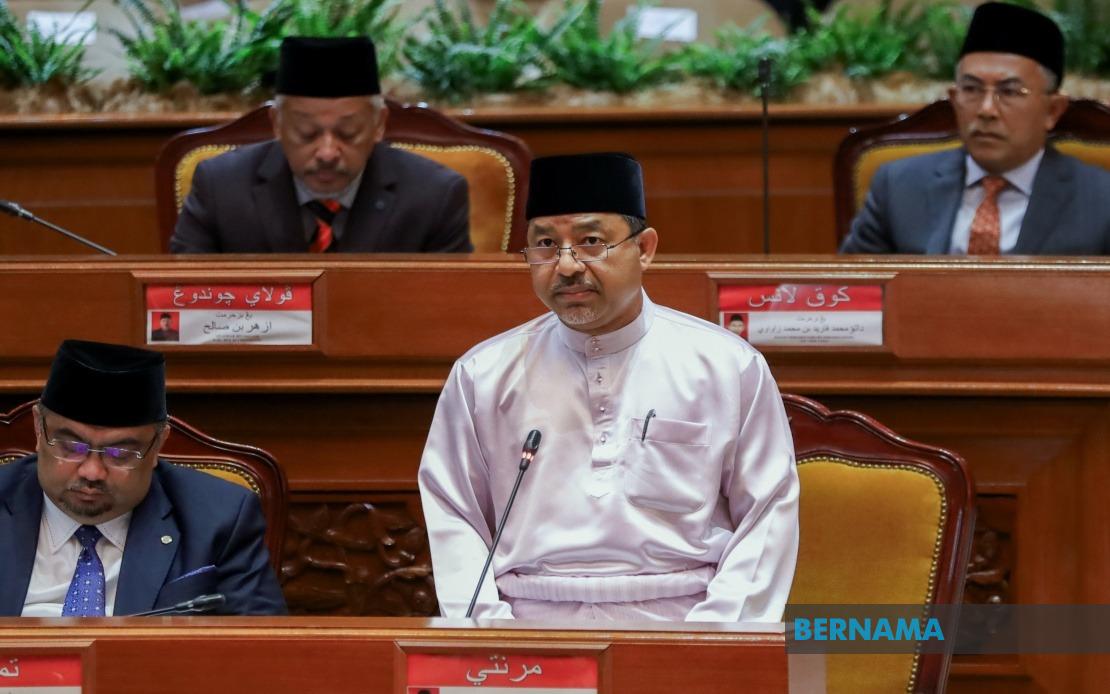
Kelantan maintains its position as the state with the most extensive Malay reserve landholdings in Peninsular Malaysia, according to figures presented by Menteri Besar Datuk Mohd Nassuruddin Daud in the State Legislative Assembly this week. The northeastern state's Malay reserve territories encompass 526,083 hectares, representing 91.5 per cent of the state's documented land area and encompassing approximately 816,020 individual ownership titles registered as of June 2026. This substantial proportion reflects the constitutional and historical protections granted to Malay-Muslim land ownership in the state, a cornerstone of Malaysia's federal framework since independence.
The remaining non-Malay reserve land in Kelantan totals 48,344 hectares, or 8.4 per cent of the state's overall land inventory, distributed across 43,255 registered titles. Combined, these figures yield a total state land area of 574,427 hectares involving 859,275 individual ownership records. The Menteri Besar's disclosure comes in response to legislative questioning from state assemblyman Datuk Abdul Rahman Yunus of PAS, representing Pasir Tumboh, during routine parliamentary proceedings at the Kota Darulnaim Complex in Kota Bharu.
Geographically, the distribution of Malay reserve land across Kelantan's 11 districts reveals significant variance. Gua Musang emerges as the district with the largest absolute area of Malay reserve holdings at 122,735 hectares, substantially exceeding other regions. The inland district's expansive landmass accommodates timber and agricultural activities alongside traditional Orang Asli settlements. Following Gua Musang, Pasir Mas contains 56,656 hectares of Malay reserve land, with Tanah Merah registering 56,246 hectares and Kuala Krai comprising 53,473 hectares. These four districts collectively account for a significant majority of Kelantan's total Malay reserve inventory.
When measured by the proportion of district land classified as Malay reserve, the pattern shifts notably. Tanah Merah exhibits the highest percentage at 99.9 per cent, indicating near-complete classification of the coastal district's territories under reserve status. The districts of Tumpat, Pasir Puteh, Bachok, Pasir Mas, Kota Bharu and Jeli follow in descending order of reserve density. This variation reflects distinct historical settlement patterns, demographic composition, and economic development trajectories across the state's geographic and administrative divisions. Densely populated urban areas and early-developed zones tend toward lower reserve percentages, while rural and remoter districts maintain higher proportions.
A crucial point emphasised by the Menteri Besar concerns the permanence of Kelantan's Malay reserve land base. No reduction in the total area designated as Malay reserve has been recorded, indicating that provisions enabling conversion or sale outside the reserve framework have not substantially diminished the protected landholding. This stability contrasts with historical periods in other states where reserve land diminished through gradual alienation or administrative changes. The preservation of Kelantan's reserve land mass reflects sustained state-level administration committed to maintaining these constitutionally-protected assets.
The legal framework governing these land protections operates under Section 13A of the Kelantan Malay Reservations Enactment, which contains provisions permitting non-Malay individuals and entities to hold land within designated Malay reserve areas under specific circumstances. However, this same legislative instrument vests state authorities with regulatory power to supervise and control transactions within reserve zones. The state government retains discretionary authority to approve, restrict, or prohibit property transfers when such transactions might compromise the integrity or interests of the Malay reserve system itself. This balanced approach permits limited economic flexibility while safeguarding the overarching protective regime.
The constitutional foundation for these land reservations derives from Article 153 of the Federal Constitution, which guarantees special position and rights for Malays and Islam. Land reservations represent one tangible manifestation of these protections, intended to prevent economic marginalisation of the Malay-Muslim majority through gradual loss of landholding. For Kelantan, a state with a predominantly Malay-Muslim population exceeding 95 per cent, the reserve system carries particular cultural and political significance beyond mere property administration.
For Malaysian policymakers and regional observers, Kelantan's reserve land statistics illuminate ongoing questions about land policy, property rights, and constitutional protections in plural societies. The state's experience demonstrates how administrative systems can maintain protective frameworks across extended periods while accommodating limited exceptions and transactions. The 91.5 per cent reserve proportion represents one of the highest concentrations nationally, reflecting both historical settlement patterns and sustained political commitment to these constitutional arrangements.
The disclosure of these figures carries implications extending beyond Kelantan's borders. As Malaysia navigates questions of economic development, property market liberalisation, and investment attraction, the continued strength of land reservation systems in states like Kelantan reflects political consensus regarding constitutional protections. The state government's emphasis on the unchanged reserve land base signals resistance to erosion of these protections despite commercial and development pressures that might otherwise encourage conversion or sale outside reserve categories. This steadfastness suggests that despite globalisation and economic integration, constitutionally-rooted land protections retain political and social legitimacy across Peninsular Malaysian society.

