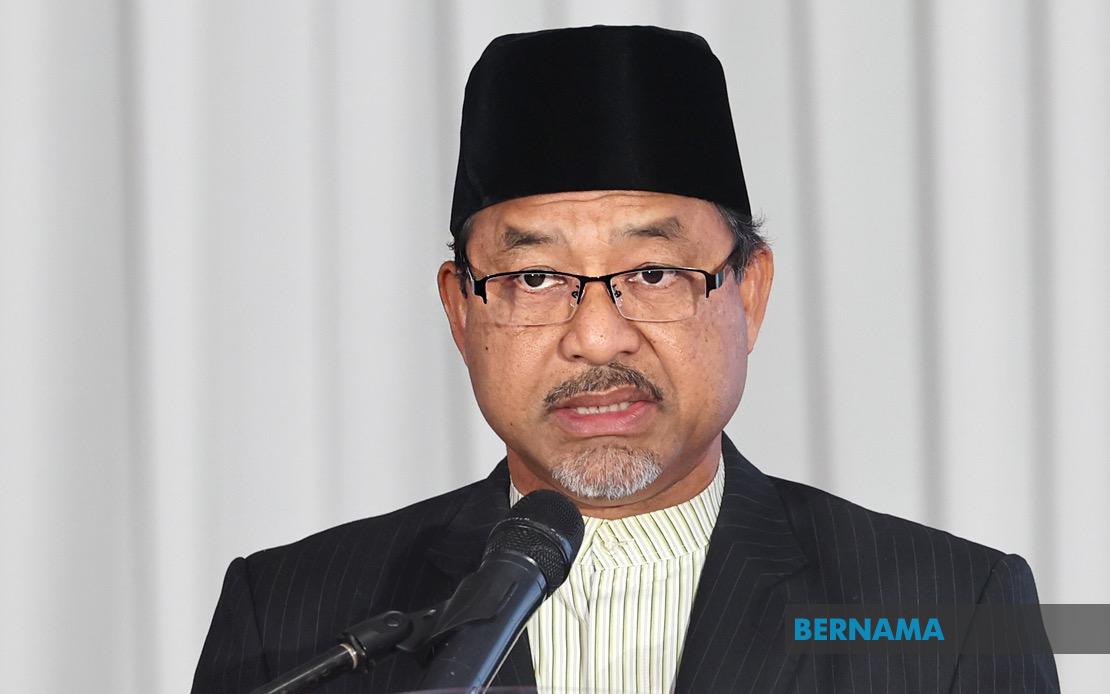
Kelantan has successfully maintained forest coverage exceeding national targets, with the state's forested areas spanning 778,708.34 hectares representing 51.79 per cent of its total land area. The milestone demonstrates the east coast state's commitment to meeting commitments under the Peninsular Malaysia Forestry Policy, which establishes a floor of 50 per cent for national forest and tree coverage. Menteri Besar Datuk Mohd Nassuruddin Daud disclosed the figures to the state legislative assembly in Kota Bharu, highlighting how Kelantan has navigated the challenging balance between environmental stewardship and economic growth.
The significance of Kelantan's forest retention extends beyond symbolic achievement. As Malaysia's northeastern gateway and a state heavily dependent on both natural resources and agriculture, the maintenance of forest cover carries implications for water security, soil stability, and biodiversity preservation across the region. The state's performance provides a template for other Malaysian states grappling with similar pressures to develop economically while honouring environmental commitments made at national and international forums.
Kelantan's approach rests on systematic identification and formal protection of suitable government lands. The Kelantan Forestry Department has prioritized identifying tracts of state-owned territory with the potential for gazetting as Permanent Reserved Forests (HSK). This methodical approach creates legal safeguards against uncontrolled land conversion, ensuring that forest designation carries statutory weight rather than remaining merely aspirational policy. The process operates within the framework established by the National Forestry Enactment, with protected areas classified according to specific forest function categories under Section 10(1) of the National Forestry Enactment (Adoption) (Amendment) (No. 3) 2025.
Beyond formal designation, Kelantan actively advances afforestation and restoration initiatives. The state government participates in the Greening Malaysia campaign, deploying tree-planting programmes and forest rehabilitation projects designed to increase or restore canopy coverage in degraded areas. Such programmes serve multiple purposes simultaneously: they expand the carbon absorption capacity of state forests, create wildlife habitat corridors, and demonstrate tangible commitment to environmental recovery at ground level where communities can observe and participate in restoration efforts.
The state administration has consciously adopted what officials characterize as a balanced approach, recognizing that conservation and economic development need not exist in perpetual conflict. Rather than treating forest protection as an obstacle to progress, Kelantan frames it as a prerequisite for sustainable advancement. This framing acknowledges that short-term economic gains achieved through unsustainable forest conversion ultimately undermine long-term prosperity by degrading the natural capital upon which future livelihoods depend. The explicit reference to meeting current needs without compromising future generations' capacity to do likewise directly invokes the widely accepted definition of sustainable development.
Technological innovation has emerged as a critical enabler of Kelantan's forest management strategy. The state government leverages advanced monitoring systems to track forest area changes and detect potential encroachment in real time rather than discovering violations months or years after they occur. Early detection capabilities allow authorities to intervene during incipient stages of illegal activity, preventing small infractions from escalating into larger-scale degradation. These technological tools represent a shift from reactive enforcement toward proactive monitoring, a transition increasingly characteristic of modernizing environmental management across Southeast Asia.
The verification process governing enforcement demonstrates procedural rigor. Information flagging potential forest area changes or unauthorized encroachment undergoes verification through on-the-ground patrols and field inspections before enforcement action proceeds. This protective mechanism against false positives or misidentified disturbances ensures that enforcement resources concentrate on genuine violations while maintaining credibility with forest communities and stakeholders. The procedure builds confidence that the state takes forest protection seriously while operating with transparency and proportionality.
Kelantan's achievement occurs against a backdrop of mounting regional pressure on forest resources. Across Southeast Asia, deforestation rates have accelerated in recent years as agricultural expansion, timber harvesting, and infrastructure development consume natural forests. Malaysia itself faces scrutiny from international environmental monitoring organizations tracking compliance with forest conservation pledges. Kelantan's sustained performance contributes meaningfully to national-level reporting on forest cover trends and demonstrates that state-level governance structures can effectively implement conservation policy when political will aligns with administrative capacity.
The state's forest cover maintenance carries particular relevance for downstream communities and cross-border ecosystems. Kelantan's forests contribute to watershed functions affecting water availability for the state's population and neighboring regions. Forest-dependent species including apex predators and migratory wildlife depend on connected habitat networks that extend across state and national boundaries. Conservation decisions made in Kelantan therefore ripple through ecological systems and human communities far beyond the state's administrative borders.
Looking forward, Kelantan's continued achievement of the 50 per cent threshold will require sustained political commitment and sustained investment in forestry administration. Population growth, infrastructure demands, and agricultural pressures will inevitably generate proposals for forest conversion. The state government's demonstrated willingness to prioritize forest retention alongside development suggests institutional capacity to navigate these tensions, though future performance will depend on whether political leadership maintains these commitments through successive administrations and changing economic circumstances.

