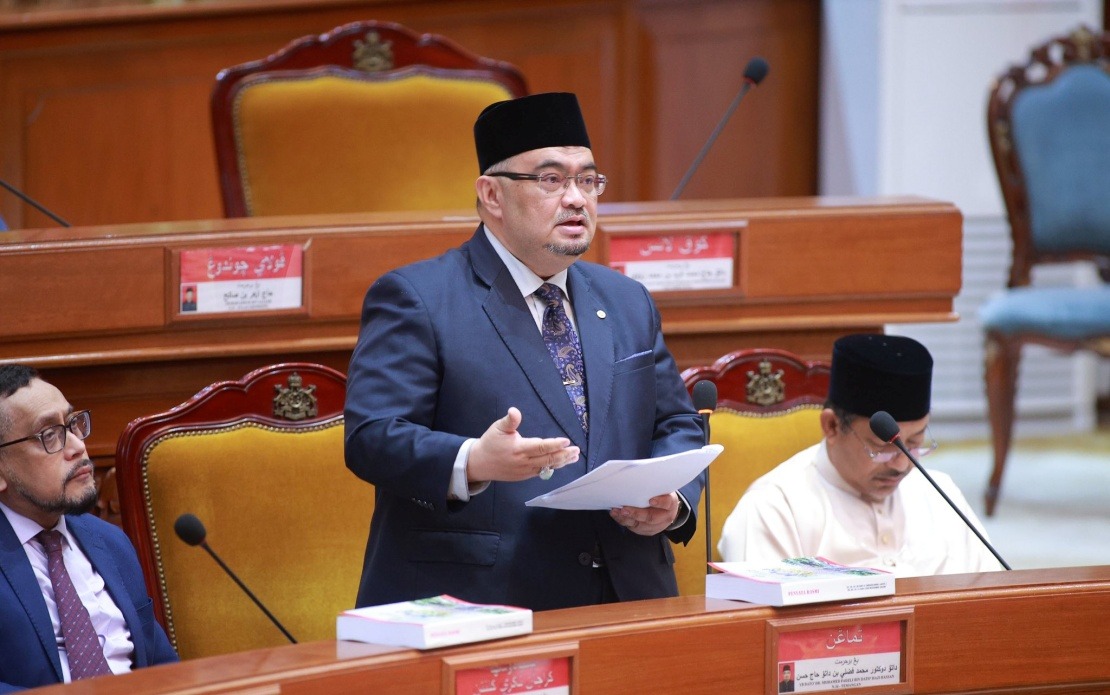
Kelantan's state government has escalated its crackdown on illegal mining and land encroachment, launching 63 formal investigations stemming from intensive enforcement operations conducted between early 2025 and June this year. The figure represents a significant enforcement drive against activities that have long plagued the eastern Malaysian state, where porous borders and remote terrain have historically made regulation challenging. Speaking during the Kelantan State Legislative Assembly sitting, Deputy Menteri Besar Datuk Dr Mohamed Fadzli Hassan outlined the scope of the state's recent anti-illegal mining campaign, emphasizing that authorities had mobilized substantial resources to combat what remains a persistent problem across multiple districts.
The 77 field operations that generated these 63 investigation papers were concentrated in four particularly affected areas: Gua Musang, Kuala Krai, Jeli and Tanah Merah. These districts have emerged as hotspots for unauthorized extraction and encroachment activities, likely due to their proximity to quarries, forested reserves and available mineral deposits. The geographic targeting suggests that state enforcement agencies have adopted an intelligence-led approach, focusing resources on zones where illegal activity is most entrenched. This strategic concentration reflects the operational reality that such activities rarely occur uniformly across a state; instead, they cluster in areas where natural resources are abundant and regulatory oversight has historically been weaker.
Among the more tangible results of the campaign, authorities confiscated 65 excavators and heavy equipment estimated to be worth RM15.8 million. The seizure of these machines is particularly significant because it strikes at the operational capacity of illegal mining networks. Without excavators and specialized machinery, operators face substantially higher costs to resume activities, creating a meaningful deterrent beyond financial penalties alone. The scale of equipment seized—totalling nearly RM16 million—underscores both the sophistication and financial resources invested in these illegal operations, as well as the seriousness with which state authorities have responded.
The investigation papers have been forwarded to the Prosecution Unit of the Kelantan Land and Mines Office (PTG) for adjudication and potential prosecution. This procedural step is crucial because it converts enforcement actions into formal legal proceedings that can result in convictions and custodial sentences. The involvement of the dedicated prosecution unit suggests that the state government recognizes the need for specialized legal expertise in handling these complex cases, which often involve land ownership disputes, environmental violations and organized networks rather than simple individual infractions.
Perhaps more revealing is Deputy Menteri Besar Mohamed Fadzli's acknowledgment that investigations will extend beyond individual operators to identify the broader criminal ecosystem supporting these activities. When questioned about the involvement of middlemen, masterminds, organizers and protectors benefiting from illegal mining, he confirmed that investigators would pursue these angles. This signals official recognition that many illegal operations do not function as isolated enterprises but as part of organized networks involving corrupt officials, landowners, transporters and buyers. Such networks are notoriously difficult to dismantle because they distribute culpability across multiple actors and jurisdictions.
The deputy menteri besar's commitment to lodge police reports when investigations identify criminal conspiracies represents an important escalation in the state's response. By involving the Royal Malaysia Police, the state government taps into federal investigative resources and broader criminal intelligence networks that may identify connections to other illicit activities such as smuggling or money laundering. This multi-agency approach acknowledges that illegal mining frequently intersects with other forms of organized crime in Malaysia's border regions.
Kelantan has also initiated discussions with PTG and other authorities to review and strengthen penalties, particularly for repeat offenders. The current enforcement regime apparently lacks adequate deterrent value for sophisticated operators who calculate that fines and equipment seizure remain cost-effective compared to the profits generated by illegal extraction. Enhanced penalties for recidivism would create escalating consequences for persistent violators and might dissuade would-be participants in organized schemes. This signals that the state recognizes enforcement alone cannot succeed without proportionate legal consequences.
The broader context of this crackdown reveals ongoing structural challenges in regulating mining and land use across Malaysia. Kelantan's experience is not unique; illegal mining has affected Selangor, Perak, Pahang and other states, often with cross-border dimensions as equipment and extracted materials move between jurisdictions. The fact that 77 operations were necessary to generate only 63 investigation papers suggests that many enforcement encounters do not yield sufficient evidence for prosecution, pointing to the technical and evidentiary challenges investigators face. Establishing chain of custody for excavators, proving ownership intent and connecting equipment to specific illegal sites requires sustained effort and expertise.
For Malaysian readers, this enforcement campaign carries implications beyond Kelantan's borders. Illegal mining represents not merely theft of state resources but environmental degradation that affects water quality, soil stability and ecosystems affecting multiple states and communities. The RM15.8 million in seized equipment, while significant, pales against the estimated annual value of illegal mineral extraction in Malaysia, suggesting that visible enforcement captures only a fraction of the actual activity. Regional governments and federal agencies will likely scrutinize Kelantan's methodology and results to assess whether similar approaches might prove effective elsewhere.
The investigation papers opened by Kelantan authorities will test the capacity and willingness of the prosecution system to follow through with convictions. Many Malaysian states have launched high-profile enforcement campaigns against illegal mining only to see cases languish in courts or result in lenient sentences that fail to deter future activity. The ultimate measure of success will not be the number of cases opened but the rate of successful prosecutions, the severity of sentences imposed and whether convicted operators face genuine consequences that outweigh potential profits from renewed illegal activity.
Looking forward, Kelantan's experience suggests that disrupting illegal mining requires sustained pressure across multiple enforcement and prosecutorial agencies rather than episodic crackdowns. The identification and prosecution of criminal networks behind individual operators represents the next frontier in this battle, as authorities attempt to sever the organizational structures enabling illegal extraction. Whether the state can maintain this enforcement momentum while improving prosecution outcomes will determine whether current enforcement efforts translate into meaningful long-term reduction in illegal mining activity across the four affected districts.

