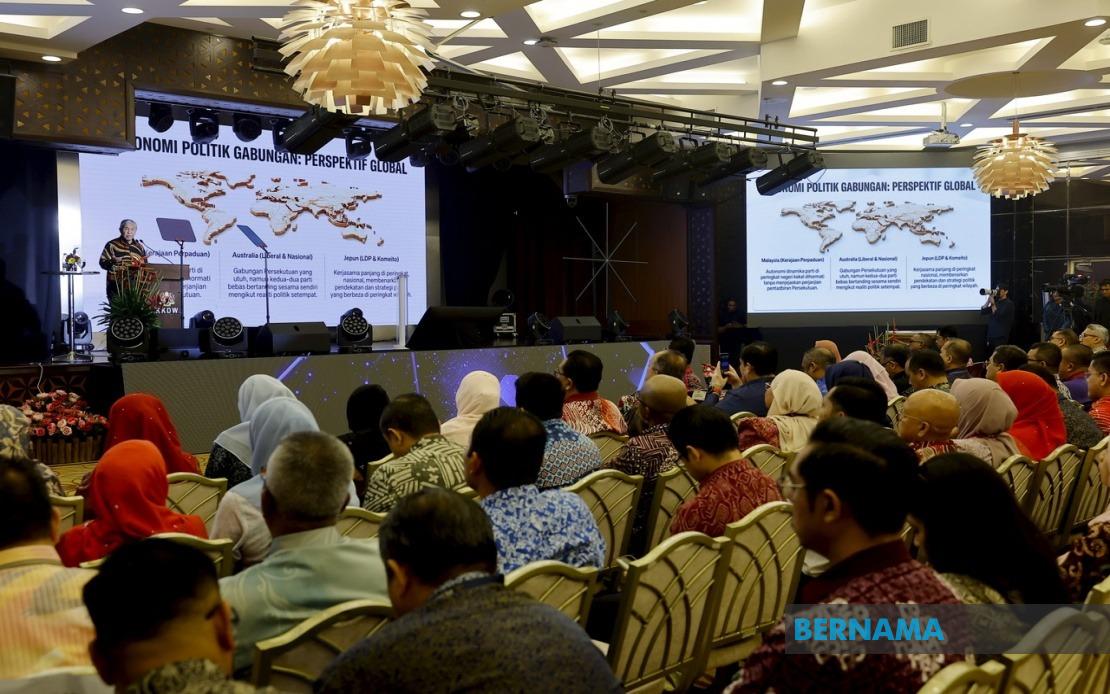
The Community Development Department (KEMAS) will undertake a significant expansion of its Tabika Tunas Istimewa Programme, aiming to ensure that children with special needs have access to early childhood education services throughout the country. Deputy Prime Minister Datuk Seri Dr Ahmad Zahid Hamidi unveiled the ambitious plan at a ministry gathering in Putrajaya, committing KEMAS to establish at least one dedicated kindergarten for special needs learners in every district by 2027. The initiative represents a major shift in how Malaysia approaches inclusive early childhood education, moving beyond urban centres to reach families in even the most remote areas of the nation.
Central to the programme's appeal is its affordability and accessibility. KEMAS will maintain monthly fees at RM100, ensuring that cost does not become a barrier for lower-income families seeking quality early intervention and educational services for children with developmental delays or disabilities. This pricing structure underscores a commitment to equity in special education, recognising that families managing additional care needs often face considerable financial pressures. By keeping fees stable while expanding capacity, the government signals that inclusive education is a public good rather than a commodity available only to the wealthy.
The scale of expansion is substantial. Currently, KEMAS operates 19 Tabika Tunas Istimewa classes across the country. The department plans to add up to 132 additional classes through both new facility openings and significant upgrades to existing infrastructure. This expansion will require considerable investment in trained educators, therapeutic specialists, learning materials, and accessible facilities designed to accommodate children with diverse needs. The rollout timeline—now until 2027—gives the government approximately two and a half years to implement this nationwide network, a challenging but feasible schedule if resources are allocated efficiently.
Ahmad Zahid framed the initiative within broader rural development strategy, emphasising that government performance should ultimately be judged by tangible improvements in people's lives. The expansion of special needs education services aligns with this philosophy, as it directly addresses a critical gap in rural areas where families often have limited options for their children with disabilities. Rural communities frequently lack specialised services, forcing parents to travel significant distances or relocate entirely to access appropriate care and education. By bringing these services to district level, the government reduces both financial and logistical burdens on vulnerable families.
The Deputy Prime Minister articulated a vision for rural transformation centred on creating genuine economic and social opportunity. He emphasised the need for "game changers"—interventions that fundamentally alter circumstances for rural populations by generating new income streams and improving quality of life. The special needs kindergarten programme exemplifies this approach by investing in human capital development from the earliest stages while simultaneously creating employment for educators, therapists, and support staff in rural areas. This multiplier effect extends benefits beyond the children served to encompass broader community economic activity.
Beyond the Tabika Tunas Istimewa expansion, Ahmad Zahid announced complementary rural development initiatives that reflect a comprehensive approach to regional growth. Regional Development Authorities (LKW) have been directed to achieve optimal Return on Assets targets of four to six per cent, signalling expectations for improved financial performance and asset utilisation across the development infrastructure. This directive suggests that government is pushing regional authorities to move beyond traditional development models toward more commercially sustainable operations that can generate returns benefiting constituent communities.
Particularly significant is the 100-day Asset Activation Plan requirement imposed on all LKWs. Government-held assets in rural areas often remain underutilised or generate minimal returns, representing missed opportunities for community benefit. By compelling authorities to conduct rapid audits and develop activation strategies, the government seeks to unlock economic value from existing infrastructure—whether that involves repurposing facilities, leasing arrangements, or redirecting assets toward productive use. The aggressive timeline suggests this is a priority receiving high-level scrutiny.
The Rural Economic Council Executive Committee (MEXCLUB) has simultaneously focused on strengthening the Sustainable Village Programme through enhanced cooperative support systems. Rather than imposing top-down development models, this approach recognises that rural sustainability depends on local organisations functioning effectively. By establishing a dedicated task force addressing governance, branding, market access, and strategic networks for cooperatives, the government acknowledges that technical expertise and organisational capacity often present greater constraints than capital. Cooperatives properly guided can aggregate local production, negotiate better market terms, and build resilience against price volatility.
For Malaysian families with special needs children, particularly those in rural areas, this policy constellation represents genuine structural change. Currently, special needs education in Malaysia remains concentrated in urban areas, requiring families in Peninsular Malaysia's interior, Sabah, and Sarawak to make difficult choices about their children's education and development. The KEMAS expansion programme, if implemented effectively, will democratise access to early intervention services—a critical period when therapeutic intervention produces maximum developmental benefit. Early childhood education for special needs learners demonstrates measurable long-term benefits in educational achievement, employment outcomes, and social integration.
The broader context for these initiatives reflects recognition that rural Malaysia faces persistent development gaps despite decades of policy attention. Incomplete education infrastructure, limited service provision, and economic stagnation continue affecting rural populations disproportionately. The government's emphasis on measurable outcomes and asset utilisation suggests acknowledgment that previous approaches sometimes failed to deliver sustainable improvements. By combining infrastructure expansion (KEMAS facilities), operational efficiency improvements (LKW asset activation), and local economic strengthening (cooperative support), policymakers are attempting a more integrated rural development strategy.
Implementation challenges remain substantial. Recruiting and retaining qualified special needs educators in rural areas presents a genuine obstacle, as such professionals concentrate in urban markets. Infrastructure development in remote districts requires careful planning and may encounter unforeseen costs. Sustaining RM100 monthly fees while providing quality services across varied geographic contexts—from accessible urban-fringe areas to genuinely remote locations—demands sophisticated financial planning. Success will depend on whether the government allocates sufficient resources and maintains political commitment beyond the next budget cycle.
For Southeast Asia more broadly, Malaysia's special needs education expansion offers a model for how middle-income nations can expand inclusive services while managing costs. The RM100 monthly fee structure, if successfully maintained across diverse contexts, could serve as a benchmark for neighbouring countries facing similar pressures to improve special education access without overburdening government budgets. Regional dialogue on best practices for rural special needs service delivery could enhance outcomes throughout the region.
The 2027 target represents both a concrete commitment and an implicit acknowledgment that Malaysia's current provision of special needs early childhood education falls short of national needs. By anchoring expansion plans to a specific date and geographic benchmark—one facility per district—the government creates measurable accountability. Whether KEMAS achieves this ambitious target will signal whether the government genuinely prioritises inclusive development or whether other pressures ultimately redirect resources elsewhere. For families with special needs children in rural Malaysia, the coming years will determine whether this announced programme translates into accessible, quality services in their communities.

