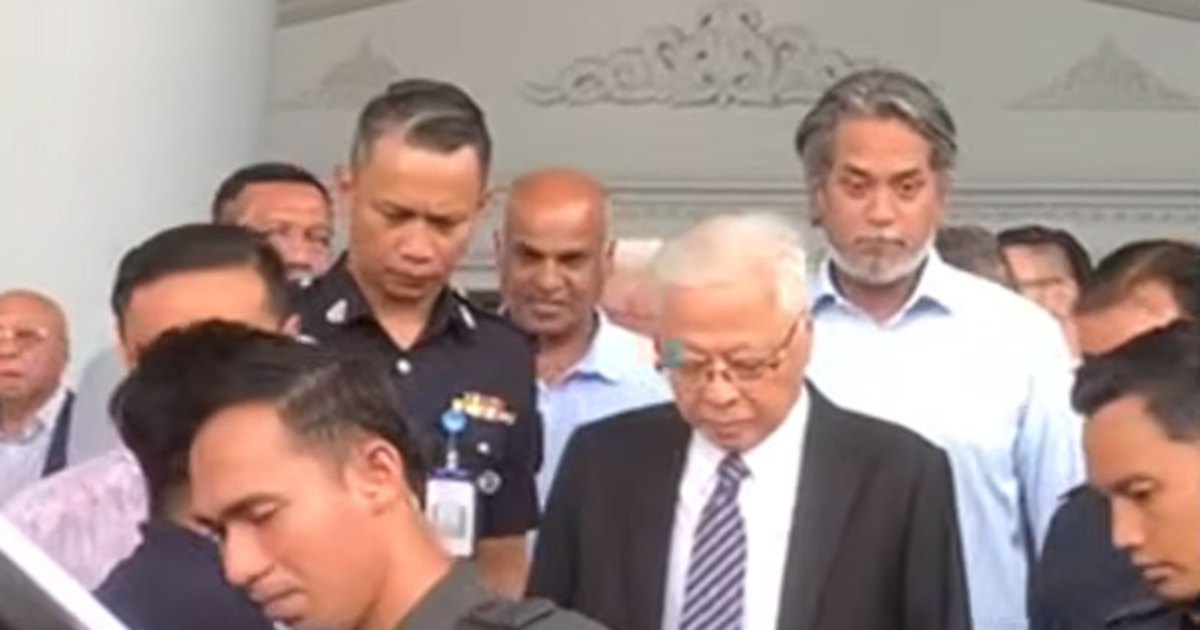
Khairy Jamaluddin's decision to attend the charge proceedings involving former prime minister Datuk Seri Ismail Sabri Yaakob at the Kuala Lumpur Court Complex on Tuesday prompted widespread commentary among political observers, underscoring the enduring factional dynamics within the Umno ecosystem during a period of heightened legal scrutiny affecting the party's senior leadership.
The appearance of the ex-Umno Youth leader at the proceedings marked a visible demonstration of party cohesion at a critical juncture when former premier figures face the judicial system. Such courtroom visits by prominent party figures carry symbolic weight in Malaysian political culture, often interpreted as public endorsements or expressions of solidarity with those undergoing legal processes.
Ismail Sabri's legal troubles form part of a broader pattern of investigations and charges directed at multiple former government officials and Umno politicians, reflecting the consequences of the post-2018 shift in Malaysia's political landscape. The accumulation of such cases has created an environment in which displays of support from within the party hierarchy take on additional significance, potentially influencing perceptions of party unity and internal allegiances.
Khairy's presence represents a calculated political gesture at a time when Umno is navigating complex internal realignments and attempting to maintain coherence ahead of future electoral contests. His attendance suggests a deliberate choice to publicly associate with a senior party colleague facing the courts, a decision that carries implications for how such alignments are perceived within Umno's power structures and among the broader Malaysian electorate.
The former Youth chief has positioned himself as a modernizing force within Umno while maintaining connections across the party's traditional hierarchy. His courtroom appearance thus operates on multiple levels—as a statement of personal solidarity, as a reinforcement of party bonds, and potentially as a positioning statement within intra-party dynamics that have grown increasingly complex in recent years.
For observers tracking Umno's internal politics, such moments provide windows into the party's informal networks and the extent to which senior figures are willing to publicly associate with colleagues facing legal jeopardy. The visibility of such gestures can influence narratives about party loyalty and the degree to which Umno presents a united front to external pressures.
Ismail Sabri's legal proceedings are part of an extended period during which multiple figures from the previous Umno-dominated administrations have encountered the courts. This broader context lends additional weight to instances of party members offering visible support, as such actions potentially signal resistance to or acceptance of the ongoing accountability processes affecting party leadership.
The Malaysian political environment has evolved substantially since the 2018 general election, introducing new uncertainties and competitive pressures that have redefined how major parties manage internal relations and project organizational coherence. Umno's ability to maintain party discipline and demonstrate solidarity among its senior hierarchy remains significant for its electoral prospects and internal stability.
Khairy's attendance at the court complex also reflects pragmatic calculations about maintaining party relationships and avoiding perceptions of abandonment or distance from senior colleagues during difficult periods. In Malaysia's relationship-driven political culture, such gestures carry meaning beyond their surface appearance and contribute to broader narratives about party functionality and leadership relationships.
The incident highlights how legal proceedings involving political figures generate interest beyond the specific charges involved, with every visible element—including who attends courtroom sessions—subject to interpretation by political analysts and the media. These observations feed into broader assessments of party health, leadership stability, and the trajectory of Malaysian politics during a period marked by considerable institutional and political fluidity.
As Umno continues adapting to the post-2018 environment and competing for electoral relevance, moments of visible party solidarity assume heightened importance. Such appearances at courtroom proceedings serve as public affirmations of party networks that extend beyond formal organizational structures, suggesting the persistence of traditional patronage and loyalty mechanisms within Malaysia's major political parties despite contemporary pressures for reform and modernization.

