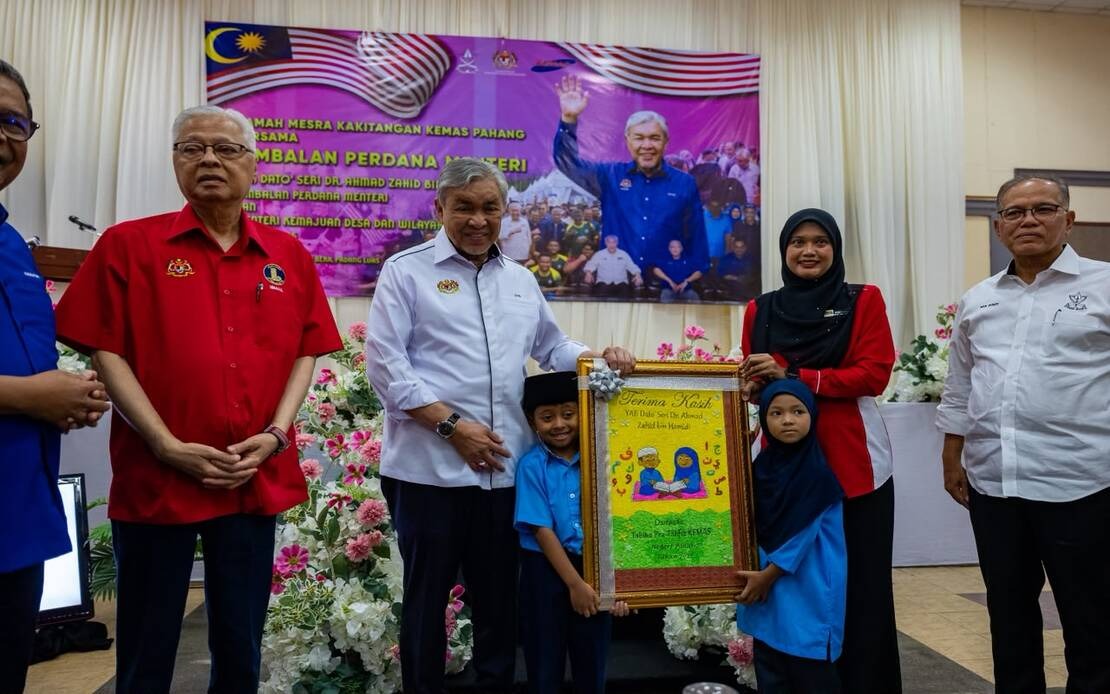
Malaysia's push to enhance early childhood education has entered a decisive phase, with the Rural and Regional Development Ministry (KKDW) announcing ambitious plans to merge digital innovation with religious foundations in its KEMAS network. Deputy Prime Minister Datuk Seri Dr Ahmad Zahid Hamidi unveiled the integrated strategy during the Pahang KEMAS Community Engagement Programme in Bera, signalling a comprehensive modernisation effort aimed at preparing the next generation for both technological and moral challenges.
The timing of this initiative reflects broader shifts in Malaysia's education landscape. Recent policy changes that lowered the school starting age from seven to six have amplified the strategic importance of pre-primary institutions, particularly KEMAS kindergartens (Tabika) and childcare centres (Taska). These facilities now serve as critical entry points for the nation's education system, making their transformation a priority for federal policymakers concerned about early skill development and foundational learning.
At the heart of the modernisation strategy lies a commitment to technological integration. The ministry plans wider deployment of Smart Class infrastructure and smartboards across KEMAS kindergartens, acknowledging that digital literacy can no longer be delayed until primary school. This technological push addresses a fundamental challenge facing Malaysia's education system: ensuring that children from diverse socioeconomic backgrounds, particularly those in rural and underserved communities, gain early exposure to digital tools that will define their future economic prospects. KEMAS facilities, which have historically served poorer communities, become vehicles for reducing digital inequality at its earliest stage.
Yet this modernisation strategy deliberately avoids a purely secular or technology-focused trajectory. Ahmad Zahid emphasised that KEMAS must maintain its foundational purpose of human development rooted in values and religious education. This balancing act reflects Malaysian education policy's longstanding attempt to harmonise technological advancement with moral and spiritual formation—a concern particularly acute in a Muslim-majority nation where Islamic education holds cultural and constitutional significance.
The proposed expansion of Quranic memorisation programmes constitutes the most substantive religious initiative announced. Beyond existing efforts to have KEMAS children memorise Juzuk 30 (the final section of the Quran), the ministry will introduce structured programmes for Surah Yasin, Al-Waqiah, Al-Mulk and As-Sajdah—chapters widely recited in Islamic contexts and known for their spiritual and pedagogical value. This expansion reflects deliberate curriculum design: these surahs offer relatively accessible entry points for young learners while carrying deep theological significance in Islamic tradition.
Successful implementation depends critically on teacher capacity. Ahmad Zahid stressed that KEMAS educators must themselves master memorisation techniques before instructing children, indicating awareness that such programmes require genuine expertise rather than superficial adoption. This prerequisite acknowledges a persistent challenge in Malaysian early childhood education: ensuring that teachers possess not just subject knowledge but also pedagogical skill in delivering specialised content to very young learners. The ministry's emphasis on structured, effective implementation suggests recognition that poorly executed religious programmes can alienate rather than inspire children.
The federal government's commitment to this vision requires unprecedented coordination across multiple tiers of governance. Ahmad Zahid called for closer collaboration between federal authorities, state governments, MPs and state assembly members to secure technological resources and infrastructure. This multilevel governance approach addresses a practical reality: KEMAS facilities depend on land tenure security, infrastructure investment and maintenance funding that often exceed what federal allocation alone can provide. The acknowledgement of Pahang's contributions—particularly its efforts to secure land titles and fund renovations—demonstrates that state-level political will remains essential to programme success.
Historical context grounds these ambitions. KEMAS has served approximately 8.4 million children over six decades, establishing itself as the nation's primary vehicle for reaching poor and rural communities through early education. This legacy carries both advantages and expectations. The institution's proven capacity to reach underserved populations provides a foundation for scaling new initiatives, yet its long institutional history also creates inertia that technological and curricular reforms must overcome. The emphasis on preserving legacy while embracing transformation captures the central tension facing KEMAS modernisation.
For Malaysian society and the broader Southeast Asian region, this strategic direction carries significant implications. As countries across the region grapple with preparing citizens for knowledge economies while maintaining cultural and religious identity, Malaysia's approach offers a distinctive model: integration rather than segregation of technological and moral education at the earliest possible stage. The success or failure of KEMAS transformation will likely influence education policy discussions in other Muslim-majority and multicultural societies confronting similar challenges.
The emphasis on political stability and cooperation underlying Ahmad Zahid's remarks underscores that education reform depends on institutional continuity and cross-party commitment. This framing is particularly significant in Malaysia, where education policy has occasionally become politicised. By casting KEMAS modernisation as a matter requiring bipartisan support and inter-governmental harmony, the Deputy Prime Minister attempts to insulate the programme from partisan fluctuations and position it as a long-term national investment rather than a temporary initiative.
Implementation timelines matter significantly. The expansion of memorisation programmes begins next year, providing a relatively near-term test case for the ministry's ability to execute integrated curriculum changes. Success in rolling out Quranic memorisation while simultaneously advancing Smart Class deployment would demonstrate genuine capability. Conversely, delays or uneven implementation across diverse KEMAS facilities would reveal familiar capacity constraints in Malaysian education administration.
Looking forward, the KEMAS transformation initiative represents Malaysia's attempt to position early childhood education as a frontier for simultaneously achieving technological competitiveness and moral formation. Whether this dual mandate proves sustainable or whether tensions emerge between technological and religious priorities will shape not just KEMAS evolution but broader educational trajectories across Malaysia. The coming years will test whether integration of these values genuinely strengthens human development or instead creates competing demands that strain an already stretched early education system.

