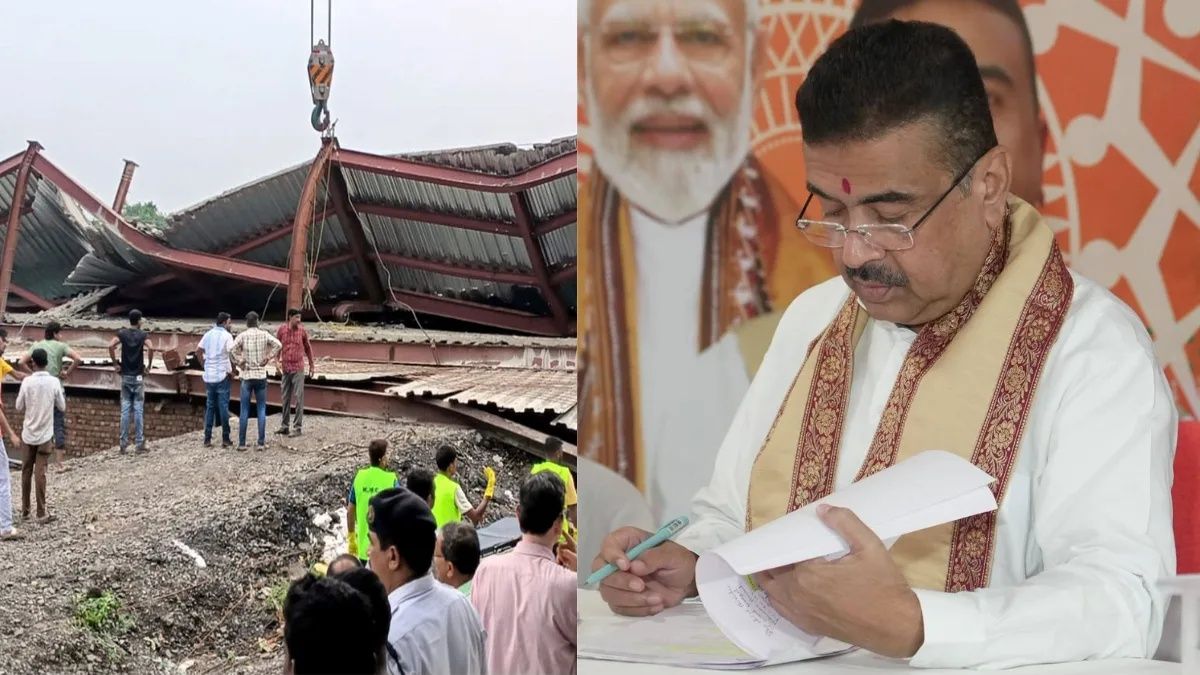
The death toll from the collapsed warehouse in Kolkata's Taratala area has risen to 11 as rescue operations extended into their second day on Thursday. Officials at the Trauma Care Centre at SSKM Hospital confirmed the recovery of another victim in the early afternoon, though the identity remained unconfirmed at the time of reporting. The incident, which occurred on June 25, has triggered a major government response involving coordinated efforts between federal and state authorities to locate survivors trapped beneath the rubble.
Rescue and recovery operations have mobilised personnel from the Indian Army, the National Disaster Response Force (NDRF), and multiple other agencies working in concert to navigate the debris field. The scale of these operations underscores the severity of the structural failure, with officials continuing to express concern that additional workers may still be trapped under the collapsed structure. The seamless coordination between federal and state authorities has become a notable feature of the response, highlighting the gravity with which authorities are treating both the immediate crisis and the underlying systemic issues it has exposed.
West Bengal Chief Minister Suvendu Adhikari used a statement to the state assembly to launch a scathing critique of the approval process that permitted the warehouse's construction. His remarks, accompanied by documentary evidence, alleged that the Kolkata Municipal Corporation (KMC)—then administered by the Trinamool Congress (TMC)—had sanctioned the building despite fundamental structural deficiencies in the design. Adhikari presented documents bearing signatures of former Mayor Firhad Hakim, claiming these demonstrated the systematic approval of a flawed construction plan. The Chief Minister's assertions suggest that the collapse may not have been an isolated accident but rather a symptom of deeper governance failures in municipal building oversight.
The investigation has already resulted in five arrests spanning different facets of the construction and approval chain. Those taken into custody include the construction company's site supervisor, the individual responsible for fabricating the iron structural components, the leaseholder of the land, a labour contractor linked to Trimex operations, and a broker involved in securing KMC approval. However, the primary accused individual, identified as Azgar, remains at large, and authorities are continuing their hunt. The breadth of arrests across multiple roles suggests that the collapse resulted not from isolated negligence but from a cascade of procedural failures and potentially deliberate misconduct at various stages.
Adhikari painted a damning picture of the previous municipal administration, characterising its tenure as marked by widespread corruption and the extraction of informal payments—locally referred to as "cut money"—that had allegedly degraded the city's infrastructure safety standards. His statements positioned the warehouse collapse within a larger narrative of institutional decay under the prior government, framing the disaster as both a symptom and an indictment of that regime's governance. This political context, while reflecting the contested nature of responsibility, also highlights how building safety failures often intertwine with questions of administrative accountability and fiscal probity.
In response to the disaster, Adhikari announced an unprecedented pause in construction activities across a wide geographic zone. All ongoing building work, with the exception of essential services, will remain suspended for four weeks across the KMC area and in surrounding municipalities including Rajarhat-New Town, Maheshtala, Budge Budge, Pujali, Bishnupur, Sonarpur, and Baruipur. This moratorium serves a dual purpose: it allows authorities to conduct comprehensive audits of existing approved plans while signalling to the construction industry that safety lapses will no longer be tolerated.
To oversee the audit process, the state government has established a high-level committee chaired by Additional Chief Secretary Rajesh Pandey. The committee's composition reflects an attempt to bring together expertise from multiple domains critical to structural integrity. Its membership includes senior administrative officials alongside technical specialists drawn from IIT Kharagpur, the Rail India Technical and Economic Service (RITES), Indian Railway Construction Limited (IRCON), the Fire Services Department, the Public Works Department, and the KMC itself. This multidisciplinary approach suggests recognition that building safety requires expertise spanning engineering, fire safety, public works management, and municipal administration.
The audit will examine all building plans that have received approval within the designated zones, representing a sweeping reassessment of municipal compliance practices. Such a comprehensive review carries significant implications for the construction sector in West Bengal's major urban centres, potentially causing delays to ongoing projects while simultaneously improving the robustness of future approvals. For developers and contractors, the four-week suspension serves as a stark reminder of the regulatory environment's shifting contours and the heightened scrutiny now being applied to structural design and approval procedures.
Adhikari has made clear that accountability will extend beyond criminal prosecution. His assertion that guilty parties will face not only imprisonment but also potential confiscation of properties to compensate victims signals an intention to pursue aggressive remedies that go beyond conventional legal penalties. This stance reflects growing recognition in disaster governance that financial reparations to affected families require substantial resources, and that wrongdoers should bear a proportionate share of compensation burdens rather than leaving victims to rely solely on state relief mechanisms.
The Kolkata warehouse collapse carries implications that extend beyond West Bengal's borders. Urban centres across Southeast Asia and South Asia have witnessed similar incidents stemming from inadequate building code enforcement, corruption in municipal approvals, and structural design failures. The incident underscores systemic vulnerabilities that persist in rapidly expanding urban areas where construction volumes outpace regulatory capacity. For Malaysia and other regional economies experiencing comparable urban growth pressures, the Kolkata disaster serves as a cautionary example of the costs associated with permitting shortcuts in building safety processes and the importance of maintaining rigorous, incorruptible approval mechanisms.
The government's response—encompassing arrests, sweeping construction moratoriums, high-level audits, and promises of stringent penalties—represents an attempt to simultaneously address immediate accountability concerns and institute systemic reforms. However, the true test of these measures will emerge in coming months as the audit proceeds, cases progress through courts, and the construction sector adapts to the new regulatory environment. For West Bengal's government, the challenge lies in translating the current political momentum around building safety into sustained institutional changes that prevent similar incidents without imposing such severe constraints on legitimate development that urban growth stalls entirely.

