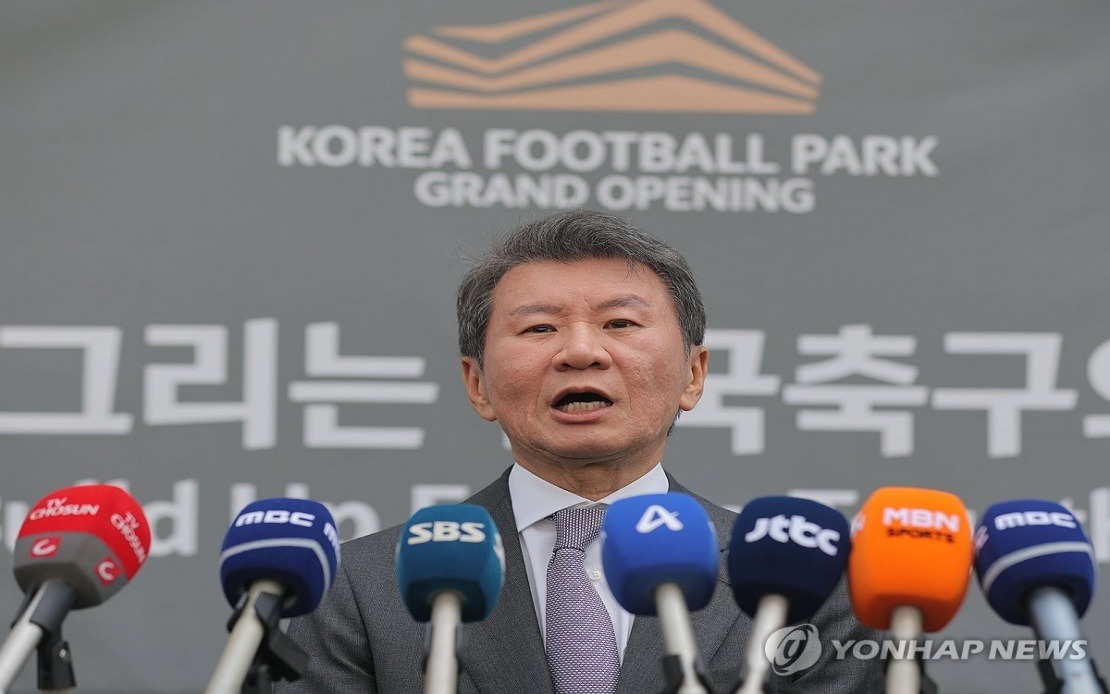
The Korea Football Association has entered a new chapter with the resignation of president Chung Mong-gyu on Monday, marking a significant moment in South Korean football governance. Chung submitted his formal resignation letter after chairing what would be his final executive meeting at Korea Football Park in Cheonan, located approximately 90 kilometres south of Seoul. His departure represents both a personal stepping back and a broader reckoning within Korean football's leadership structure following a disappointing tournament performance.
Chung had previously announced in May that he intended to resign once the FIFA World Cup concluded on July 20 by South Korean reckoning. However, the timetable accelerated dramatically after the national team's unexpected exit during the group stage. This early departure signals the intensity of pressure facing the football federation's leadership in the aftermath of what many in South Korea viewed as an underperformance by a nation with considerable football aspirations and infrastructure. The decision to leave office ahead of schedule underscores how deeply the World Cup elimination has reverberated through Korean sports leadership.
The national squad, under coach Hong Myung-bo, concluded Group A competition in third place with three points secured through one victory and two defeats. Despite the win, South Korea could not qualify for the knockout rounds as one of the eight strongest third-place finishers across all groups. Hong himself stepped down immediately once the team's elimination was mathematically confirmed, taking individual responsibility for the campaign's shortcomings. Both resignations reflect a broader accountability culture emerging within Korean football, though critics argue more fundamental systemic changes remain necessary.
Chung faced mounting criticism extending well beyond the World Cup result. A significant controversy centred on the process through which Hong was appointed as national team coach in July 2024. Multiple observers characterised the hiring procedure as lacking transparency, raising questions about governance standards within the KFA. The Ministry of Culture, Sports and Tourism subsequently conducted an extensive investigation into the federation's operations that year and determined that Chung and other senior officials warranted disciplinary measures due to documented irregularities throughout the organisation's functioning.
The relationship between the KFA and government authorities remains adversarial. The ministry is preparing to initiate another comprehensive audit targeting the football body, prompted by the World Cup failure. Simultaneously, the KFA has been engaged in ongoing legal proceedings against the ministry, creating a complicated institutional backdrop for the leadership transition. This conflict highlights persistent tensions between autonomous sports governance and state oversight in South Korea's sports administration framework.
Under KFA regulations, an interim president must be selected from the organisation's four vice presidents pending a formal leadership election. Since Chung retained nearly three years remaining on his fourth consecutive term, succession rules stipulate that his replacement must be elected within sixty days of his departure. The Korean Sport and Olympic Committee, which serves as the nation's apex sports authority, exercises oversight over KFA electoral procedures and must ensure compliance with governance frameworks.
KFA presidential elections have traditionally involved an electoral college comprising regional football association heads, K League club executives, players, coaches, and referees. During last year's presidential ballot, 183 of 192 eligible voters participated, demonstrating reasonably strong engagement from the electoral body. However, the legitimacy and design of this election mechanism have come under scrutiny, particularly regarding whether current procedures adequately reflect public sentiment and demands for accountability.
Minister of Culture, Sports and Tourism Chae Hwi-young recently commented on these electoral concerns, suggesting that the current process may become untenable given widespread public disappointment over the World Cup campaign. His remarks indicate governmental willingness to pressure the KFA toward procedural reforms. Chae stated that if KFA leaders genuinely understood the aspirations of citizens disappointed by the team's performance, the federation would necessarily modify its existing election protocols. Such language signals that significant institutional change may be imminent rather than optional.
The Korean Sport and Olympic Committee has scheduled a general meeting for July 16 to address these governance questions directly. At that session, the KSOC will consider amendments to its regulations governing how member associations conduct leadership elections. Among the potential reforms being explored are extensions to the standard sixty-day window for selecting a successor and adoption of a direct election system whereby broader constituencies could participate in choosing the next KFA president. These changes would represent substantial departures from established practice and reflect intensifying pressure for democratic renewal within Korean sports administration.
In his resignation statement, Chung expressed gratitude toward supporters while acknowledging moments when he had disappointed the football community. He framed his tenure as guided by commitment to Korean football's development and international standing, accepting personal responsibility for failures while crediting players and fans for achievements. Chung reiterated confidence that Korean football would eventually overcome current adversity and reclaim prominence, echoing sentiments common among outgoing officials seeking to preserve institutional morale during transition periods. His measured tone contrasted sharply with the contentious nature of recent controversies surrounding his leadership.
The broader implications of Chung's resignation extend across East Asian football governance. South Korea's football structures have long influenced regional standards and benchmarks, with other nations watching how Seoul addresses institutional accountability questions. The potential reforms to electoral procedures and government oversight arrangements could establish precedents affecting sports administration throughout Asia. Malaysian and other Southeast Asian football federations may observe how the KFA navigates this transition, particularly regarding balancing autonomous sports governance with public accountability and transparency demands.
For Korean football itself, the immediate priority involves ensuring continuity while fundamental questions of direction are addressed. The interim president and eventual successor will inherit a federation navigating multiple challenges simultaneously: rebuilding public confidence after World Cup disappointment, resolving ongoing legal disputes with government agencies, implementing whatever electoral reforms emerge from the July 16 KSOC meeting, and establishing renewed credibility in the eyes of players, coaches, and supporters. The next chapter in Korean football administration will likely determine whether current upheaval produces meaningful institutional strengthening or represents merely surface-level personnel changes.

