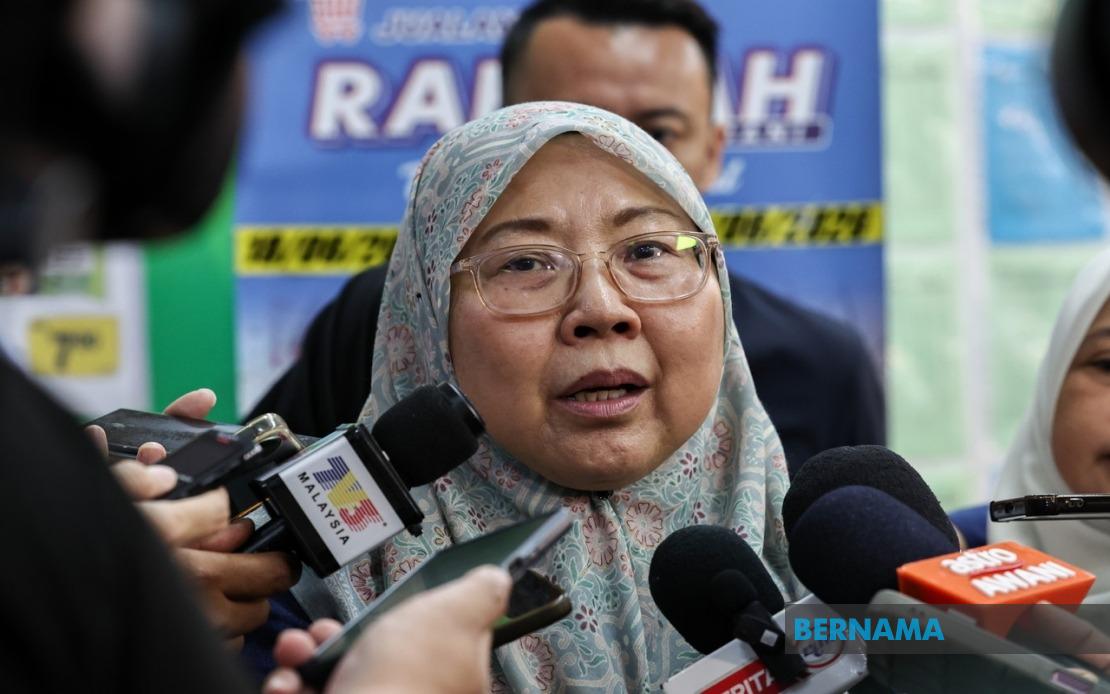
With Johor's state election campaign now in full swing, the Ministry of Domestic Trade and Cost of Living (KPDN) has moved to reassure residents that essential commodities will remain plentiful throughout the electoral period. Deputy Minister Datuk Dr Fuziah Salleh made the commitment during an inspection in Johor Bahru on June 19, underscoring government readiness to manage potential demand surges triggered by the influx of officials and visiting voters anticipated during polling preparations.
The timing of these assurances reflects underlying anxieties about supply continuity that have intensified across Southeast Asia due to geopolitical instability in West Asia. Rising maritime insurance costs and unpredictable shipping routes have squeezed logistics margins, forcing governments throughout the region to implement more sophisticated inventory management systems. Malaysia's approach focuses particularly on subsidised cooking oil, a staple commodity whose availability directly influences household spending and public sentiment—factors that carry political weight during election cycles.
Central to KPDN's strategy is a restructured distribution network that bypasses traditional wholesale intermediaries. Under this refined system, repackers deliver subsidised cooking oil directly to retail points of sale, eliminating unnecessary handling stages that historically created vulnerabilities and opportunistic diversion. Johor's monthly allocation remains anchored at more than 3,000 metric tonnes, managed through a network of 18 licensed repackers operating across 95 distribution points. This architecture reduces transaction costs while theoretically enhancing traceability—a consideration that carries administrative and political importance in Malaysia's regulatory environment.
The retail landscape reflects this transformation. Supermarket chains including Econsave have been integrated into the distribution framework, with Econsave Taman Daya maintaining daily stocks of approximately 100 cartons to serve immediate local requirements. Deputy Minister Salleh's on-site verification signals that distribution infrastructure appears functional at the grassroots level, though such snapshots capture only momentary conditions rather than systemic resilience under stress.
Government efforts to prevent subsidy diversion—a persistent challenge across emerging markets—now incorporate point-of-sale verification mechanisms requiring customer app authentication or MyKad identity card scanning. These controls attempt to ensure that price-controlled commodities reach intended beneficiaries rather than flowing into informal markets or cross-border trade. The authentication requirement represents a technological intervention increasingly common in Malaysia's governance approach, leveraging digital infrastructure to enforce policy intent at distribution endpoints.
Beyond cooking oil, the broader subsidy programme known as the Rahmah MADANI Sales Programme (PJRM) demonstrates significant operational scale. Nationwide data covering January through mid-June 2026 documents 13,692 PJRM activation events, with Johor alone conducting 920 sessions spanning all 56 state constituencies. These initiatives attracted 2.3 million participant visits and generated more than 1.46 million transactions within the state, suggesting that demand-management programming has achieved considerable market penetration and consumer awareness.
However, the political economy of these interventions warrants scrutiny. Subsidy programmes represent substantial fiscal commitments that governments leverage to demonstrate responsiveness to cost-of-living pressures—a consideration particularly acute ahead of electoral contests. The timing and scale of PJRM deployment may therefore reflect both genuine supply management and electoral positioning, though distinguishing these motivations remains analytically challenging.
Regionally, Malaysia's approach to supply chain stabilisation offers insights relevant to other Southeast Asian economies confronting similar pressures. The emphasis on direct distribution, digital verification, and retail network integration represents a pragmatic adaptation to contemporary logistics challenges. By establishing clearer control pathways and reducing intermediary layers, Malaysia attempts to enhance visibility and responsiveness throughout supply networks—lessons applicable across the region where informal trading channels and subsidy leakage remain persistent difficulties.
The Johor election cycle, with candidate nominations scheduled for June 27, early voting on July 7, and polling on July 11, provides a defined timeframe for monitoring whether announced preparedness measures translate into consistent retail availability. The margin between policy announcement and implementation reality frequently diverges in practice, particularly when demand spikes occur unpredictably or when weather and logistics complications materialise.
For Malaysian consumers and broader regional observers, the KPDN's assurances reflect an institutional commitment to managing electoral-period supply challenges—a responsibility that intersects governance legitimacy with practical economic management. Success requires sustained coordination across ministries, port authorities, transport operators, and retailers, alongside responsive adjustment when unforeseen disruptions emerge. The coming weeks will test whether the announced frameworks can deliver on their implicit promises of uninterrupted access to essential commodities at controlled prices, particularly as demand potentially intensifies across Johor and Negeri Sembilan.

