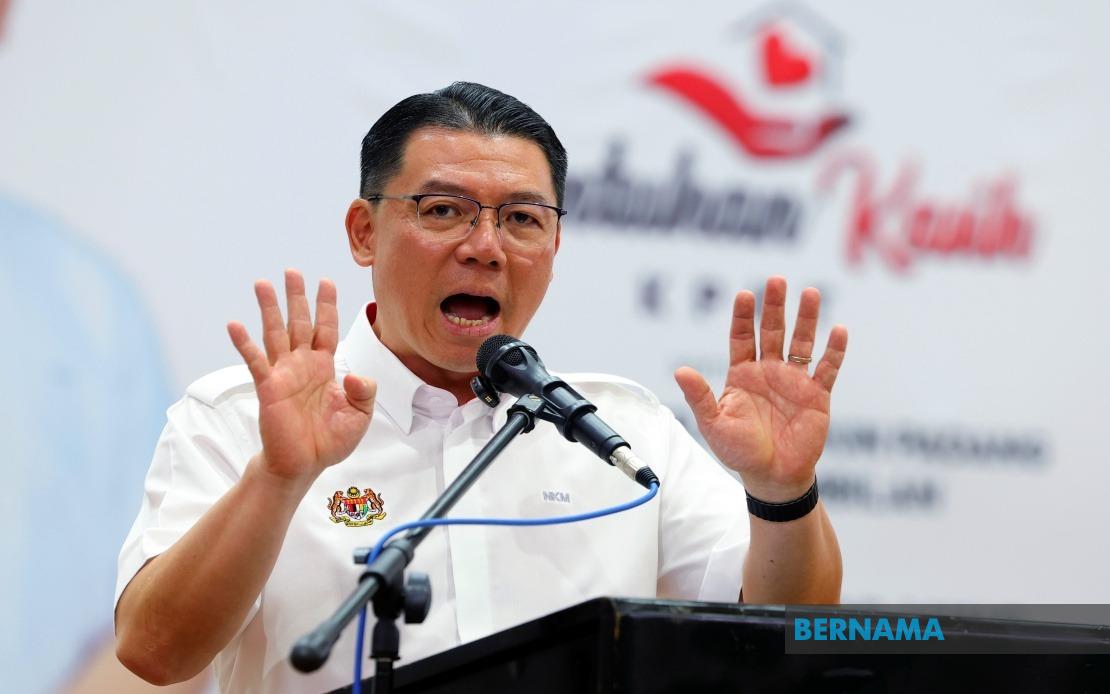
The Ministry of Housing and Local Government (KPKT) is directing RM430.3 million towards Negeri Sembilan's development agenda, funding 80 strategic projects and programmes spanning 2023 through 2026. Housing and Local Government Minister Nga Kor Ming unveiled the investment during a visit to Seremban, emphasizing the allocation as evidence of the MADANI Government's commitment to improving living standards across the state. The substantial commitment signals an intention to address housing shortages, ageing infrastructure and environmental challenges that have long affected communities throughout the region.
For the current year, KPKT has designated RM119.6 million under Rolling Plan 1 (RP1) 2026, with RM115.5 million supporting KPKT-approved development initiatives. The remaining RM4.05 million comprises supplementary funding specifically designed to advance Negeri Sembilan's broader urban development strategy. This differentiated allocation structure allows the ministry to address both established priorities and emerging municipal needs. The targeting of funds reflects a strategic approach recognising that sustainable development requires flexibility alongside long-term planning.
The additional allocations reveal KPKT's multifaceted approach to state advancement. The ministry has dedicated RM3 million towards the Negeri Sembilan Development Plan Study (2025–2026), which will inform future policy direction and investment priorities. Safety concerns are being addressed through a RM750,000 allocation for the Safe City Programme, while digital transformation receives support via RM300,000 earmarked for the Smart City Programme. These components together represent a comprehensive vision extending beyond traditional infrastructure into governance modernisation and public security.
Housing development anchors the investment strategy, with substantial portions supporting the People's Residency Programme (PRR). This flagship initiative targets affordable housing provision, a persistent concern for middle and lower-income Malaysians seeking property ownership. By prioritising residential schemes, KPKT addresses one of the most pressing needs facing Negeri Sembilan residents, where housing costs have risen significantly in recent years. The programme's emphasis on accessibility suggests recognition that sustainable economic growth depends on enabling diverse population segments to afford quality shelter.
Environmental sustainability forms another critical pillar of the expenditure plan. KPKT is channelling funding towards improved solid waste management systems, addressing growing concerns about municipal waste accumulation and environmental degradation. Complementing these efforts are programmes upgrading public markets, hawker centres and community halls, which serve as vital socio-economic anchors in both urban and rural settings. These improvements recognise that economic development encompasses more than large-scale projects; it requires supporting the small traders and informal sector workers who form the backbone of local economies.
Community safety infrastructure receives dedicated attention through funding for new fire station construction. Enhanced firefighting capability carries particular importance in Negeri Sembilan, where rapid urbanisation has sometimes outpaced emergency service development. The investment acknowledges that sustainable development must incorporate robust safety systems protecting residents and property. Additionally, urban and rural development projects funded through the allocation address infrastructure gaps between prosperous centres and peripheral communities, a persistent equity concern across Malaysia.
During his visit, Minister Nga inspected multiple ongoing initiatives demonstrating the allocation's practical impact. The refurbishment of Medan Niaga Bahau exemplifies efforts to modernise traditional commercial spaces, while the Urban House Repair Programme (PBPR) at Taman Cempaka targets residential upgrading in established neighbourhoods. MADANI recreational facilities under construction at Bandar Seri Jempol Public Park reflect recognition that community well-being encompasses leisure and cultural space alongside housing and commerce. These diverse projects illustrate how the RM430.3 million allocation translates across multiple development domains.
Parallel initiatives in Seremban and surrounding districts underscore the investment's geographic distribution. The Jelebu District Council stall upgrading in Durian Tipus and the basketball court development in Kampung Baru Sungai Muntoh serve communities beyond the state capital, addressing the infrastructure disparities frequently affecting smaller towns and villages. The TPPM initiative receiving attention—including repainting at Lobak Flats and lift replacement at Casa Prima Apartments—demonstrates commitment to maintaining existing public housing stock, where deterioration often outraces new construction.
A significant aspect of KPKT's investment addresses religious and community infrastructure often overlooked in mainstream development discourse. The ministry allocated RM224,000 to the Immaculate Conception Catholic Church in Port Dickson for roof repairs and structural restoration. Father Edwin Peter highlighted the church's over-century history and critical maintenance needs, noting that the allocation would address immediate safety concerns alongside broader facility improvements for the 1,000-member congregation. Such support acknowledges that community well-being encompasses spiritual and social gathering spaces serving diverse populations.
The Seremban Baptist Church similarly received RM73,000 for roof repairs, with deputy chairman Vincent Chong emphasising the 70-year-old structure's importance as a symbol of religious heritage and community continuity. These allocations carry symbolic weight beyond their monetary value, signalling government recognition that places of worship require investment and maintenance comparable to secular infrastructure. For Malaysia's non-Muslim communities, such tangible support represents acknowledgment of their contribution to national fabric and assurance of equitable development resource distribution.
Minister Nga's stated commitment to strengthening cooperation between KPKT, state governments and local authorities reflects structural approach to implementation. The minister emphasised that efficient, transparent project execution requires sustained coordination across administrative levels. This acknowledgment addresses persistent concerns about development project delays and cost overruns that have frustrated communities across Malaysia. By centralising responsibility for inter-agency cooperation, KPKT signals intention to overcome bureaucratic silos that frequently impede timely project completion.
For Negeri Sembilan specifically, the RM430.3 million investment represents significant stimulus to state economic development and quality-of-life improvement. The state has historically received less attention than Selangor and Kuala Lumpur in major national infrastructure programmes, making the allocation noteworthy in redressing geographic investment imbalance. The funding's emphasis on both urban and rural projects suggests KPKT recognises development inequality within Negeri Sembilan itself, where peripheral areas often lack amenities available in Seremban and Nilai.
Broader implications for Southeast Asian urban development observers merit consideration. Malaysia's approach—combining traditional infrastructure investment with digital transformation, safety programme funding and community facility maintenance—reflects emerging consensus that sustainable cities require multidimensional approaches. The allocation to heritage structure repairs alongside smart city initiatives demonstrates recognition that development must respect historical significance while embracing technological advancement. As other ASEAN nations grapple with rapid urbanisation, Malaysia's integrated strategy offers instructive lessons regarding holistic rather than siloed development planning.

