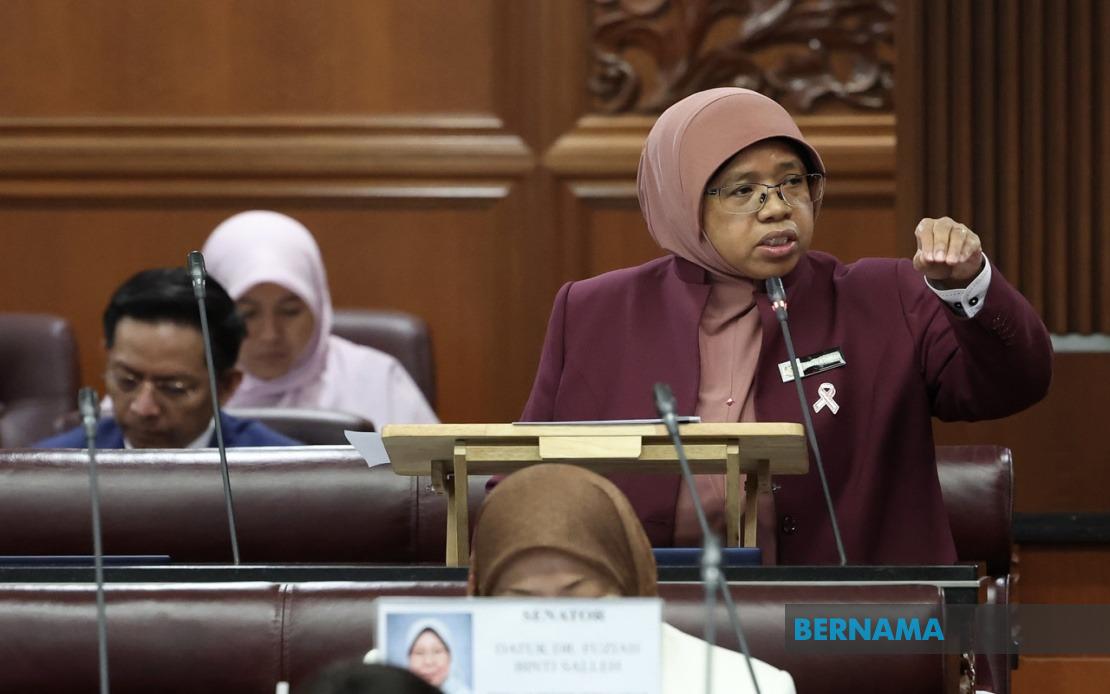
The Ministry of Housing and Local Government has adopted a targeted strategy to address deteriorating conditions across Malaysia's public housing stock, directing maintenance efforts toward residential blocks in the People's Housing Programme that have surpassed the ten-year mark. Deputy Housing and Local Government Minister Datuk Aiman Athirah Sabu outlined this approach during parliamentary questioning, emphasising that with constrained budgets, the ministry must strategically concentrate on defects posing the greatest threat to resident safety and living standards.
The prioritisation framework focuses on infrastructure components critical to daily habitability and structural integrity. Lift systems, roof structures, water storage and distribution networks, sewage piping, and electrical installations rank highest among maintenance concerns. Beyond these specialised systems, the ministry also addresses general deterioration affecting shared facilities and common areas within developments. This hierarchical approach reflects a pragmatic acknowledgement that comprehensive renovation across all PPR estates remains fiscally impossible, necessitating decisions about where limited resources generate maximum protective benefit.
Under the 12th Malaysia Plan framework, the ministry deployed RM159.1 million across five rolling funding cycles dedicated exclusively to high-rise strata PPR maintenance initiatives nationwide. This substantial commitment underscores government recognition that ageing public housing represents a critical infrastructure challenge affecting hundreds of thousands of families. However, the gap between maintenance needs and available resources reveals the magnitude of deferred upkeep. In 2026 alone, Joint Management Bodies and Management Corporations submitted 226 separate applications addressing ten priority maintenance categories, requesting a combined RM79.9 million in repairs. The ministry approved only RM44.6 million—representing merely 56 per cent of requested expenditure—illustrating the persistent shortfall between community requirements and government capacity.
For Malaysian residents in PPR estates, this funding constraint translates to prolonged waiting periods and potential safety risks. A household whose lift system fails faces significant mobility challenges, particularly for elderly residents and parents managing young children. Similarly, defective water distribution systems compromise sanitation and health, while electrical faults create fire hazards. The selective funding approach means some estates benefit from timely intervention whilst others endure extended periods of deterioration pending future allocation cycles.
The application and approval mechanism involves multiple bureaucratic stages spanning nine months. Community representatives through Joint Management Bodies and Management Corporations must first submit requests between August and October. These applications then undergo scrutiny by the Commissioner of Buildings or relevant local authorities before advancing to the ministry. November and December respectively see the submissions reviewed by Project Selection Working Committee and Steering Committee meetings. Final approval authority rests with the Controlling Officer in January, with local authorities notified simultaneously. Letters of Acceptance typically issue by April, only after which actual construction or repair work commences. This extended timeline reflects established government procurement procedures but potentially delays urgent safety interventions.
The maintenance challenge reflects broader complexities in managing Malaysia's stock of ageing low-cost housing. PPR schemes, introduced to provide affordable shelter for lower-income households, now encompass properties ranging from relatively recent constructions to blocks approaching or exceeding two decades of occupation. Many were built with anticipated lifespans of 25 to 30 years under normal maintenance regimes. Inadequate preventive upkeep during earlier periods has compressed the window for cost-effective remedial action; addressing small problems promptly proves far less expensive than confronting structural failures demanding comprehensive renovation.
Regional context adds urgency to Malaysia's PPR maintenance dilemma. Neighbouring countries including Singapore and Thailand have implemented more aggressive public housing renewal programmes, recognising that deferred maintenance ultimately multiplies costs and social disruption. Singapore's Housing and Development Board regularly refurbishes ageing estates through systematic programmes, whilst allowing resident participation in decision-making. Such approaches maintain public confidence in government-provided housing and prevent the stigmatisation that can accompany deteriorating conditions.
The maintenance backlog also carries economic implications beyond individual household welfare. Poorly maintained residential blocks reduce property values in surrounding neighbourhoods, discourage private investment in adjacent areas, and concentrate disadvantage within specific geographic zones. Residents unable to secure housing upgrades may experience diminished life prospects, as unstable living conditions correlate with reduced educational outcomes for children and lower employment stability for adults. From a broader development perspective, sustained under-investment in public housing infrastructure represents a constraint on human capital accumulation and economic mobility.
Stakeholders including estate residents, property managers, and local authorities face genuine operational difficulties given the current funding environment. Decisions about which critical systems receive attention become contentious, particularly when multiple estates compete for limited resources. A residence experiencing roof leaks and lift malfunctions simultaneously cannot receive simultaneous repairs if only partial funding arrives. These triage decisions, though necessary, highlight systemic inadequacy rather than effective management.
Moving forward, the ministry faces pressure to secure increased allocations or develop alternative financing mechanisms. Some jurisdictions worldwide utilise public-private partnerships for public housing maintenance, leveraging private sector expertise and capital whilst maintaining government oversight. Others implement resident contribution schemes whereby estate occupiers pay modest monthly levies funding preventive maintenance and minor repairs, reserving government resources for major structural interventions. Such hybrid approaches might supplement existing government spending.
The Deputy Minister's acknowledgement of budget constraints represents unusual transparency about limitations affecting service delivery to lower-income communities. Rather than projecting capability it cannot deliver, KPKT transparently communicates that maintenance applications exceed available funding by approximately 44 per cent. This candour, whilst politically uncomfortable, enables residents and estate managers to develop realistic expectations and plan accordingly. However, it also underscores that Malaysian public housing maintenance remains a persistent policy challenge requiring sustained attention and resource commitment.

