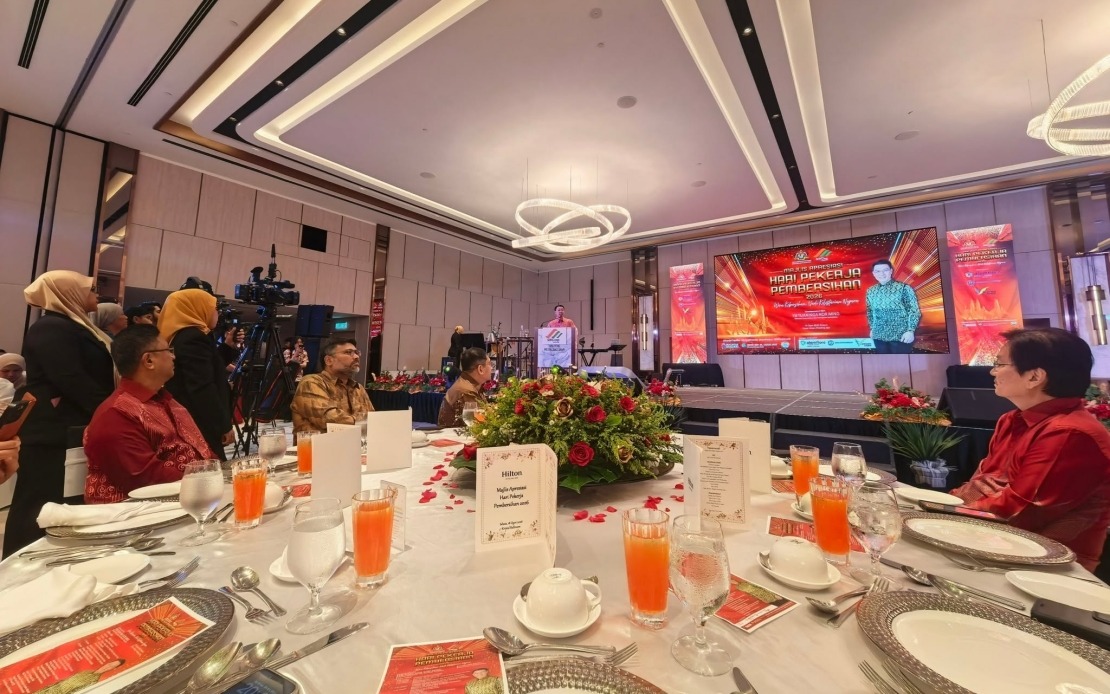
The Housing and Local Government Ministry has unveiled plans to nominate recipients of the 2026 Cleaning Workers Award for state honours, signalling a significant shift in how the nation formally recognises the contributions of those working in the country's sanitation sector. Minister Nga Kor Ming announced the initiative during the 2026 Cleaning Workers Appreciation Day in Petaling Jaya, describing it as an overdue acknowledgement of workers who maintain Malaysia's public spaces despite operating largely outside public view.
The proposal reflects growing ministerial recognition that frontline sanitation staff deserve institutional acknowledgement comparable to other professions. Currently, the solid waste management and public cleaning sector employs 26,889 workers through various concessionaires nationwide. Many of these individuals have committed remarkable tenures to their work—some serving for over a decade, whilst others have dedicated nearly three decades to the industry. These extended careers demonstrate deep professional commitment despite the physically demanding nature of the occupation and the social stigma that sanitation workers sometimes encounter.
Nga's announcement draws inspiration from Penang's established practice of honouring cleaning workers through state-level recognition programmes, which have operated successfully for almost a decade. By extending this model across other states through formal nomination processes to state palaces, the ministry seeks to ensure that exceptional performers in the cleaning sector receive honours directly from state rulers. This approach combines local relevance with national consistency, allowing each state to participate in recognising its own cleaning workforce whilst maintaining uniform standards of acknowledgement.
The involvement of Deputy Housing and Local Government Minister Datuk Aiman Athirah Sabu in the announcement underscores the proposal's institutional importance. Coordination between the ministry and the Secretary-General, Datuk Wira M Noor Azman Taib, ensures the nomination process operates smoothly and that award recipients are appropriately vetted before state palace presentation. This bureaucratic framework suggests the initiative represents a permanent policy shift rather than a one-time gesture.
Beyond formal honours, the ministry emphasises that recognising cleaning workers' contributions serves broader educational purposes. Nga stressed that public cleanliness remains fundamentally a shared responsibility rather than an obligation falling solely on sanitation workers. The 'Malaysia Bersih, Rakyat Sejahtera' aspiration represents a national commitment where citizens actively participate in maintaining environmental standards. This messaging is particularly relevant as Malaysia navigates rapid urbanisation, where waste management challenges intensify alongside economic development.
To reinforce this collective responsibility, the ministry is intensifying Community Service Order enforcement through the Solid Waste Management and Public Cleansing Corporation. As of mid-August, authorities had issued 14,807 offence notices during 2026, with 548 individuals undergoing community service in participating states. Of these, 419 have already completed their obligations whilst 129 continue serving. These figures demonstrate the practical implementation of Act 672, which frames littering enforcement not merely as punishment but as an educational mechanism instilling discipline and civic awareness.
This educational framing proves crucial for shaping long-term behavioural change. Rather than viewing community service purely punitively, the ministry positions it as a transformative experience that cultivates personal responsibility for environmental stewardship. When individuals spend time performing maintenance work themselves, they develop empathy for sanitation workers whilst internalising the value of cleanliness. This approach aligns with broader international best practices where restorative and educational frameworks prove more effective than punitive-only systems.
The practical recognition extended during the 2026 Cleaning Workers Appreciation Day ceremony reflected these principles. Seven workers received the formal award—two employed by Alam Flora Sdn Bhd and five by SWM Environment Sdn Bhd—whilst three additional recipients received financial contributions as welfare support gestures. These tangible benefits demonstrate the ministry's commitment to improving the material conditions and social status of cleaning sector workers, moving beyond symbolic recognition toward concrete support.
For Malaysian and Southeast Asian contexts specifically, this initiative addresses persistent challenges in sanitation workforce dignity and retention. Across the region, cleaning work remains undervalued despite being essential infrastructure. Formal state honours signal that competent cleaning workers deserve social respect and career recognition comparable to other professions. This messaging may influence younger Malaysians considering career paths, potentially attracting talent to an industry that often struggles with recruitment as alternatives appear more prestigious or remunerative.
The ministry's initiative also responds to practical workforce management concerns. With 26,889 workers dispersed across multiple concessionaires, maintaining motivation, consistency, and service standards presents ongoing challenges. Recognition programmes addressing individual excellence incentivise high performance whilst signalling to workers that their dedication matters institutionally. This human resources dimension extends beyond ceremonial appreciation to fundamental workforce development strategy.
Moreover, the state honours nomination approach demonstrates how federal initiatives can decentralise implementation through local rulers, respecting Malaysia's federal structure whilst maintaining national coherence. Each state palace conducting honour ceremonies strengthens connections between state leadership and essential workers, potentially enhancing local civic engagement and demonstrating that governance serves all economic classes. This federalised approach proves particularly valuable given Malaysia's diverse state governments and varying capacity for social recognition programmes.
The initiative's success ultimately depends on genuine implementation consistency and appropriate worker selection processes. Credible nomination procedures ensuring merit-based selection will strengthen the programme's integrity and impact. If executed carefully, extending state honours to cleaning workers could catalyse broader cultural shifts in how Malaysians perceive and interact with sanitation professionals, gradually elevating sector status whilst reinforcing national commitments to environmental cleanliness and social responsibility across all economic strata.

