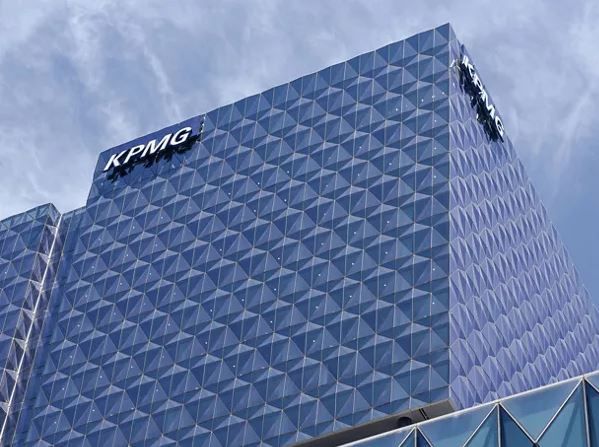
KPMG Australia's appointment of Michael Ebeid as its first independent chairman represents an attempt to restore governance credibility following months of turmoil, yet the move has immediately sparked parliamentary backlash that threatens to undermine the consultancy's rehabilitation efforts. Ebeid, a former chief executive of public broadcaster SBS, takes the helm as the embattled Big Four firm confronts a deepening crisis stemming from allegations that staff weaponised confidential client information to pursue lucrative audit contracts. His selection comes just one week after KPMG announced that its previous chairman and two senior partners would depart as part of a broader structural overhaul aimed at rebuilding stakeholder confidence.
The scandal that prompted this governance reshuffling came to public attention in March when Labor senator Deborah O'Neill invoked parliamentary privilege to disclose claims brought forward by a whistleblower earlier that year. The internal allegations centred on a particularly egregious incident: KPMG staff allegedly accessed confidential board papers belonging to property developer Lendlease and leveraged this privileged information to strengthen bids for major audit mandates. Such conduct—if substantiated—would represent a fundamental breach of professional ethics and client confidentiality, the cornerstone obligations that underpin the audit profession's social licence.
Ebeid has framed his appointment as an opportunity to demonstrate genuine transformation at an institution facing existential reputational damage. In prepared remarks, he committed to prioritising independent oversight, embedding integrity throughout the organisation, and driving the cultural and governance reforms necessary to restore market and client confidence. He signalled that accelerating the search for a permanent chief executive was his immediate priority, with the board aiming to confirm a replacement before the end of July. These statements suggest an acknowledgement that KPMG's credibility now depends on demonstrably fresh leadership and decision-making unconstrained by the institutional patterns that produced the scandal.
However, Ebeid's track record within KPMG itself problematises his appointment in ways that extend beyond conventional succession planning. Since 2024, he has served as an independent adviser to KPMG's national board, and since 2025 has held a position on the Asia-Pacific board—meaning he has been embedded within the firm's governance structures during the entire period when the whistleblower's complaints were being internally processed and mishandled. This proximity raises uncomfortable questions about oversight effectiveness and the quality of governance already being provided by those bodies.
Internal email correspondence released by the parliamentary committee investigating the scandal adds a sharper edge to these concerns. After O'Neill publicised the whistleblower allegations, Ebeid sent messages characterising the senator's parliamentary interventions as "very inappropriate and unfair" and dismissing several of her factual claims as "completely false". Notably, he contested the timeline of events that the whistleblower had documented, suggesting a degree of familiarity with the internal complaint that goes well beyond the arms-length scrutiny traditionally expected of independent board members. The committee's decision to publish this correspondence indicates that parliamentary overseers believe the public interest in transparency outweighs normal confidentiality conventions.
Greens senator Barbara Pocock articulated the parliamentary opposition with particular force, characterising Ebeid's appointment as a failure of basic ethical standards. She contended that his prior knowledge of the complaint, combined with his apparent scepticism about the whistleblower's credibility, creates precisely the kind of conflict of interest that independent governance is supposed to eliminate. Pocock warned that elevating someone with such demonstrable pre-formed views about the scandal represents a perpetuation of the cultural problems the firm claims to be addressing. The senator's assessment—that Ebeid's leadership risks entrenching rather than reforming KPMG's institutional pathologies—articulates the broader perception that the firm is attempting superficial change rather than root-and-branch transformation.
This appointment controversy arrives at a particularly sensitive moment for Australia's accounting industry. The center-left Labor government has signalled serious consideration of dismantling the Big Four structure, responding to a pattern of repeated scandals that have afflicted major audit firms. Such regulatory intervention would be extraordinarily disruptive, potentially forcing structural separation of consulting and audit divisions, or even dismantling integrated firms entirely. For KPMG specifically, this political backdrop means that restoring genuine stakeholder confidence is not merely a matter of institutional reputation—it represents an existential business imperative.
The four-investigation trajectory surrounding the Lendlease whistleblower complaint illustrates why parliamentary and public scepticism has hardened. Three prior internal inquiries concluded that no wrongdoing had occurred, prompting KPMG to finally commission a fourth external investigation after the scandal became public. This sequence suggests either profound investigative dysfunction or institutional resistance to acknowledging misconduct. Either interpretation undermines the credibility of internal governance processes, raising legitimate doubts about whether any chairman operating within existing power structures can deliver genuine reform.
Ebeid's appointment also raises questions about the quality of the independent director talent pool available to major professional firms. If the most experienced and credible candidates available to assume a governance leadership position are themselves individuals with prior embedded relationships and documented pre-formed views about the very scandals they are meant to investigate, this suggests a broader challenge in recruiting genuinely independent oversight to large professional partnerships. The traditional insularity of Big Four governance cultures may constrain the availability of truly independent candidates with sufficient credibility and industry knowledge to be taken seriously by boards and stakeholders.
For Malaysian readers and regional observers, this Australian controversy carries important implications. Southeast Asia's professional services markets increasingly rely on Big Four audit and consulting expertise, particularly as regional firms expand governance and compliance operations. If systemic cultural problems afflict these international firms, those pathologies risk being exported to local markets where regulatory oversight may be less developed. The Australian scandal demonstrates that reputational crises in professional services can escalate into existential threats, potentially triggering regulatory intervention far more severe than internal reforms.
The KPMG case also illustrates how whistleblower protections and parliamentary mechanisms can expose institutional failures that internal governance mechanisms fail to address. This has direct relevance to Malaysia's ongoing efforts to strengthen corporate governance frameworks and whistleblower protections across the professional services sector. The question of whether independent board members can genuinely challenge institutional cultures and entrenched power dynamics remains unresolved at KPMG, and that unresolved question will likely shape the trajectory of the firm's recovery attempts over the coming months.

