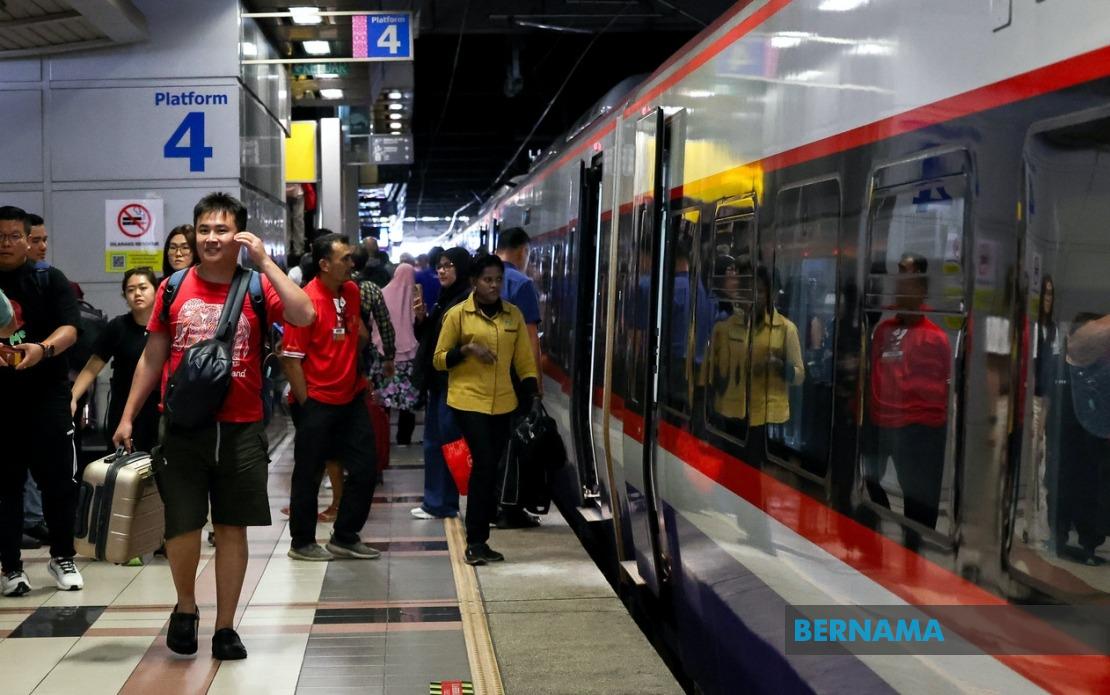
Keretapi Tanah Melayu Berhad (KTMB) has unveiled an expanded rail capacity initiative aimed at facilitating voter movement ahead of the Johor state election this weekend. The national railway operator announced it would deploy 7,464 supplementary seats across its Electric Train Service (ETS) network, focusing on critical corridors connecting the Klang Valley to the southern state. This latest move responds directly to surging public demand, as previous batches of discounted tickets released on June 19 were entirely exhausted within days of going on sale.
The expansion encompasses two primary routes that form vital transit arteries during election periods. Services will operate on both the KL Sentral to JB Sentral and return trajectory, as well as the JB Sentral to Gemas shuttle and its reciprocal path. By designating these dual corridors for enhancement, KTMB aims to absorb the anticipated surge in passenger numbers as voters journey homeward to cast ballots in their constituencies. The operator has scheduled the reinforced service to commence on July 10 and extend through July 12, providing a three-day window of elevated capacity to accommodate the anticipated electoral movement.
The operational strategy involves introducing four supplementary train departures on each of the two main routes during the specified period. This deployment structure yields a daily capacity augmentation of 2,488 seats, substantially amplifying the infrastructure available to travellers. Such specific numbers reveal the precision with which KTMB has calculated demand based on prior experience and ticketing data. The phased approach, adding trains rather than merely extending existing services, reflects operational constraints inherent in managing rail schedules during peak periods across Malaysia's most congested transport corridor.
To sweeten the proposition and incentivise modal shift toward rail during the electoral period, KTMB has implemented a promotional pricing structure offering a twenty percent reduction against standard fares. This discount applies uniformly across all newly added services throughout the three-day operational window. For cost-conscious voters—a demographic particularly sensitive to transport expenditure—the combined effect of expanded availability and reduced pricing creates meaningful accessibility improvement. The measure also aligns with broader transport policy objectives favouring reduced private vehicle usage during high-traffic periods, though such environmental considerations were not explicitly articulated in the operator's announcement.
Ticket sales protocols reflect KTMB's staggered approach to managing demand distribution. The railway company opened bookings for the JB Sentral-Gemas-JB Sentral route at 15:00 on July 7, allowing commuters heading southwestward priority access. The KL Sentral route sales commenced the following morning at 09:00, introducing a sequential opening designed to prevent immediate system saturation from concentrated demand surges. This temporal sequencing suggests KTMB learned from operational challenges faced during previous peak periods when simultaneous booking openings resulted in website crashes and system congestion.
The railway operator strongly encourages digital ticketing adoption, directing passengers toward the KITS Style mobile application, KTMB's official website portal, and kiosk installations at designated stations. This multi-channel approach accommodates diverse user preferences and technological competency levels whilst simultaneously reducing physical ticketing infrastructure pressure at busy terminals. The emphasis on cashless transactions reflects contemporary payment system trends and reduces operational friction during periods of unusually elevated passenger throughput, when manual ticketing processes become significantly slower and more error-prone.
Practical guidance for intending passengers underscores the operational realities of managing railways during demand spikes. KTMB advises travellers to arrive thirty minutes prior to scheduled departure, acknowledging that boarding queues and security screening require substantially more time during election periods than typical weekdays. The railway company's explicit notification that platform access closes five minutes pre-departure represents a strict boundary, preventing the casual latecomers who might disrupt service schedules. Such prescriptive directives, whilst perhaps appearing unnecessarily rigid to casual observers, reflect hard-won operational experience accumulated through managing similar electoral movements in previous state and federal election cycles.
The responsive nature of this initiative demonstrates adaptive capacity within Malaysia's transport infrastructure ecosystem. Rather than treating electoral periods as exceptional disruptions requiring ad-hoc crisis management, KTMB appears to have incorporated election-cycle travel patterns into systematic capacity planning. The progression from initial June offerings through successive expansions suggests a data-driven methodology wherein each phase's ticketing success informs subsequent expansion decisions. This represents a maturing approach to transport demand management during predictable peak periods, contrasting with older models reliant upon reactive rather than anticipatory responses.
For the broader Malaysian context, particularly within Southeast Asia's transportation ecosystem, this initiative illustrates how rail infrastructure can serve democratic processes effectively when operators invest in deliberate capacity augmentation. The relatively modest cost of providing supplementary services—certainly far lower than the economic inefficiency generated by road congestion from electoral traffic—positions rail as essential democratic infrastructure. For voters, particularly those requiring cost-effective homebound travel during periods when private transport becomes prohibitively expensive or logistically challenging, such offerings represent tangible policy support for electoral participation. Enquiries may be directed to KTMB's Call Centre at 03-9779 1200 or through the operator's official social media platforms.
The willingness of Malaysia's transport authorities to accommodate electoral movement through targeted infrastructure deployment reflects democratic values embedding themselves within institutional planning. When state agencies proactively reduce friction for citizens exercising voting rights, they communicate tangible commitment to inclusive political participation. For Southeast Asian nations examining transport policy integration with electoral systems, KTMB's approach offers a replicable model demonstrating that operational responsiveness and citizen convenience need not conflict with fiscal discipline or sound management practice.

