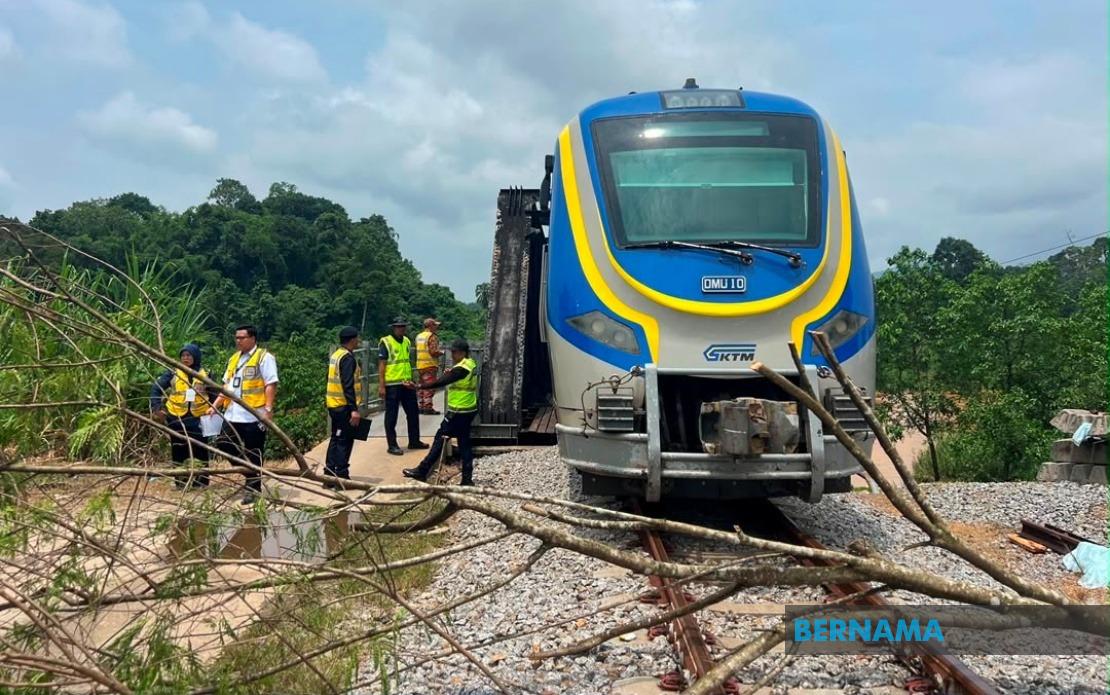
Keretapi Tanah Melayu Berhad (KTMB) has concluded a comprehensive emergency training programme on its EX-Kemubu route in Kuala Krai, designed to stress-test the railway operator's crisis response systems in one of the country's most challenging operational environments. The exercise brought together approximately 350 participants spanning 11 agencies to evaluate how effectively the national rail network can manage and coordinate emergency situations in areas where geographic isolation significantly complicates rescue efforts.
The training focused on three critical operational dimensions: the accessibility of accident sites for emergency responders, the speed at which rescue teams can mobilise after receiving incident notification, and the efficiency of information sharing between KTMB and external emergency services. Khairul Naim Johdi, KTMB's Occupational Safety, Health and Environment general manager, emphasised that these elements form the backbone of any credible emergency preparedness framework for rail operations, particularly given the specific vulnerabilities that the Kemubu route presents to both passengers and staff.
The choice of the EX-Kemubu corridor as the training ground reflects the route's genuine operational hazards. The railway line traverses terrain adjacent to rivers and passes through sparsely populated areas where road networks remain underdeveloped, creating what safety professionals term a compounded risk scenario. Should a genuine accident occur, rescue teams would face significant logistical obstacles in reaching an incident site promptly, a reality that demands specialised training and pre-coordinated protocols that acknowledge these geographic constraints rather than ignoring them.
Access represents perhaps the most acute challenge facing emergency responders in rural rail environments across Malaysia and the broader region. Unlike urban corridors where multiple roads and established infrastructure facilitate rapid deployment, the Kemubu route's isolation means that rescue vehicles may require extended travel times to reach accident scenes. This fundamental reality shaped the training's primary focus, with Khairul Naim noting that improving response mechanisms in remote areas requires explicit acknowledgment of access delays and realistic planning around them. The exercise therefore sought to establish what constitutes an acceptable response timeline given these geographic realities, and how agencies can work within those constraints to maximise life-saving potential.
The participating organisations reflected the multi-agency nature of contemporary railway emergency management in Malaysia. The Royal Malaysia Police, Malaysian Fire and Rescue Department, Ministry of Health, Malaysian Civil Defense Force, and Department of Social Welfare each brought specialist capabilities that, when properly coordinated, create a comprehensive response architecture. However, coordination itself remains challenging when agencies operate under different command structures, communication protocols, and organisational priorities. The training provided an opportunity to identify friction points in this system and test mechanisms for resolving them under simulated pressure.
KTMB's protocol structures information flow through its operations control centre, which serves as the critical hub receiving initial reports from train crews and disseminating alerts to external agencies. The effectiveness of this notification chain directly determines how quickly rescue resources begin moving toward an incident. The training evaluated whether KTMB's internal communication systems can reliably transmit actionable information within timeframes that permit rapid external response, a particularly important consideration given that railway incidents often unfold with minimal warning and require decisions to be made in genuine emergency conditions rather than the controlled training environment.
The evaluation methodology employed what participants termed a 'post-mortem' analysis, wherein response delays, actions taken by first responders, access challenges encountered, and information transmission accuracy were all documented and assessed. This systematic debriefing process allows KTMB and partner agencies to identify specific improvements rather than generating only general observations. Feedback loops of this nature prove invaluable for iterative enhancement of emergency systems, as they highlight which aspects of coordination functioned smoothly and which required intervention or modification.
Large-scale exercises of this magnitude occur annually, rotating across KTMB's four operational regions to ensure that all railway corridors receive periodic evaluation. Between these major drills, smaller-scale training activities occur throughout the year, maintaining staff familiarity with emergency procedures and keeping response capabilities sharp. This tiered approach reflects established best practices in emergency management, recognising that large-scale exercises serve different purposes than routine training, and both remain necessary for system maintenance.
Internal coordination emerged as a secondary focus area requiring attention, particularly regarding how KTMB staff communicate with each other during incidents and how these internal communications connect to external notification processes. The operator is investing in ensuring that personnel understand their respective roles in emergency scenarios, from initial incident recognition through passenger evacuation procedures. Such clarity becomes essential when real incidents occur, as confusion regarding responsibilities can delay critical actions and compound consequences.
Passenger evacuation represents a specialised skill requiring both training and psychological preparation among staff who may face panicked passengers while maintaining their own composure and following established procedures. The Kemubu route's characteristics, including its proximity to waterways and rural setting, create scenarios where evacuation might require coordinated response between railway staff and rescue agencies, further underlining why inter-agency training proves valuable rather than optional.
For Malaysian travellers and regional observers, these emergency preparedness exercises reflect a growing maturation in how the country's critical infrastructure operators approach safety management. The willingness to conduct realistic training in genuinely challenging environments, combined with systematic evaluation of results, suggests that KTMB takes seriously its obligation to passengers travelling remote routes. The programme demonstrates that railway safety in developing rail markets increasingly incorporates sophisticated emergency response planning informed by operational realities rather than theoretical ideals.
The implications extend beyond KTMB itself. As Southeast Asian nations invest in expanding rail networks into less developed areas, the model of routine emergency training adapted to local geographic conditions offers useful guidance for other operators and governments. The Kemubu exercise illustrates how systematic preparation and multi-agency coordination can mitigate risks inherent in extending modern rail service into challenging terrain, a pattern that will likely characterise railway development across the region for decades ahead.

