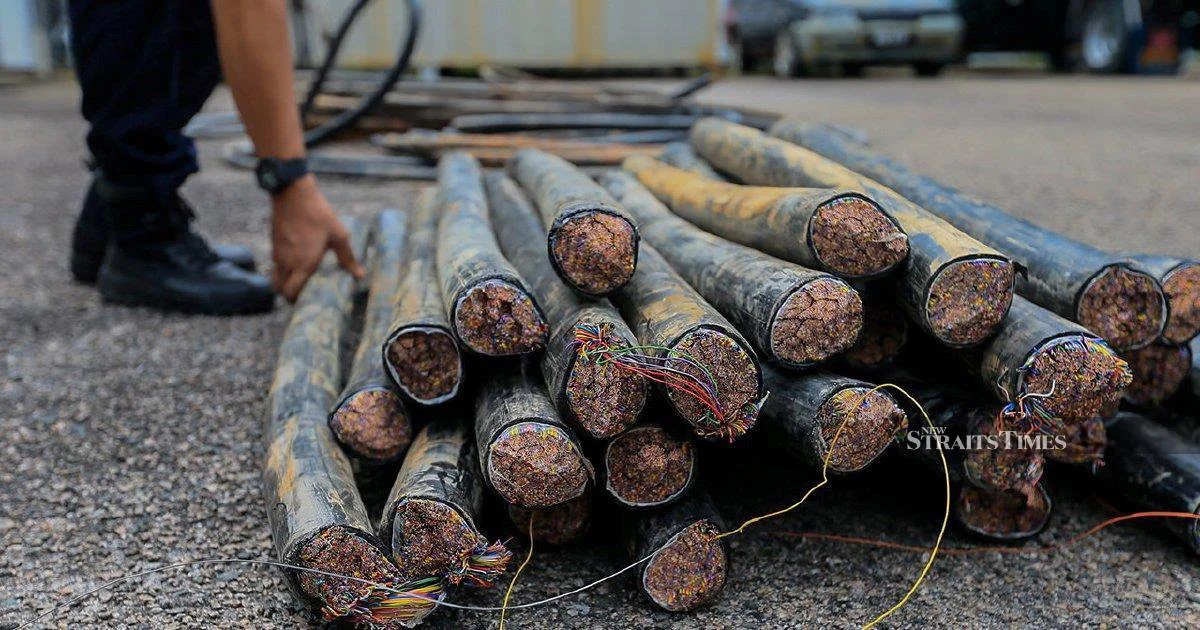
The Kuala Lumpur Police have made notable headway against cable theft, one of the city's most persistent and costly crimes, with incident numbers plummeting to levels not seen in recent years. Between January and May of this year, authorities registered just 71 reports of cable theft across the federal territory, a dramatic reversal compared to the full-year tally of 205 cases throughout 2024. The reduction underscores the impact of enhanced enforcement strategies and targeted operational deployments that have been rolled out in response to what had become an epidemic of copper and telecommunications cable pilfering across the Malaysian capital.
This downward trajectory represents more than just a statistical improvement. Cable theft has historically inflicted substantial economic damage on Kuala Lumpur's infrastructure and the businesses that depend on uninterrupted connectivity. The theft of copper wiring and fibre-optic cables disrupts telecommunications networks, causes temporary power outages in residential and commercial zones, and forces utility companies to redirect significant resources toward repairs and preventative measures. Each incident carries hidden costs extending far beyond the replacement value of the stolen materials, affecting public services, commercial operations, and the daily lives of residents who experience service interruptions.
The police force's commitment to curbing this crime category is evident in the arrest figures compiled during the initial months of 2025. So far this year, officers have taken 85 suspects into custody in connection with cable theft offences. This enforcement intensity suggests a shift toward apprehending those involved in the supply chain of cable theft, moving beyond reactive patrols to more proactive investigation and intelligence-gathering operations. The arrest rate indicates that police are not merely responding to incidents but actively pursuing perpetrators and disrupting the networks that facilitate the illegal trade in stolen materials.
For residents and businesses in Kuala Lumpur, the improvement carries tangible benefits. Reduced cable theft translates into more stable utility services, fewer unexpected power outages, and lower costs associated with system downtime and replacement infrastructure. The telecommunications sector, in particular, stands to gain from more consistent service availability and reduced pressure on maintenance budgets. These improvements can cascade through the economy, supporting business continuity and enhancing the quality of life for hundreds of thousands of people who rely on uninterrupted power and data connectivity.
The strategic approach appears to have incorporated lessons from previous enforcement cycles. Rather than treating cable theft as an isolated criminal issue, authorities have seemingly adopted a more holistic strategy that targets not just individual thieves but the broader ecosystem enabling the trade. This encompasses cooperation with scrap metal dealers, heightened vigilance at collection points, and coordination with utility companies in identifying vulnerable infrastructure. Intelligence sharing between police units and private sector stakeholders has likely played a crucial role in transforming what was becoming an intractable problem into one showing genuine improvement.
However, the context of comparison warrants scrutiny. The 2024 figure of 205 cases represents an earlier baseline, but whether that year itself was abnormally high or part of an upward trend remains unclear from available data. A more complete picture would require understanding whether the current reduction represents a return to pre-2024 levels or a genuine breakthrough achieved through new methods. Either way, the current trajectory is encouraging and suggests that sustained effort can yield real results against organised property crime.
The regional dimension of this issue deserves consideration as well. Copper and cable theft is not unique to Kuala Lumpur but reflects a broader Southeast Asian challenge driven by commodity prices and the ready market for scrap materials. Other major cities across Malaysia and the region have grappled with similar spikes in theft targeting infrastructure. If Kuala Lumpur's approach proves sustainable and replicable, the strategies employed could serve as a model for police forces elsewhere facing comparable challenges. This would position the city as a centre of innovation in urban crime prevention rather than simply a jurisdiction struggling with persistent criminality.
Maintaining this momentum will require consistent resource allocation and continued coordination between police, utility companies, and local authorities. The danger inherent in any crime-reduction success is complacency, where declining incident numbers prompt reductions in preventative effort that then allows criminal activity to resurge. Police leadership and the government will need to ensure that the operational intensity driving current results is sustained even as the immediate crisis recedes from public attention and media headlines.
Looking forward, the trajectory set during these opening months of 2025 suggests that Kuala Lumpur may finally be turning a corner on a problem that has frustrated residents, businesses, and authorities for years. The combination of 71 cases reported and 85 arrests achieved within just five months demonstrates that effective policing can address even entrenched criminal patterns. For a city committed to maintaining its status as a modern, reliable metropolis, the restoration of stability in its infrastructure through reduced cable theft represents progress worth building upon and protecting.

