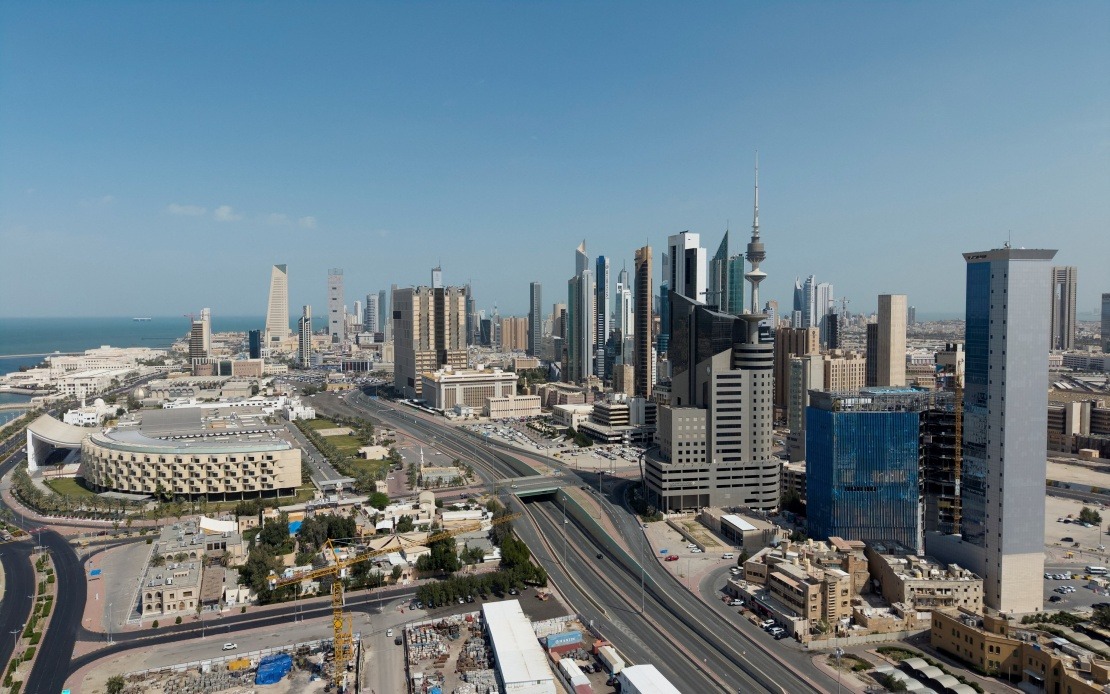
Kuwait unveiled a major financial mechanism this week to address the deteriorating condition of its physical infrastructure, announcing the establishment of an emergency response fund capitalized at US$100 million. The Kuwait Emergency Response Fund represents a significant policy shift in how the Gulf state intends to manage the consequences of escalating regional military confrontations, moving beyond conventional budgetary processes to create dedicated financing channels for rapid recovery efforts.
The initiative, unveiled by Kuwaiti Foreign Minister Sheikh Jarrah Jaber Al-Ahmad Al-Sabah during a public announcement, will be administered through the Kuwait Fund for Arab Economic Development (KFAED), one of the region's most respected development financing institutions. This institutional choice signals Kuwait's intent to apply proven project assessment methodologies and international standards to the allocation process, rather than implementing ad-hoc emergency spending.
Official Kuwaiti statements characterized the damage to national infrastructure as stemming from what the government terms "Iranian aggression," reflecting the country's position within the broader geopolitical dispute that has intensified dramatically over recent months. Kuwait, as a small state positioned between Iran and Saudi Arabia, faces particular vulnerability to the consequences of escalating tensions between regional powers, making infrastructure resilience a matter of both economic and national security concern.
The KFAED's Acting Director General, Waleed Al-Bahar, provided clarity on how the fund will operate, explaining that the institution will evaluate incoming financing requests from damaged sectors and apply prioritization criteria to maximize impact. This methodical approach contrasts with emergency-only spending, suggesting Kuwait intends to use the fund as a medium-term recovery instrument rather than a temporary measure. The deliberate structure implies planning for a prolonged reconstruction period, acknowledging that regional tensions may persist beyond the immediate crisis.
A critical component of Kuwait's strategy involves mobilizing contributions beyond the initial US$100 million. Both government institutions and the private sector have been explicitly invited to supplement the fund, reflecting recognition that the damage scale likely exceeds the opening allocation. This call for stakeholder participation also distributes burden-sharing across Kuwait's economic base and creates incentive structures for businesses with assets at risk to engage directly in recovery efforts.
The establishment of this fund emerged from a formal cabinet decision, indicating that the measure carries significant weight within Kuwait's governance structure rather than representing a mere administrative convenience. Such formalization demonstrates the seriousness with which authorities view the infrastructure challenges and the necessity of creating a dedicated institutional framework separate from ordinary budget appropriations.
The timing of Kuwait's announcement reflects the escalation of regional military confrontations that began in February when the United States and Israel conducted coordinated strikes against Iranian targets. Iran responded with substantial retaliatory attacks involving missiles and drones directed at both Israeli locations and American military installations across neighboring nations, fundamentally altering the regional security environment. Kuwait, hosting significant American military assets and with substantial economic infrastructure vulnerable to spillover effects, faces direct exposure to these dynamics.
For Malaysia and other Southeast Asian nations, Kuwait's response offers a template for how smaller nations navigate infrastructure vulnerability amid great power competition. The approach of institutionalizing emergency financing rather than relying solely on conventional budgeting provides lessons for managing economic disruption from regional conflicts. Malaysia's own experience with infrastructure challenges during periods of geopolitical uncertainty—whether from maritime disputes, trade tensions, or security concerns—suggests potential relevance for how similar mechanisms might be adapted for Southeast Asian contexts.
The fund's establishment also highlights the financial burden imposed on regional economies by geopolitical instability. Beyond immediate military costs, damage to civilian infrastructure diverts substantial capital that could otherwise support development priorities. Kuwait's willingness to commit US$100 million specifically to this purpose underscores how conflict-related costs extend far beyond defense spending, affecting economic growth trajectories and fiscal priorities for years afterward.
Looking forward, the success of Kuwait's Emergency Response Fund will depend heavily on efficient project evaluation, transparent allocation processes, and the willingness of both domestic and international contributors to sustain funding. The mechanism also implicitly acknowledges that regional tensions may persist, suggesting Kuwait's government anticipates ongoing infrastructure challenges rather than viewing the recent military exchanges as isolated incidents.
For international observers monitoring Gulf stability, Kuwait's pragmatic institutional response demonstrates how smaller states attempt to maintain economic functionality amid larger geopolitical conflicts. The fund represents neither military escalation nor passive acceptance of damage, but rather calculated investment in resilience—a posture likely to characterize smaller nations' approaches across multiple regions as great power competition continues reshaping global security landscapes.

