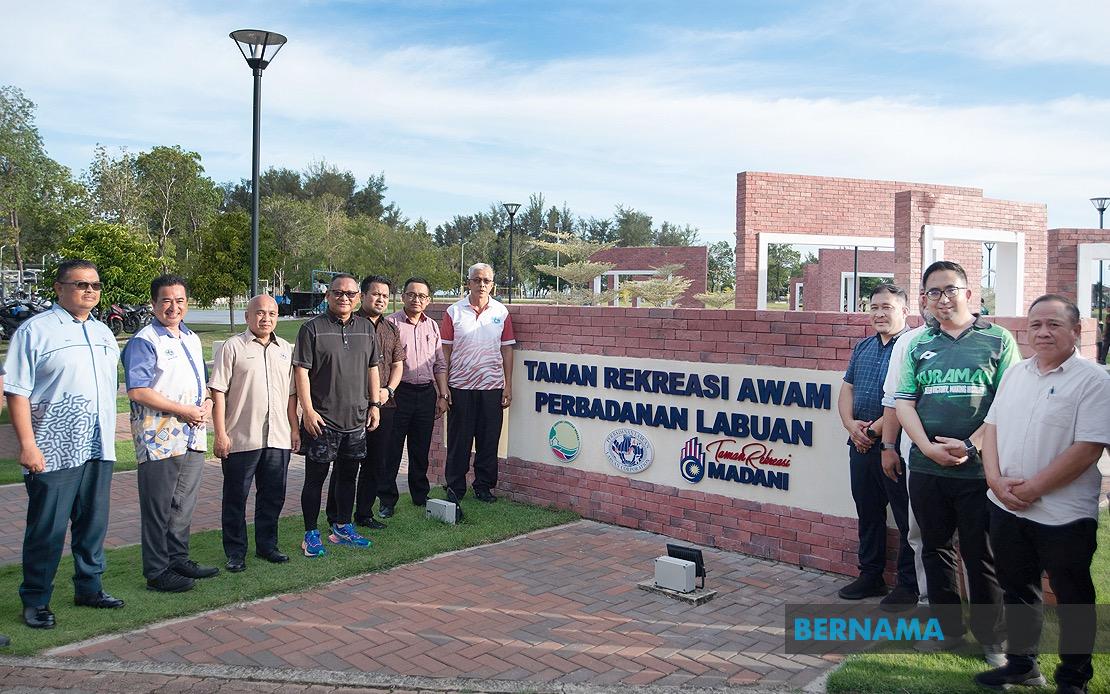
Labuan has marked a significant step toward improving public health infrastructure with the official opening of the Labuan Public Recreation Park at Tanjung Purun, situated in the commercial heart of the federal territory. The RM495,382 renovation project, delivered under the government's Madani Recreation Park initiative, represents a strategic investment in community wellness and urban renewal that reflects broader national priorities around preventive health and quality-of-life improvements for residents in outlying regions.
The transformation of this downtown venue carries particular importance for Labuan, a financial services hub that has historically struggled to balance rapid economic development with adequate recreational amenities for the broader population. Rithuan Ismail, chief executive of Labuan Corporation, emphasised during the opening ceremony that the renovated space embodies the organisation's commitment to constructing inclusive public areas where citizens of varying ages and fitness levels can participate in physical activities whilst simultaneously strengthening community relationships. This multipurpose approach to park design reflects international best practices in public space management, where facilities increasingly serve dual functions as exercise venues and social hubs.
The project origins trace to a recognition that the site, previously known as the LDA Field, operated significantly below its potential despite occupying a prime downtown location. The National Landscape Department, working through the Ministry of Housing and Local Government, identified the parcel in 2024 as suitable for redevelopment because of its accessibility, adequate land dimensions, and absence of tenure complications that often delay similar initiatives. Officials selected this location precisely because its central position should facilitate regular usage by diverse demographics, from schoolchildren to senior citizens, without requiring extended travel times.
Before the upgrade, the area functioned as an underutilised public space plagued by multiple deficiencies. Inadequate electrical lighting discouraged evening usage when tropical climates make outdoor exercise most comfortable. Recreational infrastructure remained minimal, offering little incentive for families or fitness-focused individuals to visit regularly. Additionally, ageing casuarina trees created safety hazards that further diminished the site's appeal and necessitated their removal during renovation. These compounding issues had transformed what should have been a community asset into a largely abandoned space, representing missed opportunity in an urban context where public amenities directly influence resident satisfaction and public health outcomes.
The renovated facility now incorporates several contemporary recreational features designed to accommodate varied activity preferences. An 800-metre jogging and walking track provides cardiovascular exercise opportunities, whilst outdoor fitness equipment enables strength training without membership costs that deter lower-income residents. Concrete seating areas facilitate rest, socialisation, and informal gatherings, addressing the social dimension of public recreation that research increasingly confirms influences sustained usage patterns. A landscaped garden component enhances aesthetic appeal and creates shaded microenvironments where visitors can escape tropical heat, practical considerations that Malaysian park designers must prioritise for afternoon and early-evening usability.
Rithuan indicated that the Labuan Corporation has identified additional recreational amenities for imminent installation, including three multipurpose courts designated for pickleball and sepak takraw. This phased approach to facility expansion demonstrates responsiveness to community recreational preferences whilst managing budget sequencing. The inclusion of sepak takraw, a traditional Southeast Asian sport with deep cultural roots, suggests deliberate efforts to honour local sporting heritage alongside promoting contemporary activities like pickleball that appeal to younger demographics and expatriate residents.
Successful operation of such facilities depends fundamentally on public stewardship and maintenance compliance. Rithuan explicitly appealed to residents to practise responsible usage and contribute to facility preservation, framing maintenance as a collective community responsibility rather than exclusively a government obligation. This messaging aligns with international municipal management philosophies that link civic pride to physical infrastructure condition and recognise that public perception of facility quality influences usage rates and long-term viability.
For Malaysian regional policymakers, the Labuan project offers instructive examples of how strategic public investment in smaller urban centres can yield measurable lifestyle improvements. Federal territories and smaller states often face constraints in capital budget allocation, yet targeted renewal of existing underutilised public spaces frequently generates better returns than acquiring new land. The RM495,382 investment converts a liability into an asset serving multiple policy objectives simultaneously—promoting preventive health, generating daytime activity that enhances safety perceptions, creating accessible exercise opportunities regardless of socioeconomic status, and strengthening community cohesion through shared public facilities.
The park's emphasis on inclusivity and accessibility for all ages positions it as particularly valuable for Labuan's demographic composition and lifestyle patterns. A financial centre requiring extended working hours benefits substantially from accessible evening recreational spaces where residents can exercise and unwind after work. Families with children, elderly residents seeking low-impact activity options, and fitness enthusiasts all find relevant amenities within a single venue, improving overall utilisation efficiency compared to specialist facilities serving narrow demographic segments.
The Madani Recreation Park initiative funding mechanism, operating through the National Landscape Department and Ministry of Housing and Local Government, demonstrates how coordinated inter-agency collaboration can deliver public infrastructure that individual municipalities might struggle to finance independently. This model holds particular relevance for smaller Malaysian urban centres seeking to enhance quality-of-life offerings whilst managing constrained revenue bases. Standardised funding frameworks with consistent design parameters can reduce planning delays and administrative friction whilst ensuring minimum facility quality standards across diverse geographical contexts.
Looking forward, the success of Labuan's recreation park hinges on whether the facility achieves high sustained usage rates and maintains physical condition through adequate maintenance and community cooperation. Early momentum from inaugural activities and media coverage typically generates initial traffic, but long-term viability depends on the facility becoming genuinely embedded in residents' daily routines and leisure patterns. Labuan Corporation's continued investment in supplementary amenities signals institutional commitment to this outcome, though achieving such integration ultimately requires genuine community ownership and regular participation across demographic groups.

