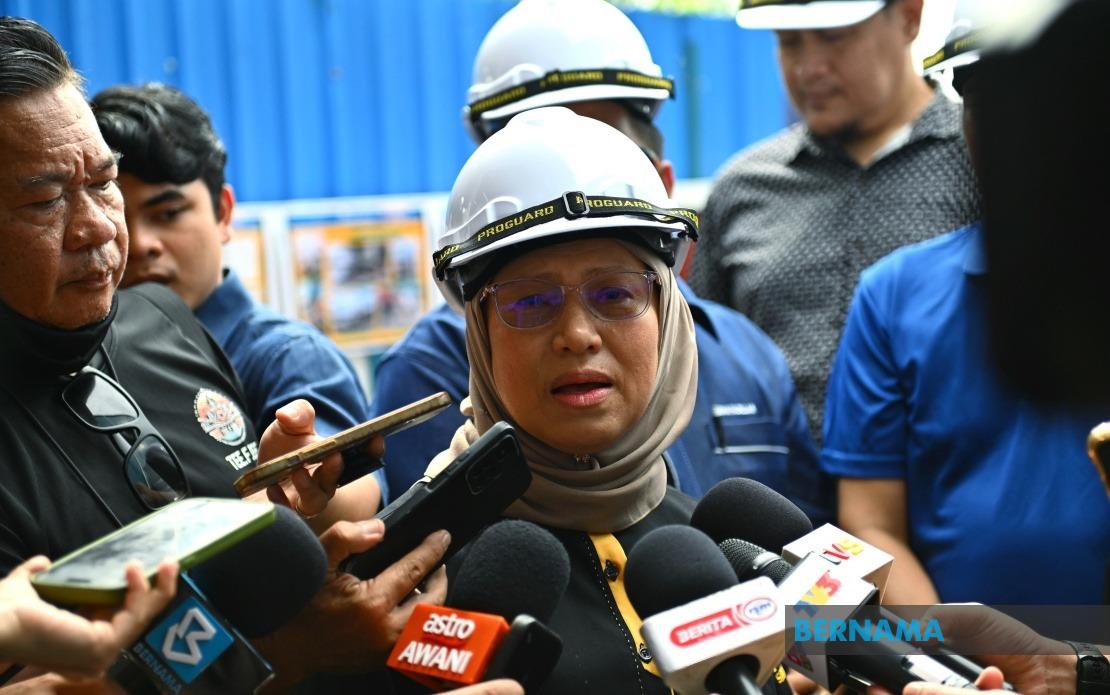
The Social Welfare Department has directed a kindergarten in Langkawi to cease operations immediately pending the completion of a police investigation into serious allegations of child neglect and mistreatment. Women, Family and Community Development Minister Datuk Seri Nancy Shukri disclosed the directive on July 18, emphasising that while the Education Ministry holds primary regulatory responsibility for kindergartens, her department maintains a critical role in safeguarding children's welfare across all institutional settings.
The investigation, initiated following a complaint lodged by a former kindergarten teacher, examines claims that encompass multiple forms of alleged mistreatment. According to Langkawi district police chief ACP Khairul Azhar Nuruddin, the allegations include forcing children to sleep directly on floors without bedding, confining youngsters in toilet facilities, and other instances of improper handling. These allegations, if substantiated, would represent serious breaches of basic childcare standards and raise profound questions about institutional oversight in early childhood education settings across Malaysia.
Langkawi District Police are conducting a comprehensive investigation under Section 31(1) of the Child Act 2001, which addresses child abuse and neglect matters. The investigative process includes detailed examination of closed-circuit television footage from the kindergarten premises, collection of testimonies from multiple witnesses, and systematic documentation of evidence. This methodical approach recognises the complexity and sensitivity inherent in child protection cases, where corroborating evidence becomes essential for establishing factual bases for any potential charges.
Minister Shukri stressed that the Social Welfare Department's child protection officers are actively collaborating with police investigators and the District Education Office to gather comprehensive information and compile necessary reports. This inter-agency coordination reflects Malaysia's evolving approach to child safeguarding, which acknowledges that effective protection requires seamless cooperation across multiple government departments rather than siloed responses from individual agencies. The involvement of the education office is particularly significant, as it signals recognition that schools and kindergartens occupy a unique position as environments where state actors have direct responsibility for children's safety and wellbeing.
The kindergarten operator has been formally cautioned regarding matters pertaining to children's care, safety, and general welfare standards. Authorities have reminded the institution of its obligations to comply with all applicable regulations governing early childhood education facilities. Minister Shukri made clear that any violations of legal requirements identified during the investigation would result in appropriate enforcement action, signalling the government's determination to pursue accountability where institutional failures are proven.
For parents with children previously attending or currently enrolled at the facility, the directive to cease operations creates immediate practical challenges regarding childcare arrangements and educational continuity. The temporary closure, while necessary for investigative purposes, disrupts families' daily routines and raises questions about whether affected parents will receive guidance on alternative placements or transitional support. The minister advised parents to follow police instructions, a somewhat vague directive that suggests further communication from law enforcement regarding evidence-gathering procedures that may involve interviews with children.
The incident underscores broader concerns about quality assurance and compliance monitoring within Malaysia's early childhood education sector. While kindergartens remain regulated primarily by the Education Ministry, questions arise regarding the adequacy of inspection protocols, the responsiveness of oversight bodies to concerns raised by staff members, and whether current regulatory frameworks sufficiently emphasise child safety metrics. The emergence of serious allegations at a kindergarten suggests that existing oversight mechanisms may not be detecting and preventing institutional failures at earlier stages.
The case also highlights the critical role played by internal witnesses, particularly educators who occupy the most direct supervisory positions within these institutions. The willingness of the former kindergarten teacher to file a formal complaint, despite potential professional consequences, demonstrates the importance of establishing robust whistleblower protections and clear reporting mechanisms within early childhood institutions. Malaysia's child protection framework would benefit from stronger provisions ensuring that staff members can report concerns without fear of retaliation or career damage.
Minister Shukri, who represents Santubong in Parliament, was visiting Langkawi to inspect progress on the Pending Jetty upgrading project, a RM600,000 infrastructure development now approaching ninety percent completion. The project, scheduled for completion on August 24, involves constructing additional jetty sections and staircases totalling approximately twelve to thirteen metres in length, intended to enhance connectivity between Pending Jetty and the Kampung Muhibbah Seberang area within her constituency. The minister's presence in the district provided the occasion for her to address the kindergarten matter publicly, though the intertwining of infrastructure announcements with child protection disclosures in a single public appearance reflects the multiplex nature of ministerial responsibilities.
The investigation's outcome will likely influence how Malaysian authorities approach regulation of early childhood facilities moving forward. Should the allegations prove substantiated, the case may catalyse wider reviews of kindergarten licensing requirements, staff training standards, and inspection frequencies. Conversely, if investigation reveals that allegations were unsubstantiated or exaggerated, the matter would underscore the importance of careful evidence evaluation before imposing operational suspensions that affect hundreds of families. Either way, the case demonstrates that child protection concerns within educational settings demand swift, transparent, and coordinated governmental responses that prioritise children's safety above institutional reputation considerations.
For Malaysian families utilising private kindergartens, the incident serves as a reminder to scrutinise facilities' safety records, staff qualifications, surveillance infrastructure, and responsiveness to parental concerns. The Social Welfare Department's involvement signals that parents who observe concerning practices have legitimate channels for reporting institutional failures, though awareness of these mechanisms remains unevenly distributed across the population. The kindergarten closure, pending investigation completion, represents the state's capacity to intervene decisively when children's wellbeing faces documented risk, though the investigation's duration and final determinations remain to be established.

