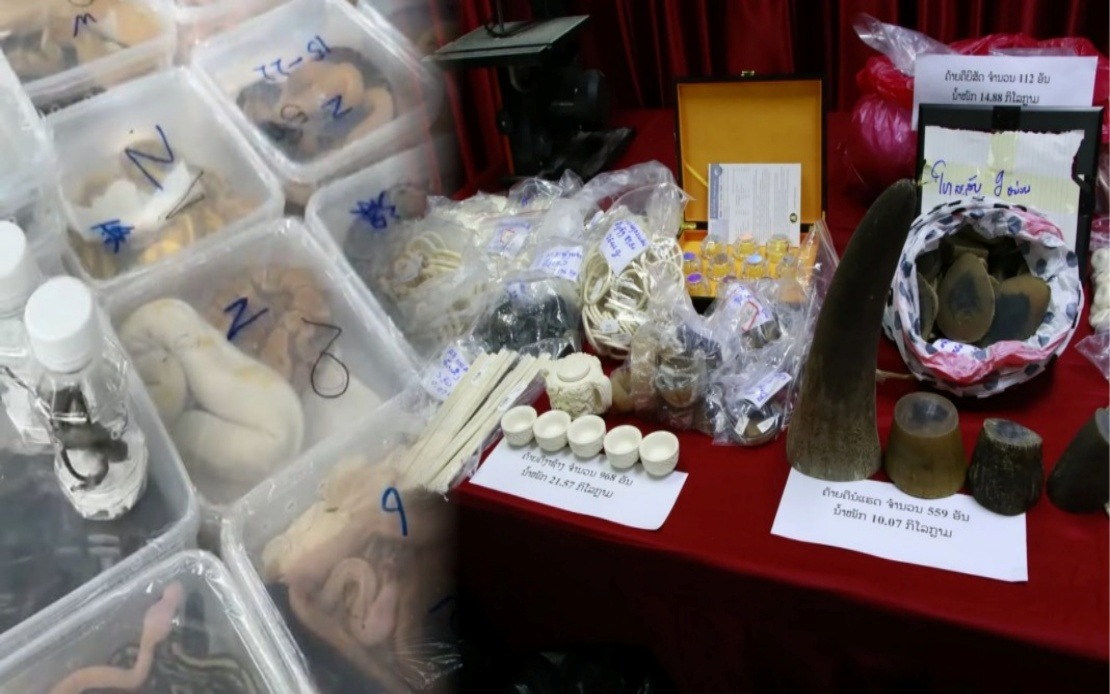
Laotian authorities have delivered a significant blow to organised wildlife trafficking networks operating across the Mekong region, with coordinated enforcement operations in late June exposing the scale of illegal trade in endangered species. The series of high-profile seizures in Luang Prabang and Champasak provinces, coupled with recent arrests in Thailand and ongoing investigations along shared borders, demonstrates both the sophistication of smuggling operations and the growing determination of law enforcement agencies to dismantle them. For Malaysia and other Southeast Asian nations grappling with similar cross-border wildlife crime, these revelations underscore a persistent regional challenge that requires intensified cooperation and resources.
The initial breakthrough came when the Lao Wildlife Enforcement Network discovered approximately 60 kilogrammes of illegal wildlife products during an operation in Luang Prabang, the country's ancient capital and a major tourist hub. The confiscated materials reveal the breadth of the black market trade: officials seized items identified as ivory-like objects, animal gallbladders sourced from bears, pangolin scales—among the world's most trafficked mammals—and what were believed to be rhino horn fragments. Additional seizures at the same location included elephant skin powder, processed bear gallbladder, severed hornbill heads, and commercial herbal medicine products suspected of containing wildlife-derived ingredients. This diversity of contraband suggests a sophisticated operation catering to multiple end markets, from traditional medicine practitioners to collectors and jewellery makers across Asia.
Just four days after the Luang Prabang operation, wildlife rangers achieved an even more dramatic success at the Vang Tao International Checkpoint in Champasak Province, which straddles the border with Thailand's Ubon Ratchathani Province. The checkpoint interdiction resulted in the rescue of 294 live animals crammed into transport containers aboard vehicles heading toward Bangkok. The seizure included reptiles commonly targeted by the exotic pet trade: various turtle species, pythons of multiple varieties, green snakes, gold-ringed cat snakes, and numerous lizards. The sheer number of animals recovered in a single operation illustrates the volume at which traffickers operate, moving hundreds of creatures across borders in what appears to be routine smuggling activity, had it not been disrupted.
These Laotian seizures form part of a broader enforcement surge across the region. Weeks earlier, a Thai woman operating a traditional medicine and souvenir shop in Nakhon Phanom, a northeastern Thai town adjacent to Laos, was arrested on May 27 following investigations that uncovered more than 100 protected wildlife remains believed to have been smuggled from Laos into Thailand. Thai authorities seized materials including bones, teeth, and other biological components of protected species, many destined for local medicinal use or sale to tourists. Earlier that month, on May 16, Thai and Laotian authorities collaborated to intercept smugglers attempting to move 130 kilogrammes of cut elephant ivory and animal carcasses along their shared border, representing one of the largest ivory busts in recent regional memory.
Geography renders Laos uniquely vulnerable to trafficking exploitation. The landlocked nation shares borders with five countries—Cambodia, China, Myanmar, Thailand, and Vietnam—each representing both source regions for trafficked wildlife and transit points for contraband heading toward international markets. This positioning transforms Laos into a critical chokepoint for smuggling networks operating throughout mainland Southeast Asia. The nation's relatively smaller population and law enforcement resources compared to its neighbours create enforcement gaps that traffickers actively exploit. Additionally, Laos's status as a developing economy with limited wildlife monitoring capacity means many trafficking operations operate with minimal risk of detection or prosecution.
The motivations driving this trade remain economic and deeply rooted in cultural practices. Traditional medicine systems across Asia, particularly in China and Vietnam, continue to generate massive demand for wildlife products including bear bile, pangolin scales, and rhino horn, despite scientific evidence questioning their efficacy and international prohibitions on trade. Simultaneously, the exotic pet trade caters to affluent collectors in developed nations willing to pay premium prices for rare reptiles and other creatures. Ivory and other luxury materials feed demand from jewellery makers and status-conscious consumers in wealthy Asian markets. This convergence of factors—traditional medicine demand, exotic pet collecting, and luxury goods markets—creates a powerful economic incentive structure that mere enforcement alone cannot address.
The United Nations Office on Drugs and Crime's World Wildlife Crime Report 2024 places these regional seizures within a global context of alarming scope. The UNODC estimates the global illegal wildlife trade at nearly US$10 billion (RM41 billion) annually, placing it in the same economic league as human trafficking, drug smuggling, and arms dealing. Despite two decades of international cooperation and increasingly stringent domestic regulations, wildlife trafficking continues to expand rather than contract. The UNODC report specifically identifies corruption as a critical facilitating factor, noting that trafficking networks often succeed not through evasion but through the complicity of officials who accept bribes to overlook shipments or provide advance warning of enforcement operations. This reality suggests that the Laotian enforcement successes, while commendable, represent only partial victories in a much larger struggle.
For Malaysian readers and policymakers, the Mekong trafficking networks hold particular relevance. Malaysia itself remains both a destination market—particularly for exotic pets and traditional medicine ingredients—and a transit point for contraband bound for China and other regional destinations. Malaysian law enforcement agencies have seized significant quantities of pangolin scales, elephant ivory, and other wildlife products destined for international markets. The operational techniques revealed in the Laotian busts—using commercial transport vehicles, tourist destinations as cover, and traditional medicine shops as retail fronts—closely mirror methods documented in Malaysian cases. This suggests the same criminal organisations may be operating across multiple countries using standardised procedures adapted to local circumstances.
The rescue of nearly 300 live animals in a single operation raises important questions about rehabilitation and repatriation. Many of the seized reptiles and other creatures have no appropriate facilities within Laos for long-term care, creating pressure to either release them into uncertain environments or transfer them to international sanctuaries. This logistical challenge reflects a broader problem in Southeast Asian wildlife enforcement: authorities excel at interdicting contraband but struggle with aftercare. Regional cooperation on animal rehabilitation infrastructure remains underdeveloped, with few facilities capable of handling hundreds of confused, stressed, and potentially injured animals simultaneously.
The enforcement coordination demonstrated between Laotian and Thai authorities offers a constructive model for expanded regional cooperation. While bilateral agreements between neighbouring countries have existed for years, practical operational collaboration—including joint patrols, intelligence sharing, and coordinated checkpoints—remains inconsistent. Expanding such cooperation to include Cambodia, Myanmar, and Vietnam, and establishing clear protocols for animal rescue and evidence handling, could substantially increase trafficking costs and risks. Additionally, strengthening the Lao Wildlife Enforcement Network through training, equipment, and personnel investments would enable Laotian authorities to sustain pressure on trafficking networks rather than achieving episodic successes followed by enforcement gaps.
Addressing demand represents the other essential component of effective trafficking reduction. Vietnam and China, as major consumer markets for illegal wildlife products, have made commitments to reducing traditional medicine reliance on wildlife ingredients and strengthening enforcement against illegal trade. However, implementation remains inconsistent, with online marketplaces and rural practitioners continuing to openly trade in prohibited materials. Malaysia, as a significant regional economy with growing influence, could leverage diplomatic channels to encourage more robust demand-reduction efforts among neighbouring nations. Domestic campaigns reducing Malaysian consumer demand for exotic pets and wildlife products would simultaneously reduce market pull and demonstrate commitment to broader regional initiatives.
The Laotian enforcement operations represent encouraging evidence that Southeast Asian authorities possess both the capability and willingness to confront organised wildlife trafficking. The coordination between agencies, the sophisticated investigative work tracking smugglers through multiple jurisdictions, and the successful rescue of live animals demonstrate professional standards matching international best practices. However, these successes remain tactical victories within a strategic context requiring systemic change. Reducing wildlife trafficking to manageable levels will require sustained investment in enforcement capacity, comprehensive demand reduction across consumer markets, corruption crackdowns targeting complicit officials, and international cooperation frameworks that treat wildlife trafficking with the seriousness accorded to drug and arms smuggling. The Mekong region's natural biodiversity represents an irreplaceable regional asset; protecting it demands commitment matching the economic stakes involved.

