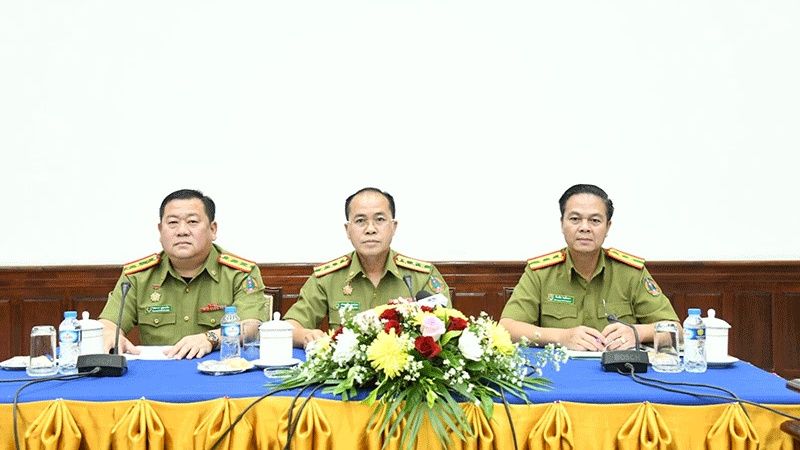
Laotian authorities have formally indicted the proprietor of Tiger Vodka distillery and personnel associated with Nana Backpackers Hostel in connection with the deaths of six foreign nationals who died in Vangvieng during late 2024, though investigators acknowledge significant evidentiary constraints in establishing causation for five of the victims. The announcement, delivered during a July 17 press conference at the Ministry of Public Security in Vientiane, represents the most comprehensive public account to date of how police have approached this complex investigation that has drawn international attention and diplomatic involvement from multiple nations.
The deceased included American James Louis Hutson, Danes Freja Vennervald Sorensen and Anne-Sofie Orkild Coyman, Australians Bianca Jones and Holly Bowles, and British national Simone White. Their deaths between November 13 and November 21, 2024, triggered immediate concern within the backpacking community and prompted scrutiny of alcohol safety standards across Southeast Asia, where such incidents have occasionally sparked broader tourism-related controversies.
Investigators determined that the Tiger Vodka produced at a privately-operated facility in Xaimoungkhoun village, Naxaithong district, contained methanol levels exceeding permitted safety thresholds. The Australian Embassy subsequently confirmed through Aek Udon Hospital in Thailand that methanol had been detected in the bloodstream of the two Australian women who perished. Despite accumulating this biochemical evidence, police officials maintain they cannot legally attribute specific deaths to particular actions under Lao law without autopsy documentation, illustrating how procedural and evidentiary frameworks can restrict investigative conclusions even when toxicological findings suggest potential culpability.
The distillery owner has been charged under Articles 275 and 297 of the Penal Code, specifically for manufacturing and distributing consumer products harmful to human health and conducting unauthorised commercial operations. Prosecutors initially explored pursuing charges related to violations of food safety regulations but subsequently abandoned this approach after determining insufficient evidentiary support. The case now proceeds to Vientiane Province People's Court for judicial proceedings. This prosecutorial recalibration demonstrates how investigative strategy can shift once evidence is subjected to rigorous legal scrutiny, a pattern familiar to observers of complex cross-border criminal cases in the region.
The separate proceeding against Nana Backpackers Hostel personnel centres on evidence tampering rather than direct responsibility for the deaths themselves. After Hutson died in Room 205 on November 13, hostel staff relocated his body to Vangvieng District Hospital before notifying police—a decision that prevented officers from conducting a detailed scene examination. Police charged the hostel owner and ten staff members with destruction of evidence under Article 383 of the Penal Code. Vangvieng District Court convicted all ten defendants, but the Vangvieng People's Prosecutor's Office has appealed, arguing the sentences were insufficiently severe. Both the hostel owner and staff members remain subject to passport confiscation and exit restrictions pending final resolution.
The investigation uncovered that officers only learned of Hutson's death on November 14, after hospital notification, discovering he had actually perished at the hostel the previous day. His room contained beer bottles, glasses holding Tiger Vodka, soft drinks, bottled water, medication, and a suicide note. However, Hutson's family declined an autopsy, and his body was released for funeral preparations, eliminating a critical avenue for determining how he consumed methanol and whether death resulted from poisoning or other causes. This sequence illustrates how family wishes and cultural practices can significantly constrain forensic investigation, particularly across international jurisdictions.
The two Danish women fell severely ill with respiratory distress, dizziness, and vomiting while at Vangvieng District Hospital and subsequently transferred to Hospital 103 in Vientiane, where they died. Their families similarly refused autopsy requests. The two Australian women, who had checked into Nana Backpackers on November 9, became seriously unwell and were treated at Vangvieng District Hospital before transfer to Settathirath Hospital in Vientiane. Following their families' preferences, medical teams transported them to Thailand for additional care, where they ultimately died. The inability to document their complete movements, dietary intake, and beverage consumption during their hostel stay severely compromised investigators' capacity to establish precise exposure mechanisms.
Simone White, the British victim, was transferred from Mahosot Hospital to Kasemrad International Hospital in Vientiane on November 13 after losing consciousness and died on November 21. While methanol was detected in the Australian women's blood and Tiger Vodka samples contained dangerous methanol concentrations, Deputy Chief Colonel Khamfong Vongdalasane stated that available evidence fell short of satisfying Lao legal standards for establishing that any individual's actions directly caused these deaths. The absence of autopsy documentation meant investigators could not determine whether methanol ingestion was the mechanism of death, whether victims consumed lethal quantities, or whether preexisting medical conditions contributed.
This evidentiary gap highlights a persistent challenge in Southeast Asian legal systems where relatively limited autopsy infrastructure and cultural preferences against post-mortem procedures can undermine criminal investigations. Malaysian readers familiar with similar cases in the region will recognise how such constraints can frustrate justice seekers and complicate cross-border accountability mechanisms. The investigation demonstrates that toxicological evidence alone, absent confirmatory autopsy findings, may prove legally insufficient even in apparently straightforward poisoning scenarios, particularly when multiple potential contributory factors cannot be excluded.
Police have pledged to continue gathering evidence in accordance with Lao criminal procedure law and committed to maintaining cooperation with the United States, Australia, Denmark, and United Kingdom embassies. The diplomatic dimensions of this case have elevated its significance beyond a simple hospitality sector safety matter, as four Western nations now monitor proceedings involving their deceased nationals. Colonel Khamfong expressed official condolences and reiterated commitments to transparent and lawful investigation, language that attempts to reassure international stakeholders that Laos takes the deaths seriously despite the acknowledged investigative limitations.
For Southeast Asian tourism authorities and hospitality operators, the Vangvieng incident underscores vulnerabilities in alcohol quality control and the complications arising when establishments fail to immediately report deaths to authorities. The hostel staff's removal of Hutson's body before police notification—whether motivated by panic, misguided helpfulness, or deliberate concealment—fundamentally compromised the entire investigation by eliminating the opportunity for controlled crime scene examination. This procedural failure will likely feature prominently in discussions about hostel liability standards and mandatory reporting requirements across the Mekong region.
The case also reflects broader tensions between family wishes regarding autopsies and investigative imperatives in cross-border fatalities. While respecting cultural and religious preferences against post-mortem examination is ethically important, the families' collective refusal meant investigators could never definitively establish whether methanol caused the deaths or operated in concert with other factors. These tradeoffs between honoring bereaved families and pursuing comprehensive justice remain contentious in international death investigations, and the Vangvieng case may prompt reconsideration of how nations balance these competing obligations when multiple jurisdictions and nationalities are involved.

