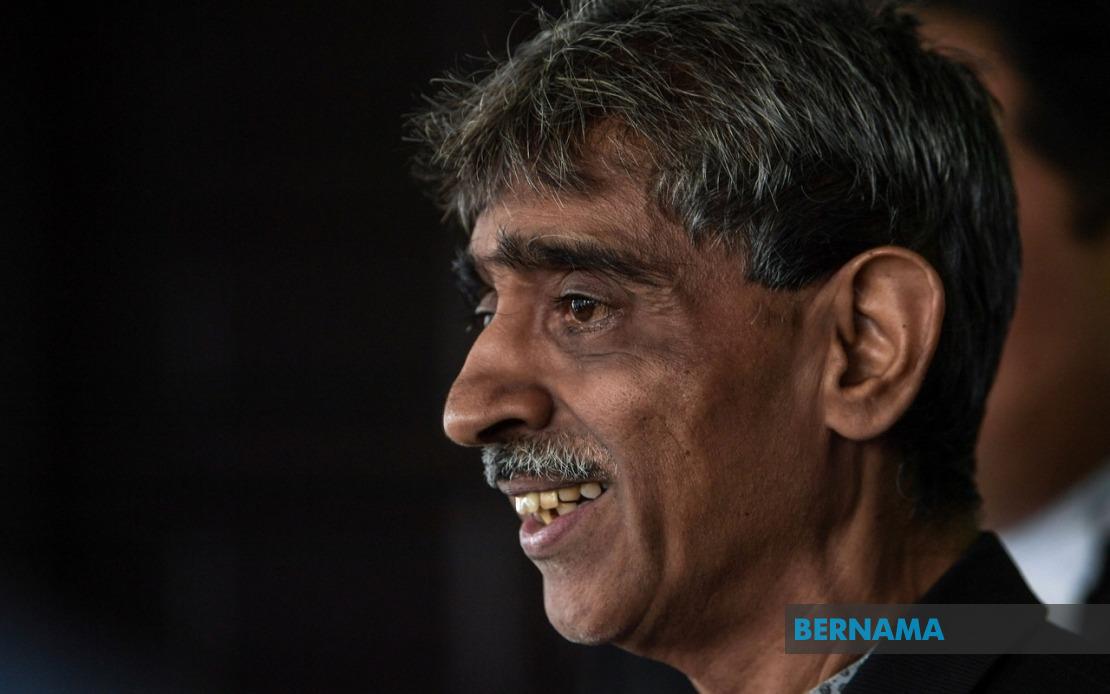
Legal experts have urged the government to move swiftly with criminal prosecutions against anyone implicated in the Tabung Haji RCI findings, provided investigations yield sufficient admissible evidence. Lawyer Mohamed Haniff Khatri Abdulla, who participated in the RCI proceedings, emphasised that decisive action is essential to translate the commission's recommendations into concrete legal consequences and to restore public trust in the savings institution. He stressed that such action must apply uniformly regardless of the individuals' rank or position, and that the public is watching closely for whether the authorities will follow through on the inquiry's implications.
Mohamed Haniff cautioned, however, that authorities must manage public expectations carefully as investigations proceed in stages. A single prosecution does not signal that all inquiries stemming from the RCI report have concluded; rather, it reflects the completion of one investigative strand where sufficient evidence has been gathered. He warned against allowing a perception to develop that prosecutions are merely politically motivated or timed around changes in government. To prevent such misunderstandings, the lawyer suggested that the government and law enforcement agencies should issue regular statements explaining the status of investigations, clarifying which aspects have been completed and which remain ongoing.
The scale of the investigation is substantial. According to information available to Mohamed Haniff, nearly 200 individuals have already been summoned to provide statements to the Royal Malaysia Police and the Malaysian Anti-Corruption Commission. Given the breadth of areas requiring scrutiny—including Tabung Haji's corporate governance, investment transactions, and potential legal breaches—he projected the investigation could take considerably longer. He estimated investigations would likely extend for at least another three to six months, cautioning that those expecting rapid conclusions should prepare for a more prolonged process.
Recognising the institutional complexity involved, Mohamed Haniff put forward a concrete proposal to streamline the legal process. He suggested that the Attorney General's Chambers establish a dedicated special unit to coordinate and evaluate all investigation papers submitted by the two law enforcement agencies. This unit should comprise three experienced Deputy Public Prosecutors with expertise in both anti-corruption cases and conventional criminal prosecution. Such a centralised mechanism would prevent duplication, ensure consistent evaluation standards, and address the challenge that PDRM and MACC operate under different procedural frameworks. The integration would be particularly important given that Tabung Haji falls within both agencies' jurisdictional interests.
Former Court of Appeal judge Datuk Yaacob Md Sam reinforced these points from his perspective as someone who has served as a conducting officer and secretary in multiple RCI proceedings, including the inquiry into the collapsed ferry terminal jetty in Butterworth. Yaacob emphasised a critical legal distinction that the public and even some officials may not fully grasp: an RCI report, while significant as a fact-finding exercise, is not itself a legal instrument. The Commissions of Inquiry Act 1950 does not permit RCI findings or evidence to be directly used in criminal or civil court proceedings. This means that whatever conclusions the Tabung Haji RCI reached, law enforcement agencies must independently gather admissible evidence and testimony to support any prosecutions.
This procedural requirement has profound implications for how the cases will develop. An RCI operates within its specific terms of reference and produces findings and recommendations, but these do not constitute evidence in the eyes of Malaysian criminal law. Only material obtained through investigations conducted by PDRM and MACC—following their respective evidentiary standards and procedures—can be presented before a court. Consequently, individuals named or implicated in the RCI report are not automatically liable; rather, the report serves as a roadmap directing where authorities should focus their investigative resources. The authorities must independently verify allegations, secure witnesses, and compile documentation that would withstand courtroom scrutiny.
Yaacob stressed that the enforcement agencies must systematically re-examine all relevant aspects of the RCI's subject matter to determine whether the facts constitute offences under Malaysian criminal law. This is a more rigorous process than the RCI itself conducted. The agencies must assess whether conduct meets the specific elements of relevant offences, whether statutory defences apply, and whether the burden of proof can be met beyond reasonable doubt. Not every finding in an RCI report will necessarily translate into a prosecutable offence, and conversely, some evidence uncovered during the post-RCI investigations might support charges not explicitly highlighted in the commission's recommendations.
The distinction between an RCI inquiry and criminal investigation reflects broader principles of the Malaysian legal system. An RCI is an administrative fact-finding body tasked with investigating matters of public concern and reporting to the government. It operates with less formal evidentiary constraints than a criminal trial. Its value lies in shining a public light on institutional failures, systemic weaknesses, and patterns of conduct, and in recommending corrective measures. However, the criminal justice system requires a different standard: evidence must be obtained lawfully, witnesses must be properly examined, and the evidence must be presented in a forum where the accused has the right to challenge and test it. The transition from RCI findings to criminal prosecutions therefore requires substantial additional work by law enforcement and prosecutorial agencies.
For Tabung Haji specifically, this process is particularly intricate because the institution itself operates in a complex regulatory environment at the intersection of Islamic finance principles, government oversight, and conventional investment law. The RCI likely identified governance failures, investment decisions that appeared imprudent or self-dealing, and potential breaches of fiduciary duty. Translating these findings into criminal charges requires anchoring them in specific statutory offences—whether under the Malaysian Anti-Corruption Commission Act, the Penal Code, the Securities Industry Act, or other applicable legislation. Different actors within Tabung Haji's management may face different charges depending on their roles and level of knowledge or involvement.
The timeline and methodology matter enormously for public confidence. If prosecutions appear rushed or politically selective, they will be dismissed regardless of their merits. Conversely, if the process drags on indefinitely without visible progress, public patience will erode and the institution's rehabilitation will suffer. Mohamed Haniff's emphasis on staged public communication addresses this tension. Rather than silence punctuated by surprise charges, or a flood of prosecutions that appear coordinated for political effect, a series of measured announcements would show the public that investigations are methodical and evidence-based. This could involve, for example, announcing that the PDRM and MACC have completed their investigation into governance failures and referred papers to the Attorney General, separately announcing that a particular investigation has concluded and charges will follow, and explaining that other strands remain under review.
The proposed special unit in the Attorney General's Chambers also serves a coordination function beyond mere efficiency. By bringing DPPs with relevant expertise to evaluate papers from both agencies, the unit could identify connections across investigations that the individual agencies might not recognize. It could also ensure that charging decisions are consistent and that prosecution strategies are coherent across multiple cases. If several former Tabung Haji officials are ultimately charged, prosecutors would want to ensure that similar conduct is treated similarly, and that the overall narrative presented to courts makes sense as a comprehensive account of institutional breakdown rather than isolated incidents.
The broader context for Malaysian readers is that Tabung Haji, as a pilgrimage savings scheme serving millions of predominantly Muslim Malaysians, holds deep significance. The RCI's very establishment reflected serious public concern about how the institution's reserves were managed and invested. Any resolution that appears incomplete or politically compromised would be particularly damaging to an institution already suffering reputational harm. Conversely, a credible process of investigation followed by proportionate prosecutions where warranted could begin to restore the institution's standing and demonstrate that even large government-linked entities are subject to the rule of law. The quality of the prosecutorial process in the coming months will signal whether Malaysia's legal system can hold powerful institutions and their leaders accountable in a manner that is both rigorous and fair.

