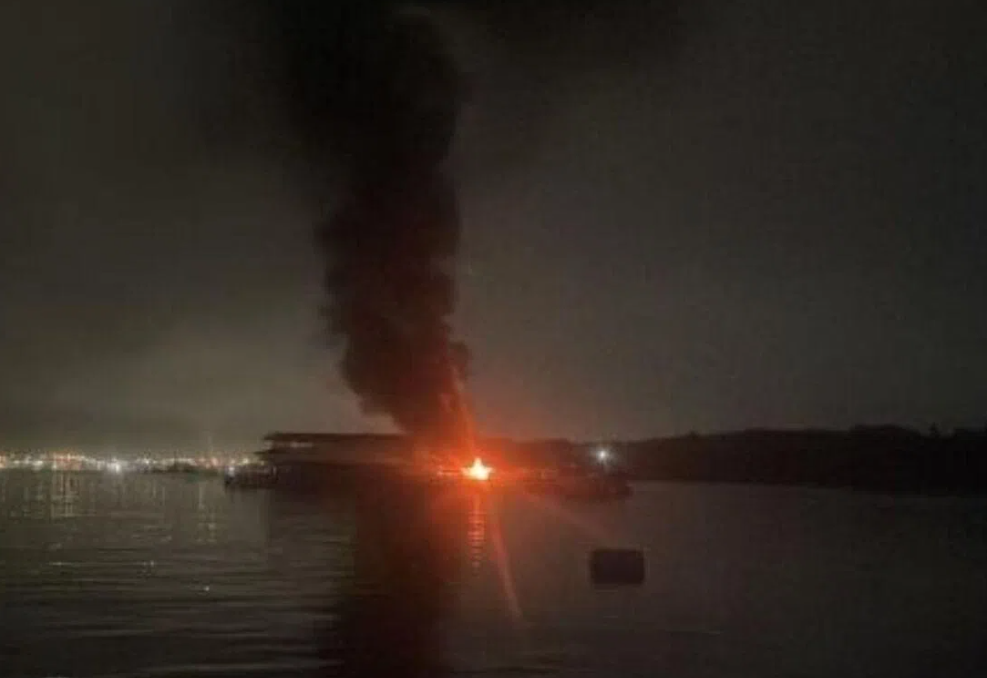
A serious fire engulfed at least two floating fish farms anchored near Pulau Ubin on June 24, with firefighters working through the evening to contain the blaze. The Singapore Civil Defence Force received the alarm at approximately 8.10pm and dispatched marine vessels along with assistance from nearby farm operators to combat the flames. The incident underscores the environmental and operational hazards facing Singapore's aquaculture sector, which operates in close proximity to densely populated areas and critical marine infrastructure.
The fire's origin appears to trace back to a lightning strike that damaged solar panels on one of the farms, subsequently spreading to neighbouring operations before being extinguished. Chinese-language media reported the meteorological cause, though investigations continue into the exact sequence of events. The farms operate from the Lorong Halus jetty vicinity in Pasir Ris, positioning them near Pulau Ubin and Pulau Ketam—locations that have historically experienced weather-related challenges given their exposure to seasonal storm patterns.
One farm owner affected by the incident reported losses approaching S$120,000, a substantial sum reflecting the capital-intensive nature of modern aquaculture operations. The destruction encompassed critical operational assets including solar panels that powered farm systems, fuel-powered generators providing backup electricity, fishing feed supplies essential for stock maintenance, a fishing vessel, and multiple fish traps used for harvesting. Additionally, fishing nets sustained damage that proved difficult to repair, resulting in approximately half of the farm's fish inventory escaping into surrounding waters—a loss compounded by the difficulty of recovery and potential ecological implications.
A notable complication emerged when the farm operator disclosed his inability to claim insurance for fire-related losses, raising questions about coverage limitations and policy gaps within Singapore's aquaculture insurance market. This disclosure highlights a potential vulnerability in the sector's risk management framework, particularly for smaller operations that may lack adequate coverage or face prohibitive premiums for weather-related incidents. The financial exposure created by such gaps can threaten the viability of individual farms and potentially destabilise the broader food production ecosystem.
The farm owner's recounting of prior lightning damage to solar panels provides critical context for understanding recurring vulnerabilities. He noted that previous incidents had been contained because workers were present to respond immediately, preventing escalation into larger fires. The absence of on-site personnel during the June 24 incident proved consequential, as the initial damage went undetected long enough for the fire to spread across farm boundaries. This pattern suggests that aquaculture operations in this region may benefit from enhanced early warning systems, automated fire suppression mechanisms, or modified shift schedules to ensure continuous presence during high-risk weather periods.
The response operation demonstrated coordination between multiple agencies and private operators. The Maritime and Port Authority of Singapore and Airport Emergency Service deployed marine vessels to access the burning farms, while workers from neighbouring aquaculture operations volunteered assistance in firefighting efforts. This collaborative approach reflects both the mutual dependencies among operators sharing the same water space and the challenges inherent in accessing offshore or semi-offshore incidents. The involvement of civilian workers also highlights the operational pressures farmers face when emergencies strike—they must balance immediate crisis response with maintaining their own operations.
The incident raises broader questions about infrastructure resilience in Singapore's aquaculture sector, which exists within tight regulatory and spatial constraints. Fish farms operating in proximity to major urban and industrial zones must navigate competing demands for marine space, environmental protection requirements, and food security imperatives. The concentration of farms near Pulau Ubin reflects both the suitability of these waters for aquaculture and the practical limitations on available locations, potentially creating clustering risks where a single incident can cascade across multiple operators.
Solar power adoption among fish farms represents a sustainable shift toward renewable energy, reducing fossil fuel dependency and operational costs. However, the vulnerability of these systems to lightning strikes during monsoon seasons presents a seasonal risk that requires specific mitigation strategies. Unlike land-based agricultural operations, floating farms offer limited shelter and grounding options, potentially leaving solar infrastructure exposed to atmospheric electrical discharge. Farmers may need to explore reinforced equipment designs, enhanced surge protection systems, or temporary shutdown protocols during severe weather forecasts.
The escapement of fish stock into surrounding waters during the fire carries ecological dimensions relevant to Malaysia and the broader Southeast Asian region. Farmed species escaping into natural waters can compete with native populations, introduce diseases, or alter local ecosystem dynamics. The incident at Pulau Ubin, while localised, exemplifies a recurring concern in regional aquaculture operations—particularly given Malaysia's extensive fish farming industry concentrated in states like Johor, Perak, and Kedah. Managing such incidents requires coordination between national authorities and cross-border communication where applicable, especially in shared water bodies.
The Fish Farmers Association of Singapore and Singapore Food Agency responses to this incident will likely influence industry practices across Southeast Asia, where Singapore often serves as a regulatory and operational benchmark. Any emerging protocols or insurance requirements in Singapore typically influence approaches adopted by neighbouring jurisdictions. Malaysian aquaculture operators, particularly those in zones vulnerable to seasonal weather patterns, may examine lessons from the Pulau Ubin fire to strengthen their own operational resilience and risk management frameworks.
Looking forward, the incident suggests that Singapore's aquaculture sector requires renewed focus on emergency preparedness infrastructure, improved communication networks for rapid incident reporting, and potentially revised insurance standards that adequately cover weather-related damage. The broader Southeast Asian aquaculture community should observe how Singapore addresses these systemic gaps, as many countries in the region operate under similar spatial and environmental constraints. Enhanced cooperation on incident reporting and best practice sharing could help other nations avoid comparable losses while strengthening regional food security.
The absence of reported injuries during the Pulau Ubin fire represents a fortunate outcome given the incident's severity, yet it masks underlying structural vulnerabilities that merit attention. As aquaculture operations expand across Southeast Asia to meet growing regional protein demands, ensuring both worker safety and operational continuity will require proactive investment in hazard mitigation technologies and regulatory frameworks that anticipate environmental risks rather than simply responding to them.

