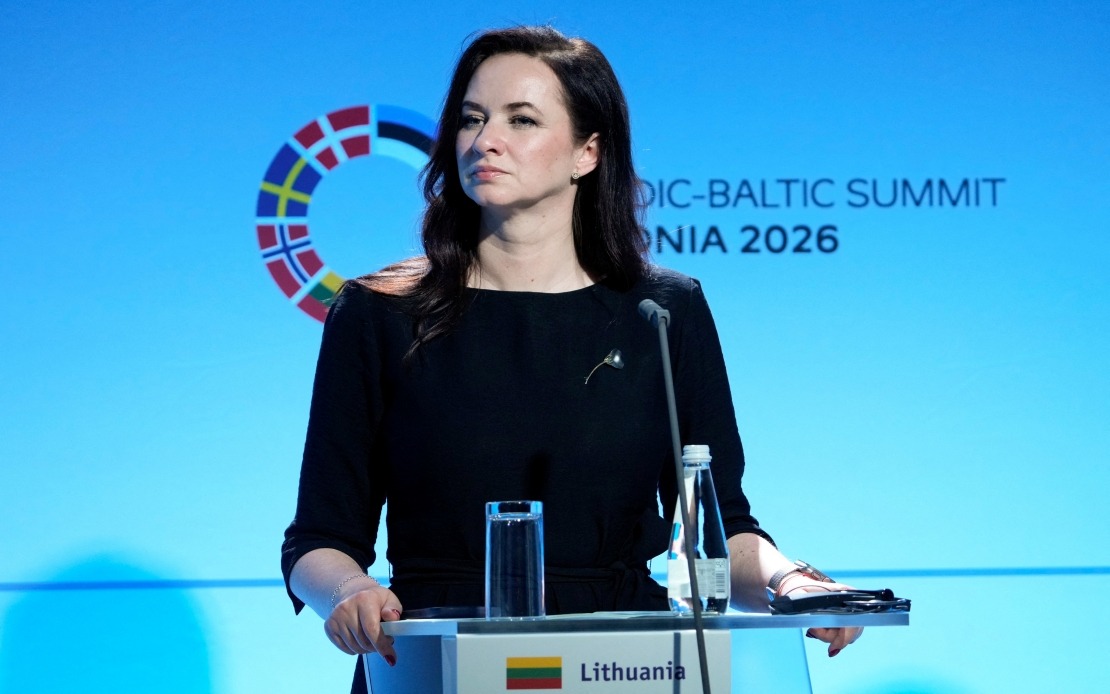
Lithuania's political landscape shifted dramatically on Tuesday when Prime Minister Inga Ruginiene formally announced her government's resignation, setting in motion a carefully choreographed process that will reshape the Baltic nation's leadership within the coming weeks. The move came after mounting pressures and realignments within the ruling coalition, prompting President Gitanas Nauseda to begin the search for a successor administration to guide the country through its current policy priorities.
Under Lithuania's constitutional framework, the president now has a 15-day window to nominate a candidate for the prime ministerial post. This timeline reflects the Baltic state's structured approach to government formation, allowing political parties time to negotiate while maintaining administrative continuity. The designated nominee must subsequently secure parliamentary approval from the Seimas, Lithuania's unicameral legislature, before assuming office and beginning the task of assembling a new Cabinet.
Mindaugas Sinkevicius, chairman of the ruling Lithuanian Social Democratic Party, stands as the frontrunner for the nomination. Political observers across the region expect President Nauseda to advance his candidacy, reflecting the Social Democrats' continued dominance in governing coalitions despite recent electoral volatility. Should parliament confirm his appointment, Sinkevicius would inherit significant responsibilities, including the formation of a functioning government within a compressed 15-day period followed by an additional fortnight to present the complete Cabinet roster for legislative approval.
The resignation marks the emergence of the Social Democrats' third governing coalition since parliamentary elections in late 2024 fundamentally reshaped Lithuania's political composition. This pattern of coalition instability reflects broader challenges facing Baltic governments, including competing policy priorities, regional security concerns stemming from proximity to Russia, and economic pressures affecting voter confidence. The frequency of coalition changes indicates underlying tensions within Lithuania's political structures that extend beyond simple disagreements over specific policies.
The outgoing administration, led by Ruginiene, assumed office in August following the earlier resignation of former Prime Minister Gintautas Paluckas. This succession itself reflected coalition difficulties that have characterised Lithuania's governance since the 2024 elections. Rather than representing a fresh political mandate, each government change has instead suggested ongoing struggles to maintain functional parliamentary majorities and coordinate policy direction among coalition partners holding divergent interests.
President Nauseda formally received Ruginiene's resignation submission and immediately requested that the departing Cabinet continue operations in a caretaker capacity. This provision ensures essential governmental functions remain uninterrupted during the transition period, preventing any administrative vacuum that might compromise Lithuania's ability to respond to domestic or international developments. Such continuity mechanisms prove particularly important for NATO member states like Lithuania, which maintain defence commitments and require unbroken institutional capacity.
The outgoing Cabinet convened for a final session on Tuesday, unanimously approving the resignation resolution in what observers characterised as a coordinated conclusion to their tenure. Ruginiene used the occasion to reflect on the government's tenure, acknowledging notable accomplishments while recognising the multifaceted challenges that had confronted her administration. Her remarks balanced political grace with implicit acknowledgment of the difficulties that had prompted the coalition's dissolution.
For Malaysian and Southeast Asian observers, Lithuania's governmental instability offers instructive lessons regarding coalition governance in smaller democracies navigating complex regional dynamics. The Baltic nation's experience demonstrates how external pressures—including security threats and economic constraints—can strain coalition partnerships, particularly when constituent parties harbour divergent policy preferences. The repeated realignment of Lithuanian coalitions within months reflects vulnerabilities common to proportional representation systems where no single party commands an outright parliamentary majority.
The Social Democratic Party's persistence as the coalition anchor despite these disruptions underscores the limited alternatives available within Lithuania's fragmented parliament. Rather than enabling fresh political directions, successive coalition shifts have preserved Social Democratic dominance while reshuffling supporting partners. This dynamic mirrors patterns observed in other European and regional democracies where institutional constraints and political fragmentation limit genuine alternatives to incumbent-led governing arrangements.
The immediate implications for Lithuania include potential policy adjustments as Sinkevicius constructs his Cabinet, likely incorporating figures from coalition partners while potentially elevating new voices within the Social Democrats themselves. International observers will monitor whether the new administration addresses underlying coalition tensions or merely reproduces existing instabilities under different leadership. For Lithuania's relations with NATO allies and European Union partners, governmental continuity during the transition will prove essential to maintaining security commitments and policy consistency.
The timeline for government formation—compressed into a 30-day constitutional window—reflects Baltic pragmatism regarding political necessity. Rather than permitting extended negotiations that might paralyse governmental function, Lithuania's constitutional provisions enforce expedited resolution of succession crises. This structure incentivises coalition partners to move beyond recriminations toward functional arrangements, though the frequency of Lithuanian government changes suggests the mechanism has achieved only partial success in stabilising governance.
As Lithuania prepares for its next governmental chapter, the succession from Ruginiene to Sinkevicius signals both continuity and potential adjustment within Social Democratic stewardship. The coming weeks will reveal whether the new administration can consolidate coalition support more durably than its predecessors or whether deeper structural tensions will prompt further realignments. For regional observers tracking Baltic governance patterns, Lithuania's experience illustrates the ongoing challenges facing smaller democracies balancing proportional representation, coalition politics, and effective policymaking in strategically significant circumstances.

