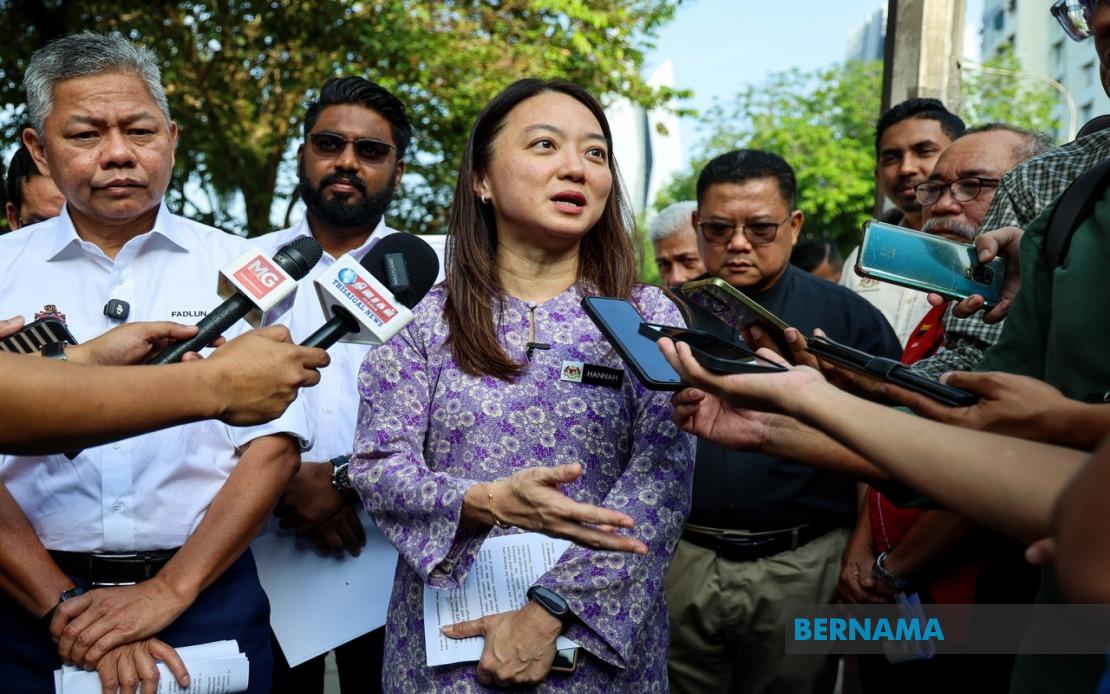
Minister in the Prime Minister's Department (Federal Territories) Hannah Yeoh has issued a firm directive to Malaysia's local authorities, particularly those managing major tourism destinations, to adopt a more proactive stance towards maintaining public infrastructure. Speaking during an inspection of a hawker facilities upgrading project at the Urban Transformation Centre (UTC) Sentul in Kuala Lumpur, she underscored that authorities have no valid excuse for allowing cleanliness and safety issues to fester until they become subjects of online outrage.
The intervention comes amid rising frustration across social media platforms regarding deteriorating public amenities in Putrajaya, including malfunctioning lifts and escalators. Rather than viewing such complaints as isolated incidents requiring reactive measures, Hannah framed the situation as a systemic failure in maintenance culture that demands fundamental change. She stressed that consistent, routine housekeeping operations should form the backbone of every local authority's service delivery, operating continuously regardless of whether supervisory attention is forthcoming or budgetary approvals are pending.
Hannah's comments reflect a growing recognition that in Malaysia's digital age, public infrastructure lapses carry amplified reputational costs. When videos of broken facilities circulate virally, they do more than simply document maintenance backlogs—they shape public perception of institutional competence and governance standards. For Putrajaya, which positions itself as a world-class federal territory and major tourist draw, such imagery carries particular significance. The minister acknowledged that Putrajaya Corporation leadership has begun remedial work following public outcry, but framed this responsiveness as insufficient; authorities should maintain standards proactively rather than reactively.
While Hannah recognised that major infrastructure upgrades require substantial financial allocations and extended planning cycles, she drew a clear distinction between large-scale capital projects and routine maintenance obligations. The latter category—encompassing regular cleaning, basic repairs, and preventive upkeep—demands neither extraordinary funding nor lengthy approval processes. By separating these responsibilities, she implied that budget constraints cannot legitimately excuse failures in basic service delivery. This distinction carries implications for how local authorities across Malaysia structure their operational priorities and resource allocation.
The minister's office has already initiated contact with Putrajaya Corporation management to accelerate repair timelines, signalling both a commitment to addressing immediate concerns and an expectation that such intervention should not have been necessary. This direct engagement suggests that the federal government is prepared to exercise closer oversight of local authority performance, particularly in high-profile locations. The message to other PBTs is unmistakable: proactive maintenance is not merely advisable but expected, and failures will receive elevated attention from central authorities.
Hannah also emphasised the importance of regular site visits and ground-level monitoring by local authority leadership. This advocacy for field-based supervision reflects a broader management philosophy that physical inspection, rather than administrative reporting, should drive maintenance decisions. By encouraging frequent on-site assessments, she is essentially pushing for a culture shift away from desk-bound administration toward hands-on management accountability. Such approaches prove particularly valuable in identifying emerging problems before they accumulate into visible deterioration visible to the public.
Parallel to her critique of local authority performance, Hannah offered commentary on the broader ecosystem of social media-driven accountability. She cautioned digital users against treating short video clips as comprehensive documentation of public issues, noting that such content typically captures mere snapshots of complex situations. Her point reflected a tension between recognising legitimate public grievance mechanisms and addressing the distortionary effects of selective information sharing. She advocated for greater discernment among Malaysians consuming viral content, urging audiences to seek fuller context before amplifying complaints.
However, this dual messaging—simultaneously criticising authorities for maintenance failures while encouraging restraint in public criticism—carries inherent complexity. For citizens concerned about public service standards, Hannah's advice to verify facts before sharing appears somewhat dismissive of legitimate platforms for expressing dissatisfaction with institutional shortcomings. The incident nevertheless highlights how social media has fundamentally altered the dynamics of public sector accountability in Malaysia, creating parallel systems where both instantaneous pressure and reputational risk shape administrative behaviour.
The implications for Malaysia's broader local government sector are substantial. Hannah's statement establishes clear expectations that basic service standards should not depend on either viral publicity or ministerial intervention to be maintained. Other PBTs managing recreation areas, markets, public transport facilities, and municipal spaces should interpret this message as establishing a new baseline of accountability. Tourism-dependent areas like Langkawi, Melaka, Penang, and Labuan will likely face similar scrutiny, particularly as visitor numbers recover and public expectations for infrastructure quality continue climbing.
The maintenance challenges facing Malaysian local authorities reflect longstanding structural issues including stretched budgets, staff limitations, and competing priorities across sprawling jurisdictions. Hannah's call for heightened proactivity, while justified, implicitly assumes that authorities possess sufficient resources and personnel capacity to meet elevated expectations. Realistically, some PBTs may require additional funding or technical support to implement the comprehensive maintenance regimes she advocates. Moving forward, federal authorities may need to complement exhortations for better performance with concrete support mechanisms including capacity-building and targeted infrastructure investment.
Looking ahead, the case of Putrajaya public facility deterioration and Hannah's response will likely set a template for how Federal Territories and other constituencies address similar situations. Rather than allowing maintenance standards to decline until viral complaints force corrective action, authorities nationwide should adopt preventive approaches prioritising continuous upkeep. For Malaysian citizens, the message is equally clear: while social media criticism can catalyse necessary government attention, systemic improvements depend on institutional cultures genuinely committed to consistent service delivery rather than crisis management.

