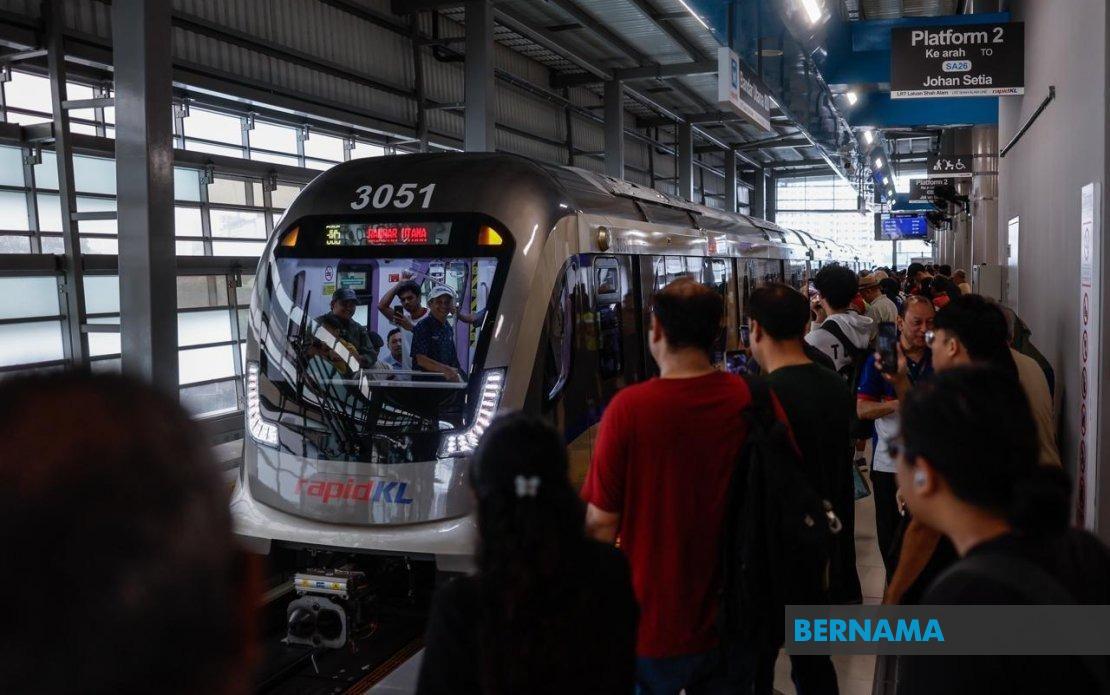
The Light Rail Transit 3 Shah Alam Line commenced operations on the morning of June 29, marking a significant expansion of Malaysia's rapid public transport network in the Klang Valley. Prasarana Malaysia Berhad, the operator responsible for the new corridor, anticipated a cautious start to the service, projecting that between 5,000 and 10,000 passengers would board trains during the opening day across the line's various stations.
President and chief executive officer Amir Hamdan outlined the company's vision for the nascent line during a visit to Glenmarie 2 station. Rather than expecting immediate capacity crowds, Prasarana has adopted a measured outlook, recognising that new transit infrastructure typically requires an adjustment period before reaching peak utilisation. The operator has set an ambitious target of 67,000 daily passengers within the first twelve months, though this figure will hinge upon how quickly residents and workers in the Shah Alam corridor integrate the LRT3 into their commuting routines.
Initial feedback from early morning commuters proved encouraging, with passengers expressing enthusiasm about the service through social media and direct conversations with staff. Many travellers highlighted a particular advantage: the ability to reach their workplaces without enduring the notorious traffic congestion that characterises the Klang Valley during rush hours. This reduction in driving stress and fuel consumption represents a tangible quality-of-life improvement for white-collar workers and others working in office environments, addressing a persistent pain point for the region's commuting population.
On its opening day, the LRT3 demonstrated operational reliability that bodes well for sustained growth. Train frequency during peak periods was maintained at approximately eight-minute intervals, a schedule that Prasarana believes is manageable given current demand levels. Across the system's various facilities—including automatic fare gates, ticketing machines, and passenger circulation areas—operations proceeded without significant hitches, establishing a foundation of reliability crucial for building public confidence in the new service.
The line's design incorporates strategic interchange points that substantially enhance its utility within the wider rapid transit ecosystem. Glenmarie 2 station provides a direct connection to the Kelana Jaya Line, while Bandar Utama links passengers to the Kajang Line. These interchanges position the LRT3 not merely as an isolated corridor but as an integrated component of a growing metropolitan rail network, enabling seamless multi-line journeys that connect residential areas, commercial hubs, and employment centres throughout the Klang Valley.
Prasarana's immediate operational focus concentrates on optimising the passenger experience rather than pushing capacity to its limits. This approach reflects international best practice in transit management, where initial months serve as a testing ground for infrastructure performance and user interface effectiveness. Engineers and management have committed to continuous assessment of the line's performance, with willingness to escalate train frequency or introduce additional rolling stock should demand warrant such measures. The company even indicated preparedness to position standby trains along certain sections during periods of peak congestion, demonstrating a proactive stance toward service reliability.
Certainly contributing to the expected surge in ridership is Prime Minister Datuk Seri Anwar Ibrahim's announcement of complimentary fares for LRT3 passengers—including associated feeder bus services operated by Prasarana—extending for one month from the opening date through July 31. This promotional initiative eliminates financial barriers to trial usage, potentially accelerating the adoption curve beyond organically-driven growth. The free-fare period effectively functions as a month-long incentive for commuters to experience the service and evaluate whether it offers sufficient convenience to justify continued patronage after the promotional window closes.
Prasarana has elected not to introduce women-only coaches at the outset, a decision that distinguishes the LRT3 from certain other Malaysian transit systems. However, management has indicated that such designations remain under consideration, contingent upon ridership data accumulation and ongoing feedback from female passengers. This pragmatic approach balances operational simplicity during the critical launch phase against the recognition that safety and comfort concerns for women commuters may eventually necessitate dedicated facilities. Data collection over the coming months will inform this decision, ensuring that any subsequent policy changes reflect genuine user preferences rather than assumptions.
The Shah Alam line represents both an infrastructure achievement and an implicit recognition of demographic and economic trends reshaping the Klang Valley. As Shah Alam and surrounding areas continue urban densification, reliable public transport connectivity becomes increasingly essential for managing traffic volumes and supporting economic productivity. The LRT3's routing through established residential and commercial zones positions it to serve genuine demand rather than speculative capacity. Prasarana's measured expectations for opening-day ridership acknowledge this reality, emphasising gradual absorption into commuting patterns rather than spectacular inaugural surge.
For Malaysian commuters and urban planners, the LRT3 Shah Alam Line's launch carries implications extending beyond the immediate corridor. It demonstrates sustained commitment to expanding the rapid transit network beyond the original Klang Valley Lines, signalling confidence in continued urban growth and investment in public transport infrastructure. The line's performance over coming months will provide crucial data about demand elasticity, user preferences regarding interchange design, and the effectiveness of multimodal integration within the Malaysian transit ecosystem. These insights will likely inform planning for future expansion phases, potentially accelerating the emergence of comprehensive rapid transit coverage across the Klang Valley's sprawling metropolitan area.

