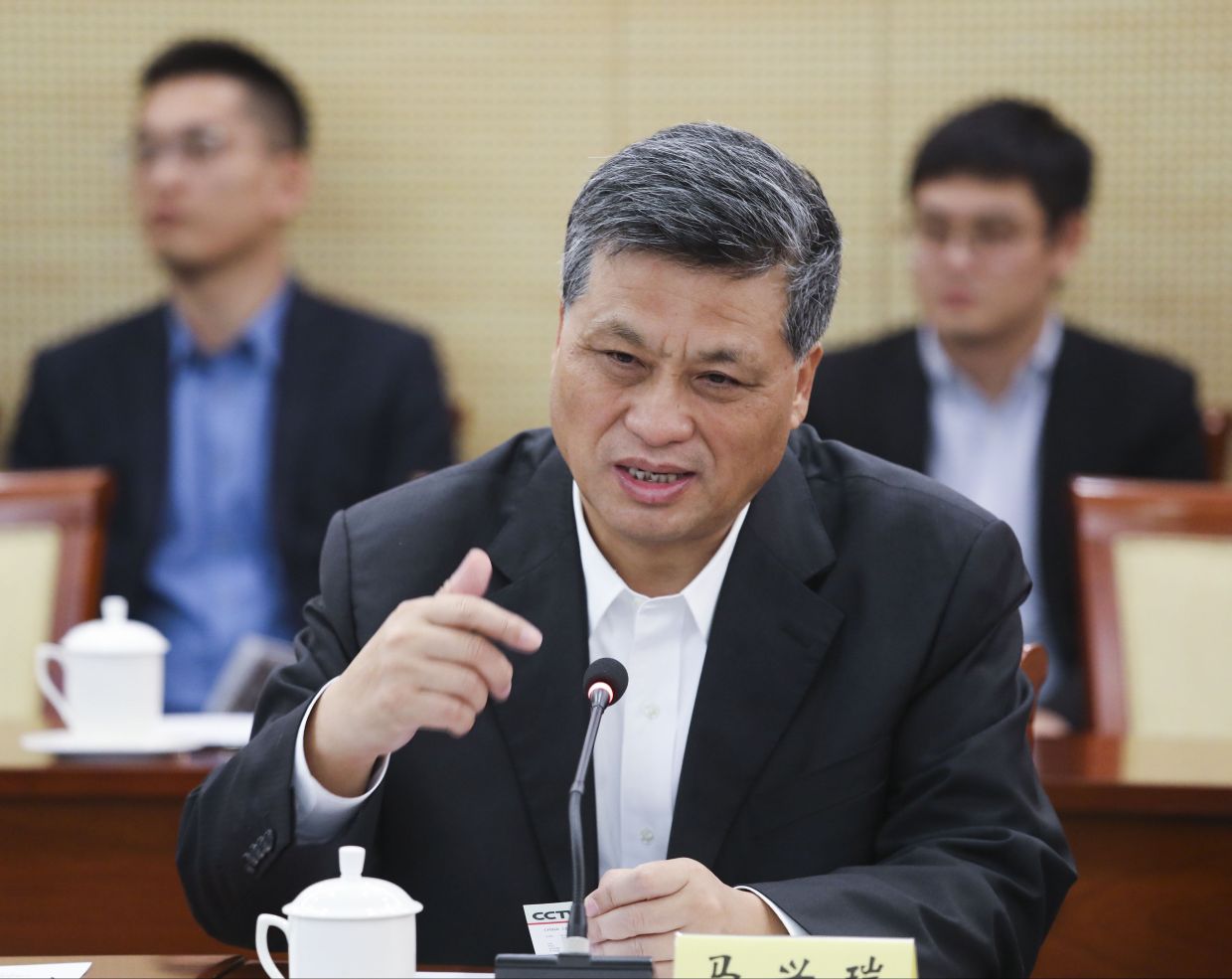
China's Communist Party has formally approved charges against Ma Xingrui, 67, a former member of the Politburo who previously oversaw the Xinjiang Uygur Autonomous Region, linking him and his relatives to what party investigators describe as extensive corrupt practices. The decision came on June 30 when the Politburo reviewed findings from the Central Commission for Discipline Inspection, the party's primary anti-corruption and disciplinary authority, marking a significant moment in President Xi Jinping's ongoing campaign against high-level officials.
Ma's removal represents the third Politburo member to face investigation during the current leadership cycle that commenced in 2022—an occurrence that senior party analysts and observers note has not transpired with such frequency in recent decades. The acceleration of such cases at the elite level reflects either intensified scrutiny of the upper echelons or genuine proliferation of misconduct within the party's highest ranks. Beyond Ma's removal, the Politburo has also dealt with the expulsion of He Weidong, a former vice-chairman of the Central Military Commission, last October, reducing the body's membership to 21 individuals.
The disciplinary commission's allegations against Ma encompass a broad spectrum of transgressions that paint a portrait of institutionalised self-enrichment. He stands accused of improperly accepting monetary gifts, engineering preferential property purchases for relatives, and engaging in what the party terms "power-for-sex and money-for-sex transactions." More significantly, investigators found that Ma tolerated and potentially facilitated his family members' exploitation of his official standing to accumulate wealth, with the CCDI report explicitly stating that his conduct "fostered rampant corruption across his family."
A particularly damning aspect of the case involves Ma's conversion of state authority into a mechanism for personal advantage. According to the disciplinary findings, he wielded his position to bestow business benefits on associates, secure lucrative project contracts for connected parties, and facilitate career advancement for favoured individuals. His relatives and associates allegedly served as intermediaries through which he funnelled substantial sums of money and property into private hands, bypassing legal channels and regulatory oversight. The report concluded that Ma systematically "distorted public power" entrusted to him by transforming it into an instrument of enrichment.
Ma's trajectory through the party apparatus provides context for understanding the scale of his influence and corresponding opportunities for malfeasance. Before assuming leadership of Xinjiang in 2021, he held progressively senior positions across China's bureaucratic and business landscape. After a stint at the Ministry of Industry and Information Technology, he ascended to deputy party secretary of Guangdong province in 2013, subsequently becoming party chief of Shenzhen, provincial vice-governor, and ultimately governor before his westward posting. His aerospace background—having served as general manager of the China Aerospace Science and Technology Corporation from 2007 to 2013, where he simultaneously held positions as deputy commander-in-chief of the manned space programme and commander-in-chief of the new-generation carrier rocket project—granted him leverage and networks extending across both civilian and defence-related sectors.
The party's anti-corruption apparatus also faulted Ma for failing to honestly acknowledge his violations during initial questioning, compounding his culpability in the eyes of investigators. His continued transgressions even after Xi's celebrated 2012 launch of sweeping anti-corruption initiatives and stringent conduct regulations underscores what the CCDI characterised as his willful defiance of party discipline. The commission's report notes that his supervisory negligence allowed subordinates to commit severe violations with impunity, suggesting an environment within his organisations where ethical constraints loosened considerably.
Xinjiang, the region where Ma held his most prominent appointment, has become a focal point of intensified anti-corruption activity. The party has initiated investigations into multiple senior officials from the region in recent months, including Chen Weijun, former executive vice-chairman of Xinjiang's provincial administration, whose case emerged in December, and Li Xu, former deputy commander of the Xinjiang Production and Construction Corps, whose investigation was disclosed in January. This clustering of cases suggests either systemic governance failures within Xinjiang's institutions or heightened party attention to the region's administrative structures.
The aerospace sector, where Ma spent formative professional years, has similarly attracted considerable disciplinary scrutiny. Several individuals who worked under Ma during his tenure at the aerospace corporation have subsequently been ensnared in anti-corruption investigations, indicating that his sphere of influence may have cultivated a culture of expectation regarding illicit arrangements. This pattern raises questions about institutional accountability within China's state-owned enterprises and whether systemic vulnerabilities enabled widespread misconduct across his various postings.
Ma's case carries implications for how the party manages succession and ensures compliance among its elite ranks, particularly within sensitive regions and defence-related portfolios. His removal signals that even prominent figures with technical expertise and significant administrative experience face severe consequences for transgression. Regarding Malaysian and Southeast Asian observers, the case demonstrates the party's willingness to prosecute high-ranking members regardless of their previous contributions or standing, reinforcing the centralisation of power under Xi and the primacy of party discipline over factional interests or institutional loyalty.
The party has ordered Ma's ill-gotten gains confiscated and mandated his transfer to judicial authorities for trial, though specific charges and sentencing outcomes remain pending. This procedural pathway—from party disciplinary action to criminal prosecution—reflects the established mechanism through which the CCDI initiates proceedings that the judiciary subsequently formalises. Whether Ma receives a custodial sentence comparable to other high-profile party figures or receives alternative punishment will signal the party's calibrated approach to punishing elite corruption while maintaining broader institutional stability and public confidence in governance reforms.
For regional observers, Ma's prosecution represents another chapter in Xi's extended consolidation of authority through selective enforcement of anti-corruption measures, a strategy that simultaneously addresses genuine misconduct and neutralises potential rival power centres. The removal of multiple Politburo members within a single political cycle underscores the leadership's commitment to visible action against corruption, though analysts continue debating whether such cases reflect proportional enforcement or selective targeting rooted in political calculation.

