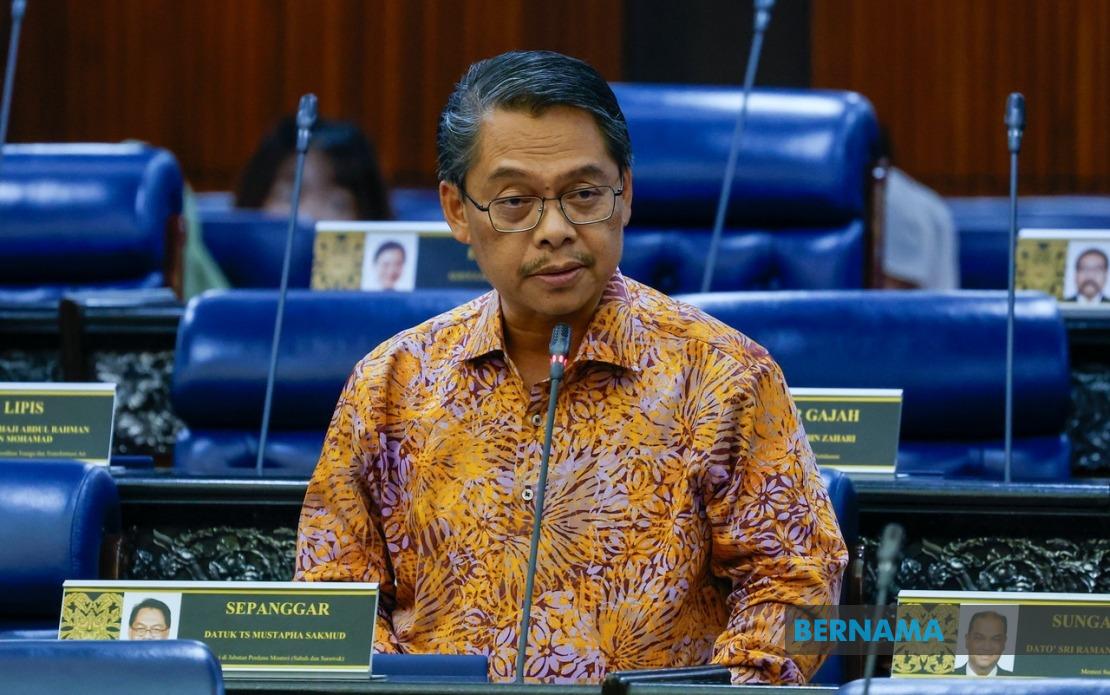
The ongoing renegotiation of the Malaysia Agreement 1963 has progressed substantially, with Datuk Mustapha Sakmud, the Minister in the Prime Minister's Department overseeing Sabah and Sarawak Affairs, reporting that nearly half of the 29 disputed matters have now been conclusively settled. Speaking in Parliament on June 25, he revealed that 13 issues have achieved full resolution following negotiations conducted through an official platform established to review and implement the historic 1963 agreement that bound Sabah and Sarawak to the Malaysian federation.
The momentum gained through these discussions reflects the sustained commitment by both the federal government and the state administrations of Sabah and Sarawak to address long-standing grievances stemming from the original compact. The resolution of these 13 matters represents tangible progress on a constitutional and administrative framework that has shaped Malaysia's federal structure for six decades, though substantial disagreements continue on several contentious areas. These preliminary victories suggest that dialogue mechanisms put in place to examine historical imbalances have begun yielding concrete outcomes, even as harder bargaining continues on more politically sensitive subjects.
Beyond the 13 fully resolved matters, another five issues have achieved what officials term interim or partial resolution, reflecting a middle ground between full settlement and continued deadlock. Mustapha detailed that four of these interim matters concern the expansion of state-level public service positions under Article 112 of the Federal Constitution, alongside interconnected questions regarding health service delivery, educational provision, and the Borneonisation initiative aimed at enhancing the presence of local recruitment in federal public services within Sabah and Sarawak. The interim categorisation suggests these matters have reached a framework for understanding or temporary agreements pending further implementation or review cycles, rather than definitive closure.
The Borneonisation question carries particular significance for the two East Malaysian states, as it addresses the historical underrepresentation of local professionals and bureaucrats in federal administrative positions and services operating within their territories. This initiative seeks to rebalance the demographic composition of federal agencies and departments throughout Sabah and Sarawak, allowing greater employment opportunities for locals in positions traditionally dominated by personnel transferred from Peninsular Malaysia. The interim status on these related matters indicates that principles have been established and initial steps taken, though detailed implementation frameworks and timelines remain subjects for ongoing refinement.
The remaining 11 outstanding matters continue to occupy substantial government attention and resource allocation. The Sabah and Sarawak Affairs Division, functioning as the secretariat for these negotiations, works continuously with federal and state-level stakeholders to advance discussions on these unresolved issues. The complexity of some of these outstanding subjects, combined with the constitutional and legal constraints governing their modification, has prolonged negotiations. Officials note that every remaining matter involves either constitutional interpretation, federal-state power allocation, or financial arrangements that demand high-level political consensus and careful legislative drafting.
Among the most politically contentious unresolved issues remains the demand to increase parliamentary representation for Sabah and Sarawak to achieve a 35 per cent quota of seats in the Dewan Rakyat. This question was raised in Parliament by Isnaraissah Munirah Majilis, the member for Warisan-Kota Belud, who sought clarification on both the overall progress of MA63 implementation and specifically on the parliamentary seats question. The demand reflects historical frustrations that Sabah and Sarawak, despite their combined population and territorial vastness, hold proportionally fewer seats in the national legislature compared to their demographic and geographic significance within the federation.
Mustapha explained that electoral redelineation exercises, which would be necessary to increase parliamentary seat allocation, can only be undertaken by the independent Election Commission following the expiration of an eight-year electoral cycle. This constitutional safeguard, designed to prevent frequent manipulation of electoral boundaries, creates a procedural barrier to swift alteration of the current seat distribution. The mechanism reflects principles of electoral stability intended to prevent partisan manipulation, yet simultaneously constrains the ability of Sabah and Sarawak to rapidly achieve their representation objectives through negotiated settlement.
The parliamentary seats issue additionally requires constitutional amendment to modify Article 46 of the Federal Constitution, which establishes the composition structure of the Dewan Rakyat. Securing such constitutional change demands a two-thirds supermajority in Parliament, an exceptionally high threshold that necessitates broad cross-party consensus or overwhelming single-party dominance. This requirement effectively places the question beyond the scope of standard legislative processes and demands consensus that transcends ordinary partisan divisions. Such supermajority provisions were deliberately embedded in constitutional design to protect fundamental structures from frequent alteration, yet they simultaneously render major constitutional modifications extraordinarily difficult to achieve absent exceptional political circumstances.
Mustapha's explanation underscores how constitutional architecture can simultaneously protect institutional stability while constraining the ability of aggrieved parties to achieve negotiated settlements on major structural questions. The electoral and constitutional framework governing parliamentary composition sits at the intersection of technical legal constraints and substantive political demands, requiring both procedural compliance and extraordinary political consensus. For Sabah and Sarawak representatives, achieving the desired 35 per cent quota would require navigating multiple institutional hurdles spanning electoral law, constitutional amendment procedures, and federal-state negotiations.
The broader MA63 negotiation process reflects deeper questions about federal governance and the balance of power within Malaysia's constitutional structure. The original 1963 agreement established specific provisions protecting Sabah and Sarawak's interests, yet decades of subsequent federal legislation and administrative practice have, according to critics from the two states, gradually eroded these protections. The current comprehensive review attempts to either restore these protections or establish new frameworks compensating for perceived historical imbalances. Progress on 13 matters and interim resolution on five others demonstrates that systematic negotiation can produce results on technical and administrative questions.
However, the stalling of the parliamentary representation question illustrates the limits of negotiated resolution when constitutional architecture and electoral mathematics present formidable obstacles. The challenge for the federal government involves demonstrating genuine responsiveness to East Malaysian demands while respecting constitutional constraints that cannot be unilaterally overridden. For Sabah and Sarawak, achieving substantive gains through the MA63 negotiation platform requires either accepting limitations imposed by existing constitutional structures or mobilising political pressure sufficient to overcome the supermajority requirement for constitutional amendment.
The progression from 13 resolved matters to five interim statuses to 11 outstanding issues traces an arc from technical achievability to escalating political difficulty. Issues that can be resolved through administrative reallocation, policy harmonisation, or bureaucratic restructuring have yielded to negotiation. Matters requiring electoral redistribution and constitutional amendment remain intractable absent extraordinary political circumstances. The next phases of MA63 negotiation will likely focus on either achieving creative solutions within existing constitutional constraints or building the political consensus necessary for constitutional modification on the most contentious questions.

