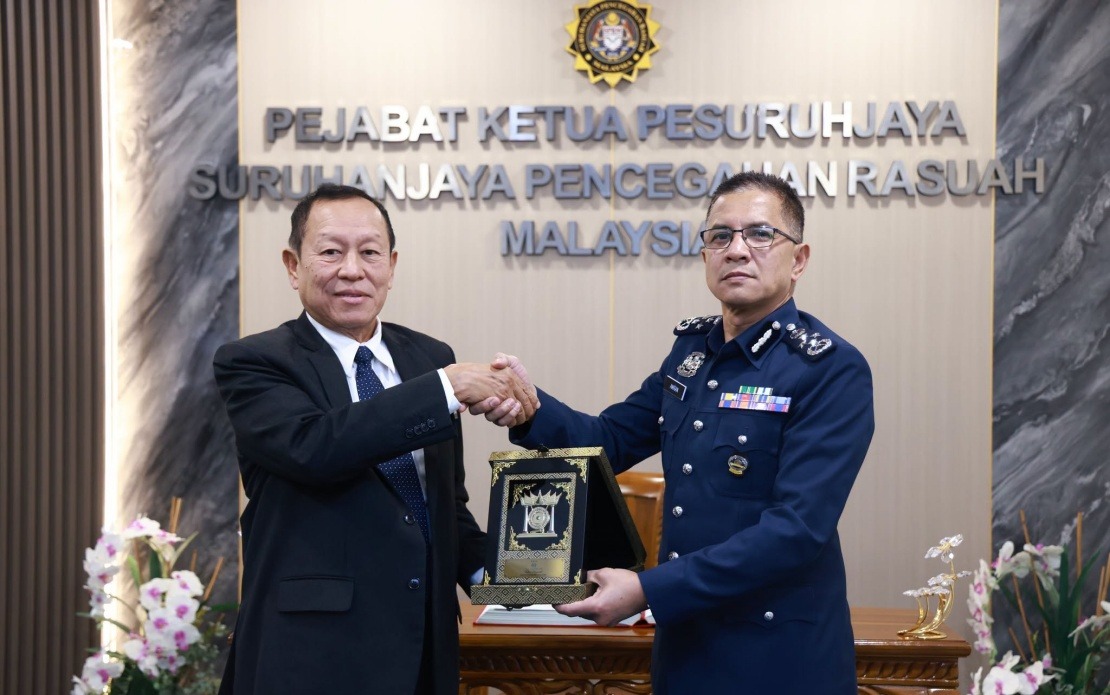
In a significant move to tighten oversight of Malaysia's crucial customs operations, the Malaysian Anti-Corruption Commission (MACC) and the Royal Malaysian Customs Department (JKDM) have agreed to create a specialised task force focused on strengthening enforcement coordination and tax collection at the country's major ports. The decision emerged from high-level discussions held at MACC headquarters in Putrajaya on July 15, when JKDM director-general Datuk Amran Ahmad visited the anti-corruption agency for strategic consultations.
Datuk Seri Abd Halim Aman, MACC's chief commissioner, underscored the importance of the collaborative initiative, noting that both agencies identified critical operational challenges requiring joint attention. The hour-long meeting provided a platform for senior officials from both organisations to evaluate systemic vulnerabilities in customs procedures and the bureaucratic frameworks that facilitate or hinder effective tax enforcement. Beyond formal protocol, the discussion allowed representatives to exchange practical insights into the evolving nature of port-related risks that threaten Malaysia's revenue streams and regulatory integrity.
The new task force will concentrate on mechanisms to prevent revenue leakage from container management operations across Malaysia's port network. This focus reflects growing concern about sophisticated schemes designed to circumvent tax obligations and exploit gaps in documentation and inspection protocols. Container management represents a particularly vulnerable area given the volume of goods flowing through Malaysia's maritime gateways and the complexity of tracking items through multiple transshipment points.
During the discussions, JKDM officials outlined increasingly cunning tactics employed by organised smuggling syndicates to evade tax payments. These operations extend beyond simple concealment to include systematic falsification of import and export documentation. Criminal networks submit deliberately misleading paperwork across multiple administrative approvals, fragmenting the audit trail and making pattern detection substantially more difficult. Such schemes exploit the traditional compartmentalisation of agency functions and the limited real-time information sharing between departments.
Of particular concern is a specific modus operandi involving the false declaration of currency and monetary instruments. Smugglers and money launderers declare cash amounts significantly lower than the actual value being transported across Malaysia's borders. This technique, which JKDM has detected with increasing frequency, creates immediate revenue loss while also masking the movement of funds potentially connected to criminal enterprises. The discrepancy between declared and actual amounts represents both a direct tax violation and a potential indicator of money laundering activity.
The collaboration between MACC and JKDM signals recognition that administrative and financial crimes at ports require integrated investigation and prevention strategies. While MACC traditionally focuses on corruption within government agencies, the formation of this joint task force demonstrates understanding that corruption in customs operations frequently overlaps with organised smuggling, tax evasion, and money laundering. By combining MACC's anti-corruption expertise with JKDM's specialised customs knowledge, the agencies aim to address systemic vulnerabilities that individual bodies struggle to tackle alone.
For Malaysian business and the broader economy, the implications are substantial. While legitimate traders operate within established regulatory frameworks, the effectiveness of customs enforcement directly affects competitive conditions and revenue collection. Uncontrolled smuggling and tax evasion create unfair advantages for criminal operators and distort pricing in legitimate markets. Enhanced monitoring through the joint task force may initially increase transaction scrutiny, but ultimately serves to level the playing field for compliant importers and exporters.
The commitment to cultivating integrity within personnel represents another dimension of the initiative. JKDM has indicated openness to MACC delivering anti-corruption training and awareness sessions to customs staff. This educational component acknowledges that corruption frequently originates from within the enforcement apparatus itself, with officials either deliberately overlooking violations in exchange for bribes or inadvertently creating compliance loopholes through negligence. Building a strong culture of integrity among frontline customs officers constitutes essential infrastructure for any effective enforcement strategy.
Senior MACC Investigation Division director Datuk Mohd Hafaz Nazar and JKDM's Integrity branch head Azian Umar participated in the discussions, indicating that both agencies have designated specialised units responsible for implementing the task force framework. The involvement of integrity-focused officials suggests that the initiative will incorporate systematic review of port operations rather than remaining a theoretical collaborative arrangement.
This development carries regional significance given Malaysia's role as a major Southeast Asian trading hub. The country's ports handle substantial transshipment volumes serving regional supply chains, making them attractive targets for smuggling networks operating across Southeast Asia. Enhanced enforcement coordination could create ripple effects throughout the region, potentially raising operational costs for criminal networks and encouraging greater compliance among regional traders. Conversely, if implementation falters or remains purely symbolic, the vulnerability will likely persist and potentially expand as organised criminal networks adapt their tactics.
The task force represents an acknowledgment that Malaysia's port security and revenue protection require continuous institutional evolution. As smuggling methodologies become more sophisticated and organised crime networks develop increasingly complex schemes, regulatory agencies must maintain corresponding advances in detection capability and operational coordination. The success of this initiative will depend substantially on resource allocation, inter-agency information-sharing protocols, and sustained political commitment to prioritise port enforcement alongside other government priorities.

