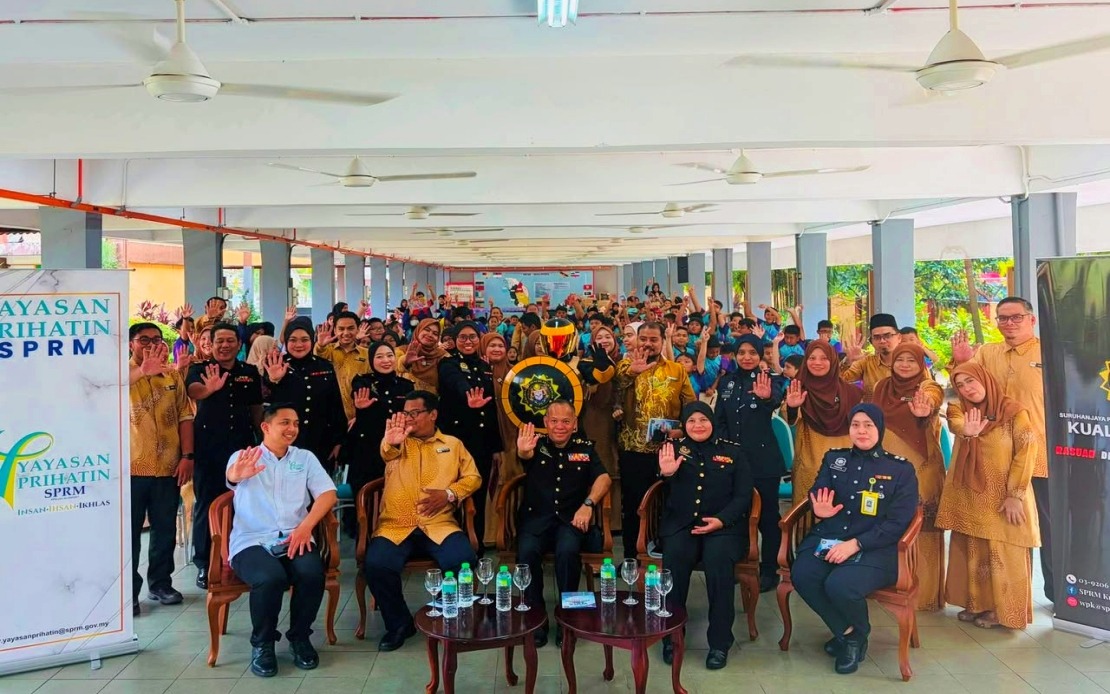
The Malaysian Anti-Corruption Commission's Kuala Lumpur branch has intensified its push to cultivate anti-corruption values at the community level by introducing the Wira Antirasuah (WAR) programme at Sekolah Kebangsaan Jalan Pasar 1. The initiative represents a strategic shift towards preventive anti-corruption work, recognising that embedding ethical principles in young minds offers a more sustainable approach to combating misconduct than enforcement alone.
Modelling integrity from childhood onwards serves as a foundational investment in shaping future citizens who possess both the moral compass and the conviction to resist all manifestations of corruption, according to Mohamad Zakkuan Talib, the director of the Kuala Lumpur MACC office. His articulation of heroism during the programme's launch underscores a critical reframing of integrity—not as an extraordinary quality reserved for exceptional individuals, but as an everyday commitment that ordinary people must consciously practise in their routine interactions.
The programme's educational philosophy emphasises that ethical conduct emerges from accumulated small decisions rather than from isolated grand gestures. Children learn that integrity encompasses refusing to engage in academic dishonesty, respecting others' belongings, honouring commitments, and maintaining the confidence that others place in them. This granular approach to ethics development proves particularly valuable in the Malaysian context, where endemic petty corruption often stems from normalised attitudes towards minor transgressions that gradually erode institutional standards.
The WAR initiative at Sekolah Kebangsaan Jalan Pasar 1 incorporated diverse engagement methods designed to sustain children's interest and reinforce core messages. The Kuala Lumpur MACC's Community Education Branch delivered comprehensive briefings that tailored anti-corruption concepts to age-appropriate contexts, while the appearance of Kapten MACC, the commission's mascot character, transformed abstract principles into memorable, emotionally resonant experiences. Such multimedia and character-driven approaches acknowledge that young learners retain information more effectively when it combines entertainment, personalisation, and interactive participation.
The establishment of an Anti-Corruption Corner within the school premises provides an enduring educational resource that extends beyond the launch event itself. This dedicated space offers school administrators, teachers, and pupils ongoing access to integrity-focused materials and information, creating an institutional reminder of the commission's values. The permanence of such corners signals institutional commitment while enabling sustained reinforcement of anti-corruption messaging throughout the academic year.
Beyond its strictly anti-corruption mandate, the programme demonstrated sensitivity to broader student welfare considerations. Yayasan Prihatin SPRM's donation of a smart television augments the school's educational infrastructure, while assistance extended to twenty-nine pupils from asnaf (eligible for zakat) families addresses material hardship that might otherwise incentivise unethical behaviour. This holistic approach recognises that corruption prevention intersects with poverty alleviation and social inclusion—individuals facing acute deprivation may perceive integrity compromises as pragmatic survival strategies rather than moral failures.
The planting of hibiscus flowers by the school's special education pupils achieved multiple symbolic objectives within a single activity. The gesture simultaneously demonstrated support for the Keep Malaysia Clean campaign, marked the National Month celebrations, and showcased inclusive participation by pupils with learning differences. This multivalent symbolism reflects sophisticated programme design that weaves anti-corruption messaging into patriotic and environmental contexts, avoiding the perception of anti-corruption work as a narrow, technical domain separate from broader national concerns.
The targeting of primary school pupils represents timing of considerable strategic importance. Developmental psychology confirms that ethical frameworks solidify during early childhood, making primary education an optimal intervention point. Children who internalise integrity principles before adolescence develop what researchers term "moral identity"—a self-conception where ethical behaviour becomes central to how they view themselves rather than merely external compliance with rules imposed by authorities. This identity-based approach produces more durable behavioural change than fear-based or punishment-focused interventions.
Malaysia's contemporary anti-corruption landscape makes such grassroots initiatives particularly pertinent. While high-profile prosecutions and institutional reforms capture headlines, the nation's long-term anti-corruption trajectory depends upon cultivating a culture where ordinary citizens—particularly those entering civil service, business, and public life—view integrity not as an obstacle to overcome but as a fundamental professional and personal value. The MACC's investment in primary schools represents recognition that this cultural transformation must commence early and proceed systematically across the education system.
The programme's potential ripple effects extend beyond individual pupils to their families and communities. Children exposed to anti-corruption education frequently become informal advocates within households, questioning or challenging practices that, while commonplace, constitute low-level corruption. Parents and grandparents may experience reconceptualisation of everyday practices—gift-giving, favour-trading, or rule-bending—through their children's newly acquired ethical consciousness. This intergenerational knowledge transfer harnesses young people's moral clarity and enthusiasm as agents for cultural change.
Expanding such programmes across additional schools throughout Kuala Lumpur and beyond would require sustained commitment and resource allocation. However, the long-term return on investment—measured in reduced corruption incidents across government and private sectors two decades hence—justifies substantial institutional support. The MACC's engagement at grassroots level complements enforcement operations, creating a comprehensive anti-corruption strategy that addresses both systemic incentives and individual moral development.

