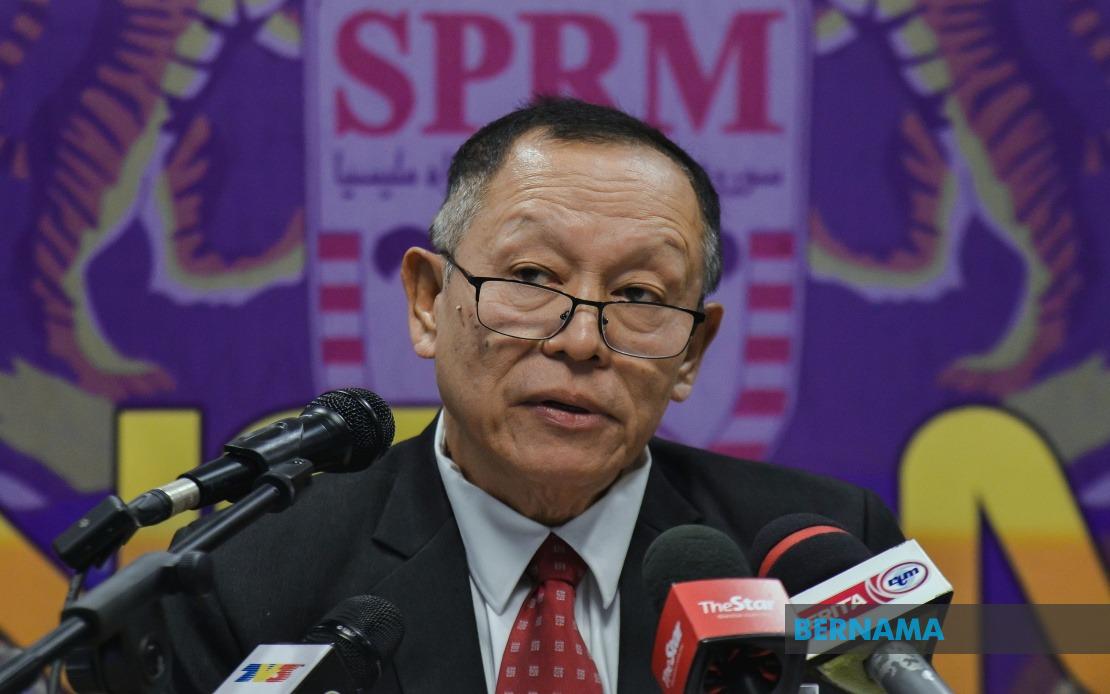
The Malaysian Anti-Corruption Commission has wrapped up its investigative questioning of a former chief financial officer connected to Lembaga Tabung Haji, marking a significant milestone in the anti-graft agency's examination of a controversial financial transaction flagged by a recent royal inquiry. The four-day interrogation concluded on Wednesday evening at MACC headquarters in Putrajaya, with the individual's complete statement now on file as the commission pursues allegations surrounding the acquisition of shares in two plantation enterprises valued at approximately RM370 million.
According to MACC Chief Commissioner Datuk Seri Abd Halim Aman, the questioning sessions stretched from 9 am to 6.30 pm on the final day, underscoring the complexity and scope of matters under investigation. The former financial executive, a 60-year-old individual, presented himself voluntarily at the commission's office on Tuesday to furnish his account, working through an intensive multi-day deposition process designed to extract detailed testimony regarding the circumstances surrounding the contested plantation investment.
The core focus of this investigation centres on assertions that those involved in orchestrating the RM370 million transaction abused their official authority. The Royal Commission of Inquiry that examined Tabung Haji's operational and financial practices had brought this particular transaction into sharp relief, raising questions about governance standards and decision-making procedures within the institution. The RCI's findings prompted MACC to launch its own formal investigation, treating the allegations with appropriate seriousness given the sums involved and implications for public trust.
The involvement of both the former chief financial officer and the previous chief executive officer—both of whom came to the MACC office together on Tuesday—suggests the investigation encompasses the full decision-making hierarchy that would have been responsible for authorising such a substantial capital deployment. Their concurrent presence at the agency and subsequent separate questioning indicates that investigators are working to establish individual accountability and trace how approval mechanisms functioned within the organisation's governance framework.
The plantation sector transaction raises broader concerns about how government-linked statutory bodies deploy their assets and the safeguards in place to prevent capital misallocation. Tabung Haji, which manages pilgrimage savings and investments for Malaysian Muslims, operates under heightened scrutiny given its role as a custodian of religiously significant funds. Any diversion of resources into questionable acquisitions directly affects the retirement security and investment returns of hundreds of thousands of Malaysian contributors who rely on the institution to prudently manage their savings.
The RM370 million figure represents a substantial portion of Tabung Haji's investment portfolio, making the authenticity and business rationale of the transaction crucial to institutional credibility. The RCI's decision to highlight this particular share purchase in its formal recommendations suggests investigators identified irregularities in valuation, due diligence procedures, or alignment with the institution's investment mandate. Whether the plantation companies represented suitable vehicles for the organisation's capital, or whether the transaction served unstated objectives, remains central to MACC's investigation.
The completion of the former CFO's statement represents a procedural checkpoint rather than investigation's conclusion. Investigators must now cross-reference testimony from both executives, examine documentary evidence including board minutes, valuation reports, and correspondence, and potentially question additional witnesses including board members, auditors, and external advisors who may have been involved in approving or scrutinising the transaction. The four-day duration of questioning suggests considerable complexity in financial structures, multiple transaction layers, or disputed characterisations of events that required extensive clarification.
For Malaysian governance standards, this investigation carries symbolism extending beyond the specific transaction. Public confidence in statutory bodies depends substantially on demonstrated willingness to investigate credible allegations through established institutional mechanisms. The MACC's progress signals that no organisation, regardless of historical prestige or religious significance, operates beyond accountability frameworks. This reinforces the principle that public trust in financial institutions requires transparent investigation and appropriate enforcement when concerns arise.
The investigation also underscores evolving scrutiny of government-linked investment decisions. Malaysia has experienced periodic concerns about capital deployment efficiency and governance failures within statutory bodies, prompting stronger oversight mechanisms. Tabung Haji's case exemplifies institutional challenges in balancing growth imperatives with prudent risk management and transparent decision-making. The outcome may influence how other government-linked entities structure investment approval processes and risk controls.
As MACC proceeds with documentary analysis and potential follow-up questioning of other individuals, the timeframe for investigation conclusions remains unclear. Anti-corruption probes involving substantial sums and multiple decision-makers typically require months of systematic evidence gathering before prosecutors can determine whether charges warrant filing. The former CFO and CEO's cooperation in coming forward voluntarily may influence how MACC treatment of their cases develops, though this represents only one factor in comprehensive prosecutorial assessment.

