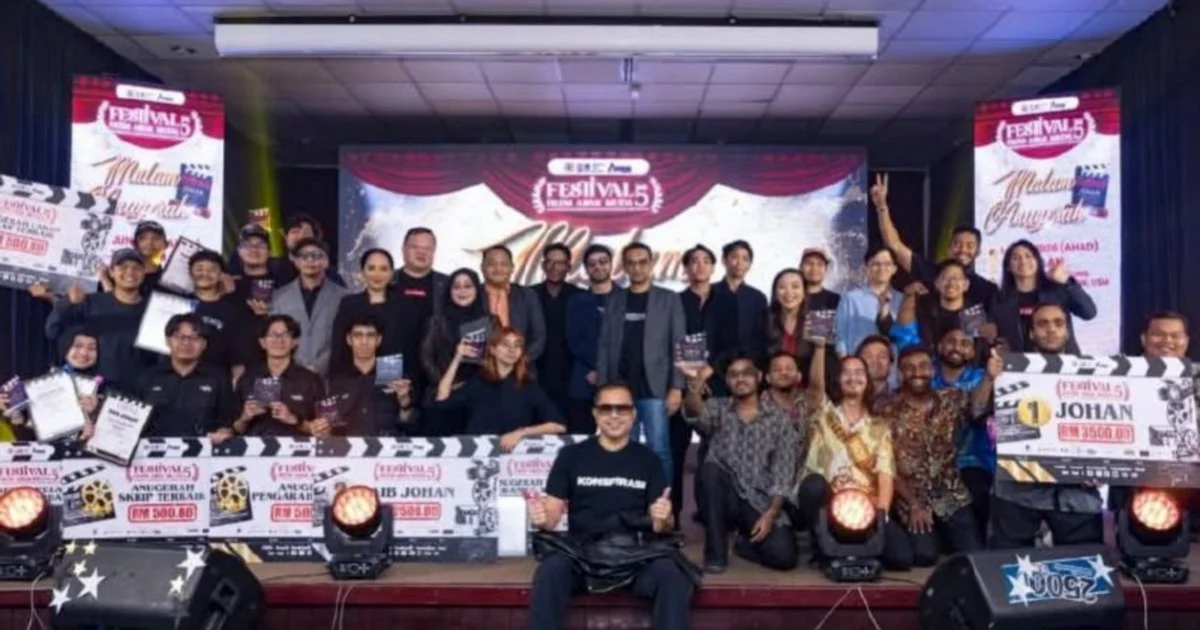
The Malaysian Anti-Corruption Commission (MACC) is deepening its push to instil integrity values and strengthen anti-corruption consciousness among Malaysia's young population through an innovative partnership supporting the 5th Youth Film Festival (FFAM) being held at Universiti Sains Malaysia (USM) in Penang. This collaborative approach signals a notable shift in how the national anti-graft body is communicating its mandate beyond traditional enforcement channels, recognising that cultural and creative platforms offer a more resonant pathway to shape ethical attitudes in emerging adult demographics.
For regulatory bodies in Malaysia and across Southeast Asia, the challenge of connecting with younger audiences on governance issues has long been structural. Conventional awareness campaigns built around policy bulletins and formal compliance messaging often fail to penetrate youth consciousness or generate lasting behavioural change. By anchoring its messaging to film—a medium that enjoys genuine cultural currency among university students and young professionals—the MACC is attempting to embed anti-corruption principles within narratives that feel organic rather than didactic. The film festival setting also removes the institutional heaviness that might otherwise accompany direct government communication on the subject.
The partnership between the MACC and USM represents a recognition that universities serve as critical hubs for shaping civic values during formative years. Penang, home to multiple tertiary institutions and a vibrant intellectual community, provides an ideal location for such an initiative. Film festivals held on university campuses naturally attract creative students who may later influence broader cultural conversations through their own media work, journalism, entertainment production, or professional fields. By engaging filmmakers and audiences at this stage, the MACC effectively invests in long-term cultural infrastructure around corruption awareness.
The strategic use of the creative arts for governance messaging also reflects global best practice in public administration. Countries ranging from South Korea to Singapore have deployed entertainment and cultural initiatives to reinforce civic values, recognising that entertainment platforms can reach audiences who might otherwise avoid government-issued materials. For Malaysia, where younger voters and professionals are increasingly scrutinising institutional integrity, demonstrating that anti-corruption work extends beyond prosecutions to encompass cultural leadership strengthens the MACC's broader institutional credibility.
The fifth iteration of the Youth Film Festival itself represents an established platform with demonstrated reach into student networks. By securing partnership status at such an event, the MACC gains visibility across multiple demographic segments—not only students directly engaged with film production and criticism, but also the wider audience attending screenings and panel discussions. This multiplier effect extends the anti-corruption message beyond those who might actively engage with MACC-branded content to encompass casual attendees who absorb messaging through osmosis.
Integrity messaging framed through narrative cinema also allows nuance that policy documents cannot convey. Films exploring corruption dilemmas confront viewers with human dimensions—the career choices individuals face, the social pressures within institutional cultures, and the personal consequences of ethical shortcuts. Such storytelling approaches have proven effective at shifting attitudes precisely because they allow audiences to inhabit perspectives rather than absorb abstract principles. Young viewers encountering these narratives may internalise lessons about institutional accountability far more effectively than through lectures or brochures.
For Malaysia specifically, youth engagement on anti-corruption matters carries particular importance. Younger professionals entering government, banking, corporate, and civil sectors will shape institutional cultures over the coming two decades. Building their commitment to integrity values from the outset creates preventative value that dwarfs the impact of any individual enforcement action. Moreover, young voters increasingly factor institutional integrity into electoral and policy preferences, meaning that demonstrating MACC engagement with youth audiences serves strategic communication purposes alongside substantive mission fulfilment.
The MACC's partnership also reflects pragmatic resource allocation within anti-corruption work. Collaboration with established events and institutions allows the commission to leverage existing audience infrastructure rather than building engagement platforms from scratch. Universities like USM already maintain credibility and draw with target demographics, meaning the MACC essentially gains access to established networks by participating meaningfully in their activities. This approach proves especially efficient given the resource constraints that most regional anti-corruption bodies face.
Beyond the immediate objective of raising awareness, such partnerships create ongoing dialogue channels between young Malaysian creatives and anti-corruption authorities. Filmmakers, screenwriters, and producers engaged through the festival framework may subsequently develop projects exploring governance themes independently, creating a multiplier effect. These cultural workers become informal advocates for institutional accountability within their professional networks and audiences. The initial festival partnership thus plants seeds for longer-term cultural production around integrity themes.
The initiative also addresses a knowledge gap that persists in Malaysian public discourse. Many young people understand corruption in abstract terms but lack familiarity with how it actually manifests within institutions, what detection mechanisms exist, or how individual choices within organisations can either enable or prevent corrupt practices. Narrative films created by and for young audiences can make such mechanics intelligible and dramatically compelling simultaneously. By hosting this festival, the MACC positions itself as an institution sufficiently confident in its mandate to engage in cultural work rather than purely compliance-oriented functions.
For regional observers, the MACC's approach offers a model for how anti-corruption institutions can evolve beyond reactive enforcement. As anti-corruption bodies across Southeast Asia mature, those that successfully embed ethical values within cultural frameworks will likely prove more effective at preventing corruption than those relying solely on investigation and prosecution. The 5th Youth Film Festival partnership represents an early indication that Malaysia's anti-corruption leadership recognises this imperative.
Moving forward, the success of such initiatives will depend substantially on how substantively the MACC engages with festival programming and participating filmmakers. Genuine partnership that shapes festival content sends stronger signals than token sponsorship. If the MACC shapes meaningful conversations around institutional integrity themes throughout the festival, the initiative may establish a replicable model for corruption prevention that other Malaysian institutions and regional bodies could productively emulate.