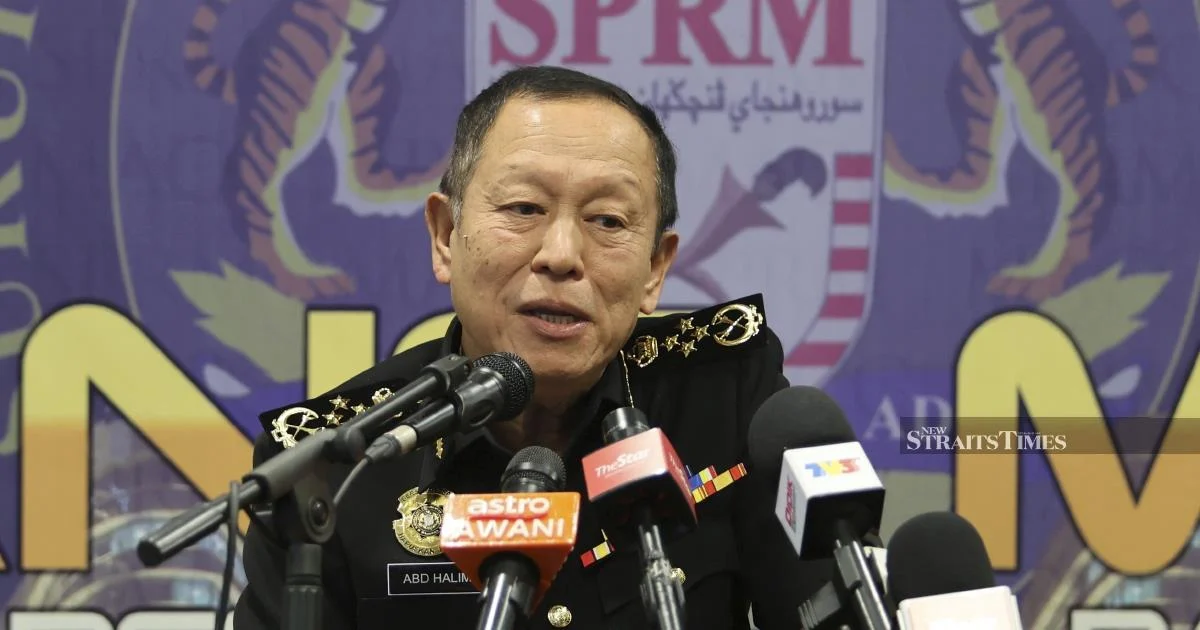
The Malaysian Anti-Corruption Commission has reaffirmed that its investigation into fugitive businessman Low Taek Jho continues unabated, brushing aside any suggestions that the matter has been shelved or abandoned. In a statement issued from its headquarters in Putrajaya, the agency clarified that despite Low's absence from the country and the passage of time, authorities maintain an active investigative posture toward the controversial figure who became synonymous with the 1Malaysia Development Berhad scandal.
Low Taek Jho, commonly known as Jho Low, fled Malaysia in 2015 amid deepening scrutiny into his role in one of the world's largest corporate fraud cases. The businessman, who wielded considerable influence in Malaysian financial and political circles during the administration of former Prime Minister Najib Razak, became the focal point of multiple investigations spanning jurisdictions from Kuala Lumpur to Singapore, the United States, and beyond. His departure marked a turning point in efforts to unravel the 1MDB debacle, which ultimately exposed how billions of ringgit were allegedly siphoned from the sovereign wealth fund through an intricate network of shell companies and offshore accounts.
The MACC's clarification comes at a time when public attention on the case has ebbed somewhat from its peak during the immediate aftermath of the change of government in 2018. However, maintaining an officially active status for the investigation signals that the commission has not accepted the notion of permanent closure despite practical challenges in apprehending someone operating beyond Malaysian territory. This stance reflects both institutional commitment and the understanding that financial crimes investigations often require extensive periods to mature, particularly when assets and financial trails span multiple countries.
Low's international mobility has presented persistent obstacles to Malaysian authorities seeking to bring him to account. Various countries have pursued their own investigations and legal actions, with the United States Department of Justice mounting an aggressive prosecution that resulted in civil asset seizure cases. Singapore's authorities have also investigated his activities in connection with 1MDB, underscoring how the scandal's tentacles extended throughout the region. Malaysia's insistence that its own probe remains active signals a determination not to cede jurisdiction or abandon domestic accountability mechanisms, even as other nations pursue parallel tracks.
The MACC's position carries particular significance given Malaysia's reputation within international anti-corruption frameworks. Keeping investigative files open demonstrates institutional resilience and commitment to the rule of law, particularly important for a nation that has sought to restore its international standing following the 1MDB crisis. The investigation serves as a reminder that accountability remains a priority even when suspects remain at large, and that Malaysia's anti-corruption machinery continues functioning despite the obvious logistical constraints.
For Malaysian investors and the broader business community, the ongoing investigation represents continuity in efforts to recover misappropriated funds and establish legal precedent for corporate governance violations. The 1MDB scandal exposed vulnerabilities in oversight mechanisms and asset protection frameworks that rippled across Southeast Asia's financial sector. Malaysian regulators have subsequently implemented stricter compliance requirements and enhanced monitoring protocols, reflecting lessons learned from an episode that cost the nation's credibility and substantial sums of public money.
The fugitive status itself presents complex legal and diplomatic dimensions. While Low remains beyond the reach of Malaysian law enforcement, maintaining active investigation status preserves the possibility of prosecution should circumstances change—whether through a shift in his operational base, cooperation from host nations, or evolution in international extradition frameworks. Several countries, including the United States, have secured convictions and asset seizures related to 1MDB, creating a global environment increasingly hostile to the fugitive businessman's freedom of movement.
The MACC's clarification also addresses a persistent public concern that major investigations might be quietly shelved due to political considerations or resource constraints. By explicitly stating that the Low investigation remains active, the commission reinforces public confidence in its institutional independence and commitment to pursuing high-profile cases regardless of their political sensitivity or temporal distance from the original alleged offences. This transparency proves particularly valuable in Malaysia's post-2018 context, where citizens have become more attuned to questions of accountability.
Moving forward, the investigation likely will continue to evolve as international cooperation mechanisms mature and as countries share intelligence and coordinate enforcement activities. The Financial Action Task Force and other regional bodies have increased pressure on nations to enhance cooperation in cross-border financial crime investigations, creating new avenues for Malaysian authorities to advance their probe. Additionally, any future changes in Low's circumstances, including potential apprehension in another jurisdiction or voluntary return, would immediately activate dormant aspects of the Malaysian legal process.
The MACC's statement ultimately reflects recognition that investigation permanence serves multiple functions: it maintains institutional credibility, preserves legal options, and signals to the public and international community that Malaysia has not accepted the outcome that a major perpetrator of financial fraud simply escapes accountability through flight. While uncertainty surrounds whether Low will ever face trial in Malaysia, the open investigation file ensures that the possibility remains alive, and that Malaysian law enforcement continues to monitor developments that might enable the pursuit of justice.

