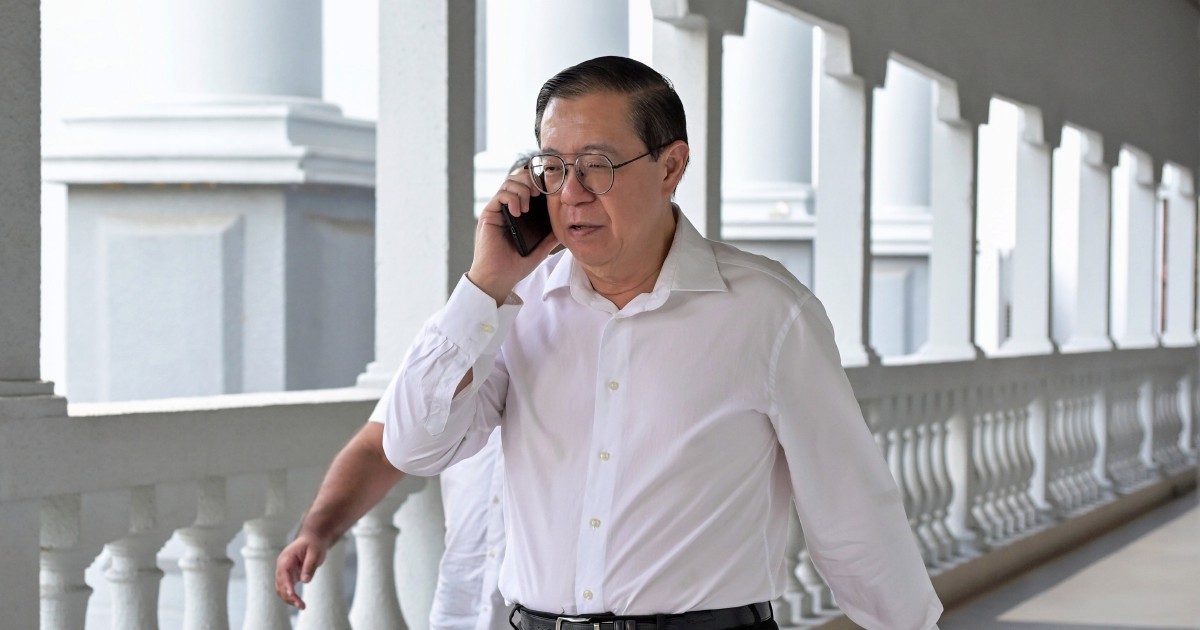
A Malaysian Anti-Corruption Commission investigating officer has categorically rejected claims that his examination of the RM6.3 billion Penang undersea tunnel and associated major roads project was tainted by prejudice or improper conduct. The officer's denial came during legal proceedings centring on the high-profile case involving former Penang Chief Minister Lim Guan Eng, whose tenure from 2008 to 2018 was marked by significant infrastructure development initiatives across the state.
The undersea tunnel project represents one of the most ambitious transportation undertakings in Malaysian history, designed to alleviate chronic congestion in the Penang conurbation by creating an alternative route across the Penang Strait. The development was conceived as a transformative infrastructure initiative that would fundamentally reshape connectivity patterns across the island and mainland sections of the state. The scheme encompassed not merely the tunnel itself but a comprehensive ecosystem of associated arterial roads and supporting infrastructure components, collectively valued at approximately RM6.3 billion.
Investigations into the project's procurement, approval mechanisms, and financial management came under MACC scrutiny following changes in Penang's political leadership and subsequent administrative reviews. Such transitions frequently trigger institutional examinations of prior administrations' major expenditures, particularly those involving substantial sums and complex contractual arrangements. The MACC's involvement reflected growing public and political interest in ensuring transparent governance frameworks around megaprojects of this magnitude.
The assertion of bias carries significant implications within Malaysia's institutional landscape, where public confidence in anti-corruption bodies directly influences their effectiveness and legitimacy. Defence counsel's challenge to investigatory impartiality strikes at the fundamental credibility of the MACC's findings, suggesting that evidence-gathering may have been compromised by predetermined conclusions or political motivations. Such allegations have become increasingly common in Malaysian legal proceedings involving prominent political figures, reflecting broader concerns about whether anti-corruption investigations maintain procedural integrity independent of shifting political contexts.
For Lim Guan Eng, the undersea tunnel project remained emblematic of his administration's modernisation agenda and development philosophy, which emphasised infrastructure investment as a catalyst for economic expansion and quality-of-life improvements. His supporters have consistently portrayed the project as a necessary response to Penang's geographic constraints and chronic transport challenges, arguing that any irregularities reflected systemic weaknesses rather than personal misconduct. The investigation's trajectory thus carries profound implications for how his political legacy will ultimately be assessed.
The MACC's investigator maintained that examination procedures adhered strictly to established protocols and evidentiary standards, suggesting that conclusions reached through such systematic methodology cannot reasonably be characterised as biased. This defence argument resonates with institutional positions frequently articulated by anti-corruption authorities, who assert that rigorous methodological frameworks inherently safeguard against prejudicial outcomes. The investigator's testimony therefore constitutes a pivotal moment in establishing whether the court will accept such procedural assurances as sufficient guarantees against bias.
The case unfolds against Malaysia's evolving relationship with anti-corruption enforcement, particularly following the 2018 election and subsequent governance transitions. The MACC has undertaken numerous high-profile investigations touching former administrations' megaprojects, raising persistent questions about whether investigative focus distributes equitably across political actors or concentrates disproportionately on particular groups. Malaysian civil society observers have tracked patterns in MACC enforcement with increasing sophistication, producing detailed analyses of investigation initiation, case progression, and prosecutorial outcomes across different political affiliations.
The Penang undersea tunnel project specifically illustrates tensions inherent in evaluating megaproject governance retrospectively. Such large-scale infrastructure initiatives inevitably involve complex decision-making across numerous governmental bodies, private contractors, and technical specialists. Determining precisely where authoritative responsibility lies and whether approvals reflected adequate oversight or improper authorisation becomes exceptionally difficult when multiple actors contributed to final decisions. This complexity creates interpretive space within which bias accusations gain purchase, as parties can plausibly argue that particular investigative emphases reveal prejudgement regarding which actors and decisions warranted intensive scrutiny.
For Malaysian business constituencies and international investors, this trial carries implications extending beyond Lim Guan Eng's personal legal position. The investigation's scope and methodology signal how governmental authorities will subsequently treat large infrastructure contracts under political leaders' supervision. Companies contemplating participation in future megaprojects must assess residual risks that executive decisions facing retrospective anti-corruption examination might result in criminal liability, regardless of whether procedural compliance occurred at decision-making moments. Such uncertainty potentially dampens investment enthusiasm and inflates risk premiums attached to major Malaysian infrastructure undertakings.
The court's ultimate assessment of bias allegations will likely establish precedential frameworks influencing how future anti-corruption investigations survive legal challenge. If the court accepts the investigator's testimony and finds procedures sufficiently rigorous to preclude bias, it substantially strengthens MACC's institutional position in pursuing further megaproject investigations. Conversely, if courts find systematic reasons to doubt investigative impartiality, MACC may face heightened evidentiary burdens and greater scrutiny regarding investigator selection, methodology documentation, and independence assurances. Either outcome will reverberate across Malaysia's anti-corruption apparatus and influence prosecutorial strategies in comparable cases.
The proceedings underscore fundamental tensions within anti-corruption frameworks attempting to balance vigorous enforcement against civil liberties protections and fair trial guarantees. Bias accusations invariably arise in high-stakes cases involving prominent figures, reflecting rational defence strategies rather than necessarily indicating actual prejudice. Nevertheless, accumulating such allegations across multiple cases may gradually erode public confidence in institutional impartiality, even when individual allegations lack substantiation. This dynamic creates genuine governance challenges transcending any single trial's outcome, compelling Malaysian institutions to continually reexamine and reinforce their credibility infrastructure.

