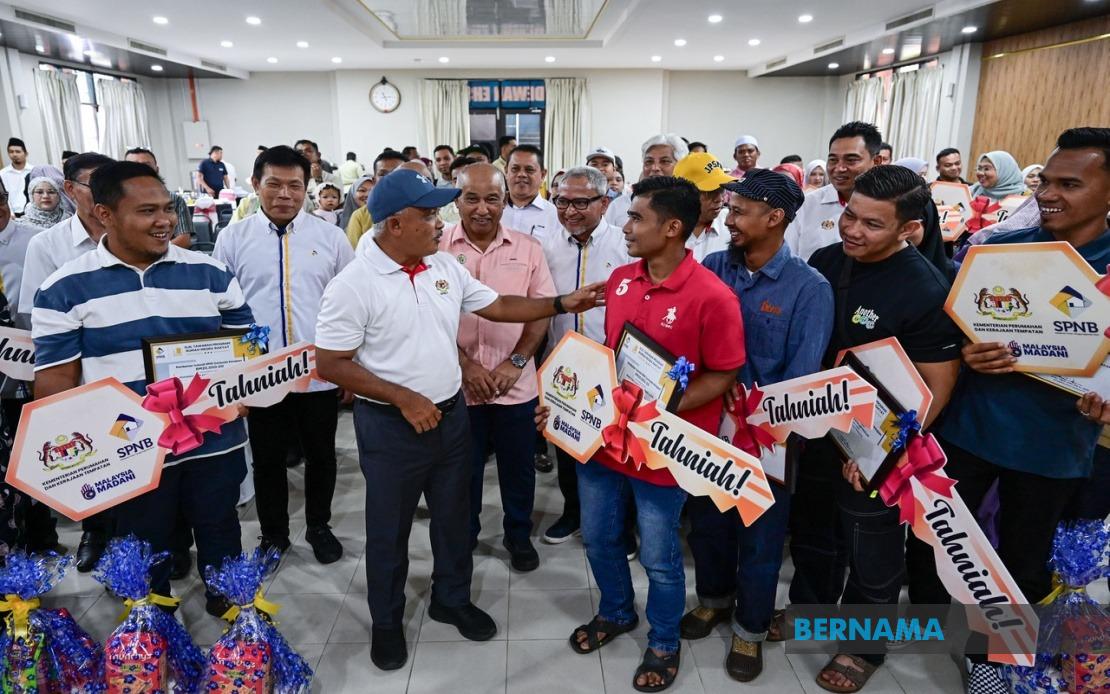
The MADANI Government has handed over housing assistance to fifty eligible recipients across Kuala Terengganu and Kuala Nerus parliamentary constituencies, reinforcing its pledges to expand affordable homeownership for ordinary Malaysians. The distribution ceremony, held at Dewan Ehsan in Felda Wilayah Timur, included the presentation of thirty completed residential units and twenty offer letters authorising the construction of new homes for qualifying families.
The initiative, known as Rumah Mesra Rakyat (RMR) or People's Friendly Housing, operates under the purview of the Housing and Local Government Ministry through its implementing agency, Syarikat Perumahan Negara Berhad. According to Datuk Dr M. Noor Azman Taib, the ministry's secretary-general, the programme embodies the government's strategic commitment to addressing a persistent gap in Malaysia's housing landscape—the plight of lower-income households who possess land but lack the financial capacity to construct dignified, safe dwellings. The scheme recognises that homeownership extends beyond mere shelter provision; it functions as a transformative social tool that stabilises families and strengthens communities from the ground up.
The underlying philosophy of the RMR programme transcends conventional housing delivery. Rather than viewing residential construction as an isolated transaction, government officials frame it as a comprehensive mechanism for elevating living standards and fostering long-term family stability. By enabling landowners to convert their assets into secure homes, the initiative addresses both immediate accommodation challenges and broader aspirations for generational wealth accumulation. This approach resonates particularly in Malaysia's regional context, where land ownership among lower-income groups often remains underutilised due to capital constraints.
Terengganu state has emerged as a significant beneficiary of the programme's expansion. Currently, six hundred and eighty RMR units are in various stages of implementation across the state, backed by a combined budget of RM46.67 million. As of May this year, two hundred and forty-six units had been completed and transferred to eligible recipients, while an additional one hundred and fifty-four units were actively under construction. These figures demonstrate the accelerating pace of project delivery, though substantial work remains before all commitments are fulfilled.
Within the Kuala Terengganu parliamentary constituency specifically, thirty-four RMR units have been activated, with eighteen already completed and eighteen currently in construction phases. Kuala Nerus, the neighbouring electoral area, hosts thirty-two units, comprising twenty-five finished homes and seven still under development. These locality-specific breakdowns illustrate how the broader national strategy translates into tangible community benefits, creating visible infrastructure investments that touch individual families and reshape residential landscapes.
The government's Budget 2026 allocations signal continued momentum. Officials have announced intentions to construct six thousand five hundred and forty-five additional RMR units nationwide, substantially exceeding current completion rates. To date, the national programme has delivered three thousand nine hundred units across Malaysia, of which two thousand four hundred and seventy-eight have been finalised and transferred to beneficiaries. The remaining one thousand four hundred and twenty-two units remain under active construction, indicating a healthy pipeline of future completions.
Historically, the RMR programme has demonstrated impressive reach since its inception in 2002. Over the past two decades, the scheme has extended housing support to more than eighty thousand families across Malaysia, providing them with safe, comfortable, and quality residential spaces. This longitudinal success suggests the model's fundamental soundness and its capacity to deliver meaningful outcomes at scale, particularly when sustained through consistent government funding and administrative oversight.
For Malaysian policymakers and development specialists, the Terengganu distribution event underscores a pragmatic approach to addressing housing affordability—a persistent challenge across Southeast Asia. Many regional governments struggle to balance market-driven housing systems with interventionist social programmes. Malaysia's RMR framework demonstrates that targeted state involvement, when structured appropriately, can effectively bridge gaps between aspiration and reality for ordinary citizens. The programme's emphasis on building upon existing land assets, rather than requiring recipients to acquire expensive plots, represents a fiscally intelligent approach that maximises public investment efficiency.
The implications for Malaysia's broader development trajectory merit consideration. Housing accessibility directly influences social mobility, educational outcomes, health indicators, and community cohesion. By facilitating homeownership among lower-income groups, the government addresses upstream determinants of life quality rather than merely responding to symptoms of deprivation. This preventative orientation aligns with long-term sustainable development principles increasingly emphasised in regional and global policy discussions.
Looking ahead, sustained implementation of such programmes will depend on adequate budgetary allocations, efficient project management, and responsiveness to recipient feedback. The Terengganu milestone suggests that administrative mechanisms and institutional capacity exist to execute these complex initiatives. However, the scale of remaining commitments—thousands of units across multiple states—demands vigilant oversight and continuous refinement of delivery mechanisms to ensure schedules are met and quality standards maintained.
The housing sector, both in Malaysia and throughout Southeast Asia, remains fundamentally shaped by affordability constraints that systemic market forces have failed to resolve independently. Government programmes like RMR occupy an essential niche, providing pathways to ownership that market mechanisms alone cannot guarantee. As urban populations continue expanding and land scarcity intensifies, such targeted interventions become increasingly vital to preserving social stability and preventing the entrenchment of housing inequality.

