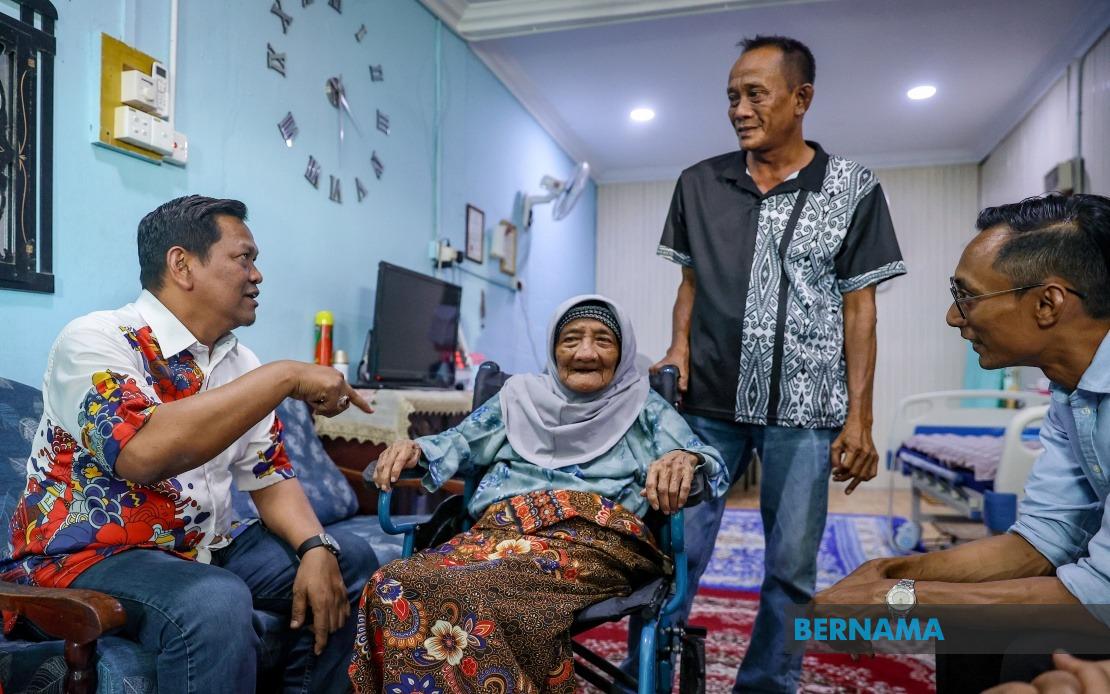
The MADANI Government has reiterated its unwavering commitment to the Ziarah Kasih programme, an initiative designed to furnish immediate relief to marginalised and economically disadvantaged Malaysians. Speaking in Mersing, Abdullah Izhar Mohamed Yusof, political secretary to the Communications Minister, underscored that this assistance scheme represents a cornerstone of the administration's pledge to engage meaningfully with communities across the country and buttress those facing genuine hardship.
The Ziarah Kasih mechanism operates through a structured identification process involving the Department of Information and Komuniti MADANI, which systematically identifies households and individuals meeting criteria for vulnerable status. By deploying this systematic approach, the government aims to ensure that resources reach those experiencing the most acute financial pressures and health-related challenges. Abdullah Izhar's remarks came during the Jiwa@Komuniti MADANI Sembang Santai World Cup Edition programme held in Endau, where officials engaged directly with recipients and assessed the practical impact of disbursements.
The initiative fundamentally aligns with Malaysia MADANI, the governing coalition's overarching development framework that prioritises citizen wellbeing as its central organizing principle. This philosophical orientation represents a deliberate pivot toward tangible, direct support mechanisms rather than exclusively structural or macroeconomic interventions. Officials emphasise that Ziarah Kasih will operate as a recurring rather than episodic programme, establishing predictability for communities that depend on such assistance to bridge gaps in their monthly budgeting and healthcare expenses.
Among those receiving assistance during the Mersing programme was Hamdan Abd Latif, a 71-year-old man whose health circumstances exemplify the complex challenges confronting elderly Malaysians lacking adequate social safety nets. Hamdan, now bedridden and entirely dependent on his wife for daily care, suffered a catastrophic injury in 2011 while engaged in supplementary fishing work just days before his scheduled retirement from the fire service. What initially appeared to be a simple accident subsequently revealed itself as a gateway to compounding medical crises that would reshape his family's trajectory entirely.
The sequence of medical adversities facing Hamdan illuminates how a single accident can precipitate cascading health deterioration across years. Medical investigations following his 2011 fall disclosed a brain tumour, necessitating surgical intervention and months of recovery. Although he achieved tumour remission, the underlying neurological damage from both the initial trauma and subsequent medical treatment progressively eroded his physical functioning. A bathroom fall approximately one year prior to the assistance programme resulted in a stroke, effectively rendering him immobilised and entirely dependent on continuous spousal care.
Hamdan's spouse, Meriam Abd Wahab, now 66 years old, has absorbed the entirety of caregiving responsibilities while watching her capacity to generate supplementary household income evaporate. She previously sustained a modest but consequential income stream through sewing work, an activity she has necessarily abandoned to provide round-the-clock attention to her husband's needs. The family's financial circumstances consequently deteriorated from already modest means to genuine precariousness, making government assistance programmes not merely helpful but existentially important to their ability to afford medications, medical consumables, and basic nutrition.
A second beneficiary encountered during the programme, 91-year-old Zainon Ibrahim, represents another demographic segment experiencing escalating vulnerability in contemporary Malaysia: elderly women outliving their spouses and depending on adult children who have themselves sacrificed economic prospects to provide care. Zainon receives full-time supervision from her son Jamaluddin Ismail, a 64-year-old former supervisor who abandoned his employment approximately two years earlier to become her primary caregiver. This decision, though emotionally and ethically compelling, created immediate household income loss precisely when Zainon's medical and nutritional requirements were increasing substantially.
Jamaluddin's choice to exit the workforce reflects a broader phenomenon affecting middle-aged Malaysians: the absence of adequate institutional eldercare infrastructure forces families to deploy adult children as full-time carers, effectively erasing their earning capacity. Though his siblings contribute financially where possible, the primary burden falls on Jamaluddin, whose forgone wages represent a permanent reduction in household resources. The Ziarah Kasih assistance, while insufficient to fully compensate for lost income, provides meaningful relief by subsidising the elderly woman's daily requirements and medical expenses, reducing the intensity of pressure on her son's already strained finances.
The targeting methodology employed by MADANI officials emphasises precision rather than universal distribution, recognising that government resources, however substantial, remain finite and require strategic deployment. The Department of Information collaborates with Komuniti MADANI structures at grassroots level to identify cases meeting objective vulnerability criteria: age combined with health incapacity, absence of adequate family financial support, and lack of alternative income sources. This evidence-based targeting approach mirrors international best practice in means-tested assistance programmes, though Malaysian implementation occurs within the distinctive context of cultural expectations regarding filial obligations and family-based welfare provision.
For Malaysian observers evaluating social policy effectiveness, the Ziarah Kasih programme exemplifies a pragmatic acknowledgment that rapid urbanisation, changing household structures, and escalating healthcare costs have outpaced traditional family-based support mechanisms. Previous generations relied substantially on multi-generational households and tightly-knit kampung communities to sustain elderly or infirm members; contemporary economic realities and geographic dispersion have substantially eroded these informal networks. Government programmes addressing this institutional gap represent necessary adaptation to demographic and economic transformation rather than ideological innovation.
The programme's sustainability and scale remain substantive questions for policy analysts monitoring the MADANI Government's welfare trajectory. Ziarah Kasih's success in reaching marginalised populations depends heavily on sophisticated identification mechanisms and adequate budgetary allocation in successive fiscal years. As Malaysia's demographic profile continues ageing, with projections indicating that citizens aged 65 and above will comprise approximately 15 percent of the population by 2040, the demand for targeted elderly care and disability support will intensify dramatically. Current programme beneficiaries like Hamdan and Zainon represent merely the visible fraction of a much larger population experiencing comparable circumstances.
The government's commitment to regular, sustained implementation rather than sporadic interventions signals recognition that vulnerability is not temporary but often chronic, requiring reliable ongoing support rather than episodic charity. Officials stress that Ziarah Kasih operates within broader Malaysia MADANI framework emphasising dignified assistance delivered through direct engagement rather than impersonal bureaucratic processing. This relational dimension—wherein government representatives meet beneficiaries, understand their specific circumstances, and deliver assistance personally—carries psychological and social significance beyond the material value of assistance provided.

