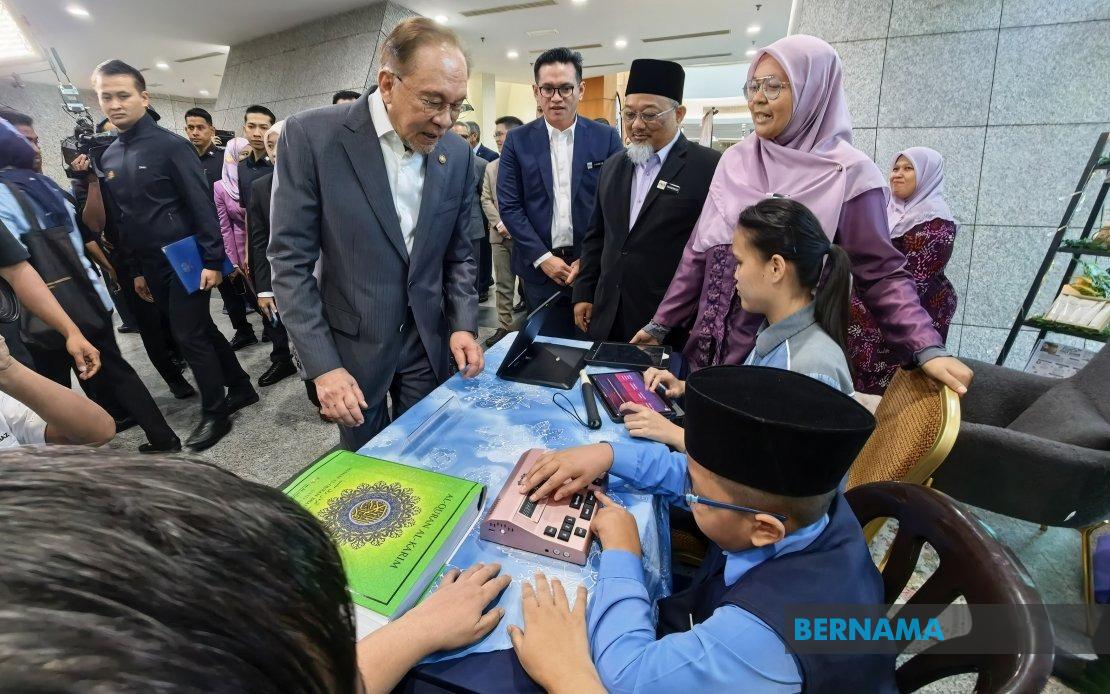
Malaysia's commitment to elevating the teaching profession has taken centre stage in the government's policy agenda, with Prime Minister Datuk Seri Anwar Ibrahim emphasising that educator welfare and educational excellence remain inseparable from the nation's broader development goals. Speaking at a gathering with Ministry of Education staff in Putrajaya on July 28, Anwar underscored how the MADANI Government has positioned the education sector as a cornerstone of its strategic priorities since assuming office, signalling a deliberate shift in how the administration views teachers and their role in nation-building.
The Prime Minister's remarks reflect a comprehensive approach to teacher support that extends beyond symbolic gestures. Since taking office, the government has implemented tangible measures designed to improve service conditions, create clearer pathways for professional advancement, and enhance overall compensation. Anwar articulated a specific concern affecting Malaysian education: the traditional pattern of talented educators seeking administrative roles not because of passion for management, but out of necessity to achieve recognition and financial reward. By expanding opportunities for salary increases and career progression within the teaching discipline itself, the government aims to retain highly skilled educators in classrooms where their impact matters most.
The emphasis on sustainable funding represents a critical dimension of this commitment. Malaysia's education budget stands as a significant marker of governmental priorities, and Anwar highlighted the country's distinction according to UNESCO data: Malaysia allocates a higher proportion of its national budget to education compared to other countries globally. This statistic carries particular weight for a developing economy juggling multiple competing demands, suggesting a conscious choice to invest in human capital development over alternative expenditures. The government has pledged that this budgetary support will remain consistent through future annual allocations, providing institutional stability that allows the education sector to plan long-term initiatives rather than operating in uncertainty.
Beyond immediate welfare concerns, the government's reform agenda positions teachers as essential partners in technological advancement and economic modernisation. The integration of artificial intelligence into educational systems and the strengthening of Science, Technology, Engineering and Mathematics curricula represent forward-looking initiatives that demand educator expertise and commitment. These reforms cannot succeed through policy pronouncements alone; they require teachers who understand both pedagogical principles and emerging technologies to translate government objectives into classroom reality. Anwar's framing of educator support explicitly connects teacher welfare to these modernisation goals, suggesting that investing in educator satisfaction and development directly enables the technological transformation the nation seeks.
The gathering brought together senior government figures, including Education Minister Fadhlina Sidek, Chief Secretary to the Government Tan Sri Shamsul Azri Abu Bakar, and Public Service Director-General Tan Sri Wan Ahmad Dahlan Abdul Aziz, signalling cross-governmental institutional support for education sector priorities. This assembling of high-level officials underscores that education policy commands attention at Malaysia's apex decision-making level, rather than being relegated to the Ministry of Education alone. Such coordination suggests integrated approaches to teacher compensation, professional development, and systemic reform that require alignment across different government agencies.
Anwar's comments about public perception of the teaching profession touch on a deeper challenge facing educational systems across Southeast Asia. Teachers operate under intense scrutiny; individual failures attract immediate media attention and public condemnation, while the quiet success of educating millions of children daily passes largely unrecognised. This asymmetry in recognition creates a difficult psychological environment where educators bear disproportionate blame for social problems while receiving insufficient acknowledgment for their successes. The Prime Minister's explicit call for greater public appreciation of educators represents an attempt to rebalance this narrative, encouraging society to recognise that the massive responsibility entrusted to teachers deserves corresponding recognition and support.
The government's positioning of education as inseparable from Malaysia's aspirations in economic growth and technological advancement reflects international development patterns. Nations that have achieved sustained economic prosperity and technological leadership—from Singapore to South Korea—have prioritised education as foundational infrastructure. Anwar's framing aligns Malaysian policy with these successful models, arguing that future competitiveness depends on the quality of education provided today. This long-term perspective contrasts with short-term budget-cutting approaches that view education spending as discretionary rather than essential investment.
For Malaysian educators, these statements carry both encouragement and implicit expectations. The government has signalled willingness to invest in teacher development and compensation, but this investment comes paired with expectations that teachers will embrace curriculum reforms, integrate new technologies into teaching practice, and meet higher performance standards. The implicit bargain involves mutual commitment: the state provides better working conditions and career prospects, while teachers deliver higher-quality instruction and engage with educational modernisation initiatives.
The implications for Southeast Asia's education landscape merit consideration. Malaysia's explicit commitment to teacher welfare and education funding provides a regional example, particularly for developing economies facing pressure to balance multiple priorities. How successfully the MADANI Government implements these pledges will influence whether other regional governments accelerate similar investments or conclude that education spending remains discretionary. Malaysia's UNESCO-recognized budget allocation positions it as a regional leader in educational investment, establishing benchmarks that neighbouring countries may face pressure to match.
Looking forward, the practical implementation of these commitments will determine their significance. Statements about prioritising education require translation into specific salary increases, manageable class sizes, professional development opportunities, and working conditions that actually reflect the stated value placed on teaching. The government's willingness to position senior officials alongside education leaders suggests serious intent, yet the distance between policy announcement and institutional change in education systems remains substantial. How quickly and comprehensively the government translates its rhetorical commitment into structural improvements for educators will ultimately measure whether this represents a genuine reorientation of state priorities toward the teaching profession.

