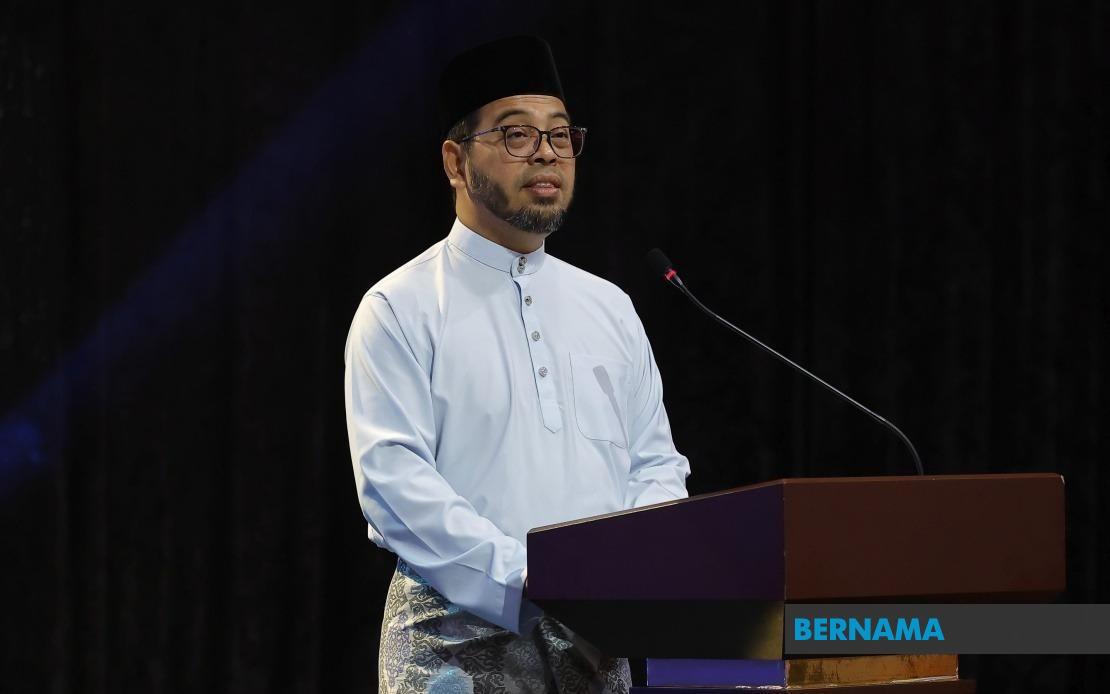
The federal government has reaffirmed its dedication to elevating tahfiz education as an integral component of Malaysia's broader educational landscape, rather than treating it as a parallel or secondary system. Minister in the Prime Minister's Department (Religious Affairs) Dr Zulkifli Hasan made this commitment clear during remarks at the 34th Darul Quran (DQ) JAKIM convocation ceremony in Kuala Lumpur, signalling a policy direction that seeks harmonious coexistence between religious and conventional academic pathways.
Central to the government's vision is a reconceptualisation of tahfiz education beyond its traditional focus on Quranic memorisation. Rather than producing memorisers alone, Dr Zulkifli emphasised that these institutions must cultivate individuals who combine religious knowledge with robust character development and practical competencies. This holistic approach reflects evolving demands in Malaysia's labour market and society, where employers and communities increasingly seek graduates with multidisciplinary capabilities.
The timing of this policy affirmation proved symbolic, coinciding with Darul Quran's Diamond Jubilee celebration marking six decades since its establishment in 1966. Over these 60 years, the institution has become a flagship tahfiz centre in Malaysia, accumulating an extensive track record of institutional excellence and graduate achievement. The milestone provided an opportune moment to assess the sector's trajectory and outline future ambitions.
Darul Quran's quantifiable contributions to the nation have been substantial. The institution reports producing 12,633 huffaz—individuals who have memorised the Qur'an—who now serve across diverse professional and societal sectors. This distribution is noteworthy: graduates work not only in explicitly religious fields such as Islamic education and syariah judiciary, but also in dakwah (Islamic outreach), research, public administration, and professional industries. This dispersal demonstrates that tahfiz credentials need not confine individuals to narrowly defined career paths, but rather enable diverse contributions across the economy.
The 2024 convocation ceremony itself illustrated the expanding scope of tahfiz education in Malaysia. Seven hundred graduates received formal recognition, distributed across multiple qualification levels and formats. Notably, 37 recipients earned Bachelor's degrees through collaboration with Universiti Sains Islam Malaysia (USIM), indicating a deliberate move toward integrating tahfiz studies with accredited university-level credentials. A further 454 graduates completed Diploma programmes in Qur'an and Qiraat studies, while 204 finished tahfiz certification courses and five completed basic certificates, reflecting a differentiated educational pathway system catering to students at various levels of commitment and ability.
This structural diversification carries implications for Malaysia's broader educational equity agenda. By offering multiple entry and exit points—from basic certification to bachelor's degrees—tahfiz institutions like Darul Quran accommodate learners with differing circumstances, aspirations, and prior educational backgrounds. For many Malaysian Muslims, particularly from lower-income families, these pathways represent genuine opportunities for advancement and credentials otherwise inaccessible through conventional tertiary institutions.
Dr Zulkifli's emphasis on transformative vision—encouraging the legacy of 60 years to inspire "greater excellence" in the next 60 years—suggests the government recognises that tahfiz education faces modernisation pressures. Global education standards, digital innovation, and changing employment landscapes necessitate continuous evolution. Institutions must enhance pedagogical methods, update curricula to include contemporary Islamic scholarship and emerging disciplines, and ensure graduates possess competitive soft skills such as communication, teamwork, and critical thinking.
The strategic positioning of tahfiz education alongside mainstream schools rather than in isolation reflects Malaysia's multicultural and multi-religious context. In a plural society, the government's commitment to strengthen Islamic education must be accompanied by tangible efforts to ensure such institutions contribute positively to national cohesion and meet quality benchmarks comparable to secular counterparts. This approach helps prevent perceptions of institutional stratification or marginalisation that could undermine social integration.
For Southeast Asia more broadly, Malaysia's experience with integrating tahfiz education into national frameworks offers instructive lessons. Across the region, Islamic educational institutions serve millions of students, yet their relationship to state systems varies widely. Malaysia's model—characterised by government institutional support, quality accreditation, and deliberate integration with mainstream pathways—demonstrates one approach to honouring religious education while maintaining national educational coherence.
The government's sustained backing also signals confidence in tahfiz institutions as engines of character formation and moral leadership. As Malaysian society navigates rapid technological change, urbanisation, and social transformation, authorities appear to view these centres as anchors for spiritual and ethical grounding. By strengthening them institutionally and elevating their profile, policymakers hope to reinforce the role of religious education in cultivating socially responsible citizens.
Darul Quran's trajectory over six decades exemplifies the capacity of focused institutions to achieve excellence within their specialisation. However, the minister's framing of the Diamond Jubilee as a transition point—not merely a celebration of past accomplishment but a launch pad for renewed ambition—indicates expectations for accelerated advancement. Whether through enhanced funding, infrastructure investment, faculty development, or curricular innovation, the coming years will test whether rhetorical commitment translates into substantive resource allocation.
Ultimately, Dr Zulkifli's message encapsulates a fundamental policy direction: Malaysia's tahfiz sector will not remain static or confined, but will evolve as a dynamic component of the national educational ecosystem. Success will depend on balancing fidelity to religious and pedagogical traditions with openness to institutional modernisation, ensuring that institutions serving 700 graduates annually can expand their reach and impact while maintaining the scholarly rigour that built their reputation over six decades.

