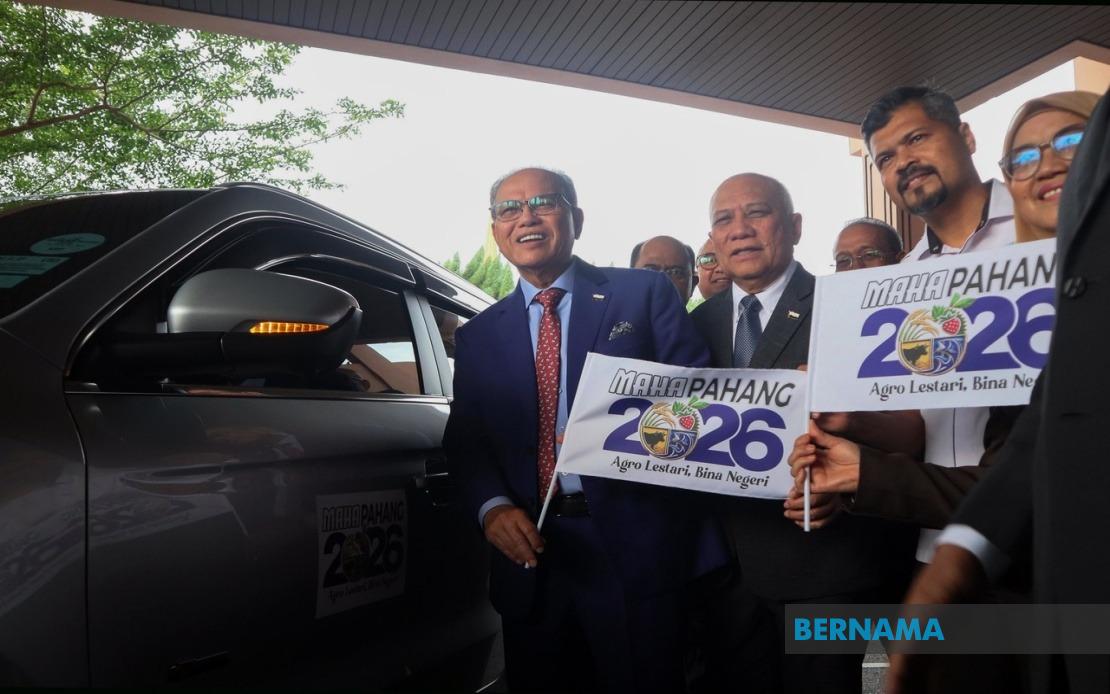
The Pahang state government is preparing to launch one of its largest agricultural exhibitions this July, with ambitious targets that underscore the region's commitment to promoting the farming sector. MAHA Pahang 2026, scheduled to run from July 30 to August 2 at Dataran Raub, is expected to become a significant draw for visitors from across the state and neighbouring regions, according to Menteri Besar Datuk Seri Wan Rosdy Wan Ismail. The four-day event aims to attract more than 100,000 attendees while facilitating commercial transactions worth RM1.3 million between participating entrepreneurs and consumers.
The scale of MAHA Pahang 2026 reflects a deliberate strategy by state authorities to create a centralized marketplace where agricultural producers can directly engage with buyers and the general public. The participation of approximately 100 entrepreneurs signals broad interest from the farming and agribusiness communities in Pahang, indicating confidence in the event's drawing power and commercial viability. Such exhibitions serve as crucial platforms in Malaysia's agricultural calendar, allowing smallholder farmers, livestock breeders, and value-added product manufacturers to showcase their wares beyond traditional distribution channels.
To enhance visitor experience and drive foot traffic, the Pahang state government is deploying an attractive incentive structure through a lucky draw programme. The headline prizes—a Wagyu cow and a Perodua Bezza vehicle—represent high-value giveaways designed to capture public imagination and encourage attendance. Beyond these marquee prizes, organizers are planning numerous secondary giveaways, creating multiple layers of incentive that broaden appeal across different visitor demographics. Such promotional tactics have become standard practice at major agricultural fairs across Southeast Asia, where competition for attention in an increasingly crowded events calendar necessitates compelling audience engagement strategies.
Wan Rosdy's remarks came during the official flagging off of a convoy comprising 20 vehicles from various government departments and agencies, underscoring the multi-agency coordination required to deliver an event of this magnitude. The ceremonial launch at the Bera District and Land Office served as a symbolic moment, with government machinery mobilized to ensure visibility and logistical support. This administrative footprint demonstrates that MAHA Pahang 2026 enjoys high-level political backing, which typically translates into necessary infrastructure support, security arrangements, and promotional resources.
The Menteri Besar also publicly acknowledged the contributions of Agriculture and Food Security Minister Datuk Seri Mohamad Sabu and the event's committee chairman, emphasizing collaborative governance in bringing the initiative to fruition. Such formal recognition is not merely ceremonial; it reflects the intergovernmental coordination required when federal agricultural portfolios intersect with state-level economic development priorities. The visibility of federal-level agricultural leadership at state events reinforces the importance of farming to Malaysia's broader economic and food security agenda.
MAHA Pahang 2026 is being positioned as more than a marketplace—it is framed as an educational platform where visitors can absorb knowledge about agricultural advancement and innovation. The event will feature exhibitions highlighting new crop varieties, reflecting the sector's ongoing evolution toward higher-yielding, climate-resilient, and market-responsive cultivars. For farmers and agricultural entrepreneurs in Pahang, exposure to emerging technologies and breeding advances represents valuable professional development, while consumers gain insight into where their food originates and what production methods underpin modern farming in Malaysia.
The choice of Dataran Raub as the venue carries practical significance for Pahang's agricultural heartland. Raub district has established credentials as a farming region, with longstanding involvement in rubber, palm oil, and diversified agriculture. Holding MAHA Pahang 2026 at this location leverages existing agricultural infrastructure and taps into established supply chains and producer networks, reducing logistical friction. Additionally, the district's geographic position within Pahang makes it reasonably accessible to potential visitors from across the state and adjacent regions.
From a regional perspective, MAHA Pahang 2026 contributes to Malaysia's broader positioning in Southeast Asian agricultural trade and innovation. As regional neighbors increasingly compete on agricultural productivity and value-added processing, events that showcase local production capabilities and business opportunities support Malaysia's competitive positioning. The exhibition format allows buyers from other states and potentially from neighbouring countries to assess Pahang's agricultural offerings, potentially catalyzing business partnerships and export opportunities.
The targeted RM1.3 million in sales represents a measurable commercial objective that extends beyond mere visitor attendance figures. This sales target indicates expected transaction values per visitor, suggesting organizers have conducted preliminary market research on typical spending patterns at similar events. Achieving this revenue figure would validate demand for Pahang agricultural products and might provide momentum for follow-up commercial initiatives, whether through online platforms, wholesale partnerships, or repeat events.
For Malaysian consumers, particularly in Pahang and neighbouring states, MAHA Pahang 2026 offers a rare opportunity to engage directly with primary producers and purchase fresh agricultural products, potentially at prices more advantageous than conventional retail channels. The direct-to-consumer model reduces intermediary markups, benefiting both producers and consumers. For smallholder farmers who typically struggle with market access and pricing power, events of this nature can be transformative, allowing them to build customer relationships and gather feedback that informs production decisions.
The event also addresses broader Malaysian policy priorities around food security and self-sufficiency. By promoting local agricultural products and creating visibility for domestic farming enterprises, MAHA Pahang 2026 supports the national agenda of reducing import dependency and strengthening rural incomes. Agricultural exhibitions function as soft infrastructure for economic development, facilitating the flow of information, capital, and relationships that enable agricultural sectors to evolve and strengthen.
Looking forward, the success metrics for MAHA Pahang 2026 will extend beyond attendance and sales figures to encompass qualitative outcomes such as business partnerships forged, knowledge transferred, and momentum generated for sustained agricultural development in Pahang. Should the event meet or exceed its targets, it may become an established fixture in Pahang's annual calendar, providing recurring platforms for agricultural commerce and promotion. The government's investment in flagship agricultural exhibitions reflects confidence in farming's enduring importance to the state's economy and society.

