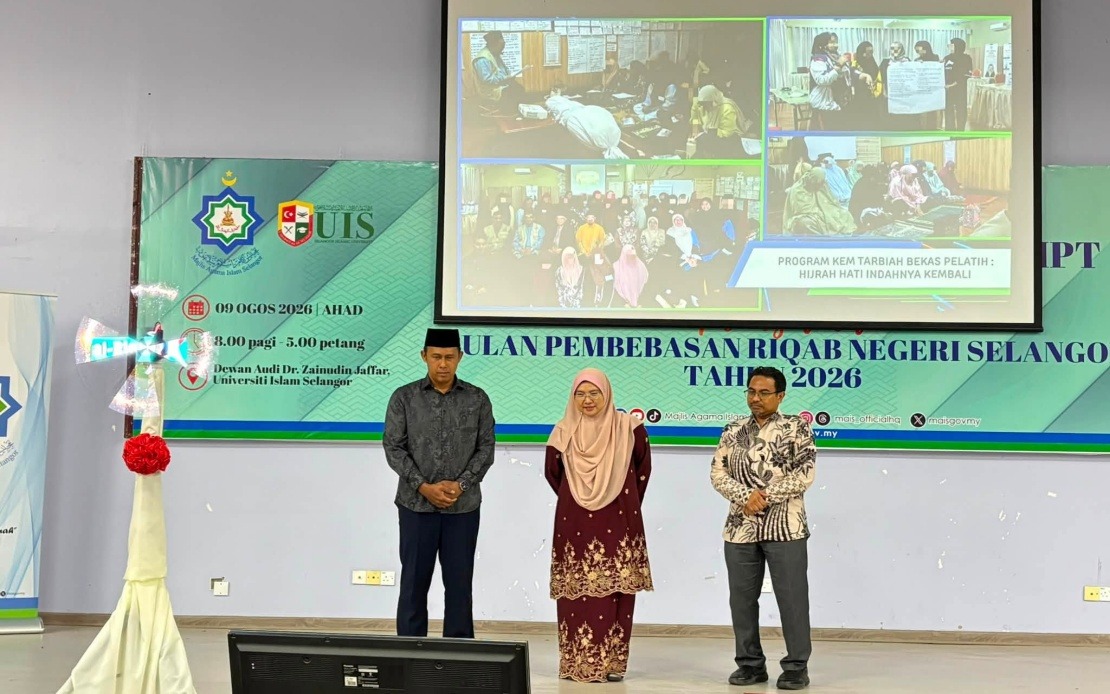
The Selangor Islamic Religious Council (MAIS) has substantially reinforced its commitment to addressing social welfare within the Muslim community by channelling over RM17 million in zakat contributions to assist 13,945 individuals classified as asnaf riqab during the past financial year. This targeted intervention represents a significant portion of MAIS's annual charitable allocation dedicated to a population facing multifaceted challenges spanning addiction, mental health, and faith-related concerns across Selangor.
The council's comprehensive support infrastructure operates through a network of three dedicated rehabilitation homes and twenty-four specialist facilities designed specifically for the asnaf riqab demographic. Beyond providing residential rehabilitation services, MAIS has invested in extensive training and educational initiatives, coupled with professional counselling infrastructure and ongoing welfare assistance. This layered approach reflects an understanding that sustainable rehabilitation requires more than temporary shelter or emergency support, instead demanding coordinated intervention across multiple dimensions of personal recovery and social reintegration.
Further demonstrating momentum in this area, MAIS reported that between January and June of the current year, an additional 1,656 individuals received assistance totalling RM4.1 million in zakat allocations. This mid-year figure suggests the council remains on track to potentially exceed its previous year's expenditure, indicating either rising demand or expanded outreach capacity. The consistency in funding demonstrates organisational commitment rather than episodic charitable activity, establishing a predictable resource flow for programme continuity.
A notable innovation in MAIS's approach involves the recruitment and training of 213 specialized guides known as Al Riqab guides. These trained mentors function as peer advocates and rehabilitation facilitators, helping individuals navigate the complex pathway from crisis or deviation toward reintegration into mainstream Islamic practice and social functionality. The guide programme acknowledges that professional intervention alone often proves insufficient without sustained personal mentorship and community connection throughout the recovery journey.
The asnaf riqab category itself encompasses a broad spectrum of vulnerabilities formally recognized through Islamic jurisprudential channels. The 2012 fatwa underlying this classification encompasses individuals battling substance addiction, those navigating LGBT-related challenges, and Muslims who have fundamentally deviated from Islamic practice and belief. This expansive definition reflects institutional acknowledgment that social distress and faith disruption frequently intertwine, requiring holistic rather than purely spiritual or purely material responses. For Malaysian policymakers and regional observers, this framework demonstrates how religious institutions can operationalize inclusive support while maintaining orthodox theological boundaries.
To amplify public understanding and encourage broader participation in rehabilitation support, MAIS has declared August as the Riqab Liberation Month Campaign for 2026, beginning August 1st. This month-long initiative incorporates public forums addressing the social dimensions of riqab concerns, informational seminars, guidance workshops, and dedicated awareness counters positioned throughout Selangor. The Ihtifal Amal Islami initiative and the Selangor Riqab Seminar serve as flagship events intended to destigmatize both the asnaf riqab category and the rehabilitation process itself, encouraging families and communities to seek assistance rather than isolate affected individuals.
For Malaysian readers and policymakers, MAIS's approach offers important lessons about the potential role of religious institutions in social service delivery. Rather than treating addiction, LGBT issues, and faith deviation as purely criminal or medical matters, MAIS operationalizes them as rehabilitation challenges deserving structured support and community compassion. This model becomes particularly relevant as Malaysia continues developing its social safety net, particularly for populations that might otherwise fall outside secular welfare frameworks or face stigma within traditional family structures.
The scale of MAIS's commitment—serving nearly 14,000 individuals annually—suggests that asnaf riqab challenges constitute a substantial component of Selangor's social welfare landscape. The fact that such resources flow through zakat channels rather than government budgets indicates how Islamic philanthropic mechanisms address gaps in public provision, though it also raises questions about equitable access and the sustainability of depending on voluntary contributions for essential social services.
Regionally, MAIS's model carries implications for other Southeast Asian societies with significant Muslim populations. Indonesia, Thailand's southern provinces, and other contexts grapple with similar challenges around addiction, LGBT identities, and faith-related social rupture, yet institutional responses vary significantly. MAIS's combination of structured rehabilitation facilities, trained guides, and public awareness campaigns presents a systematic framework that balances religious principles with pragmatic social compassion, potentially offering reference points for neighbouring jurisdictions developing their own approaches.
The emphasis on guidance and faith-restoration alongside material assistance distinguishes MAIS's methodology from purely secular rehabilitation models. Rather than treating faith deviation as irrelevant to recovery, the council integrates spiritual reorientation with practical support, reflecting beliefs that sustainable rehabilitation requires addressing both material circumstances and spiritual/psychological foundations. This integration may particularly resonate for individuals whose primary identity and social belonging revolve around Islamic community participation.
Moving forward, the visibility generated through the Riqab Liberation Month Campaign and the expansion of Al Riqab guides suggest MAIS anticipates continued or growing demand. Public awareness initiatives risk inadvertently increasing caseloads if communities become more willing to report and seek assistance for previously hidden challenges. The council's apparent confidence in expanding its guide corps and launching this public campaign indicates institutional readiness to accommodate expanded service delivery, though the adequacy of current funding levels to meet future demand remains an open question worth monitoring.

