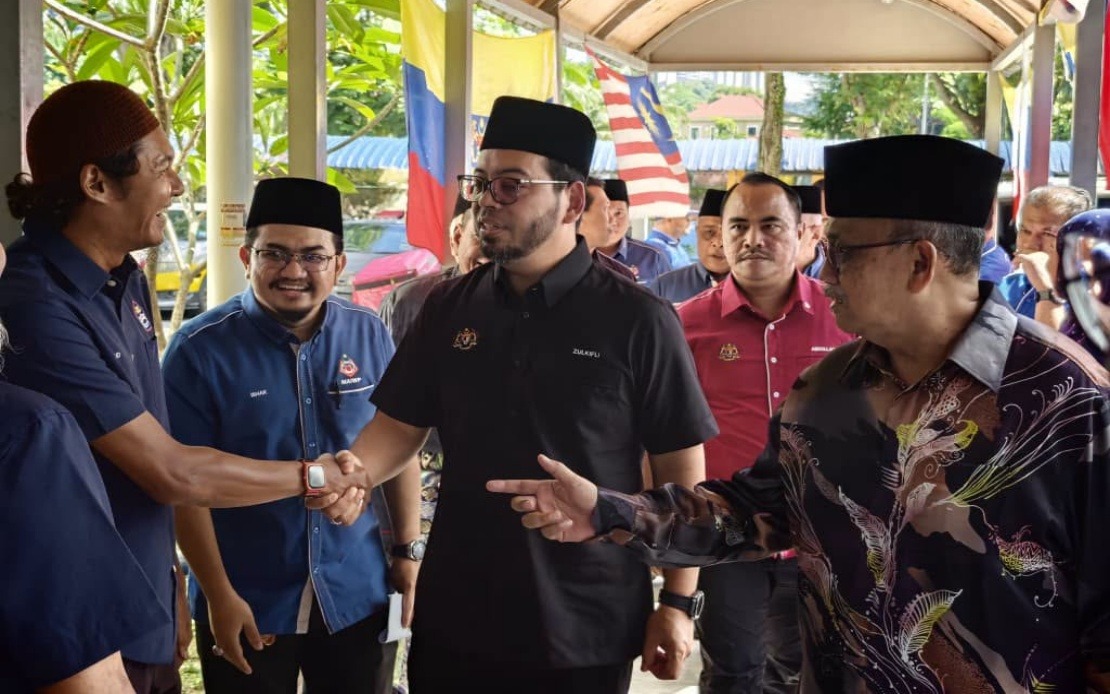
The Federal Territories Islamic Religious Council (MAIWP) has taken a significant step forward in modernising its charitable infrastructure with the launch of the Zakat Distribution Centre (PAZA) Batu at Jalan Pelangi 10, Taman Pelangi in Kuala Lumpur. The facility represents an evolution in how the council delivers Islamic philanthropic services to residents in one of the capital's established parliamentary constituencies, reflecting broader efforts to make religious welfare services more accessible and efficient for urban populations.
Senator Dr Zulkifli Hasan, Minister in the Prime Minister's Department (Religious Affairs), highlighted that the new centre transcends the conventional role of a service counter by functioning as a comprehensive community hub. Rather than serving merely as a transactional venue, PAZA Batu is positioned to engage residents through a multifaceted approach encompassing various welfare initiatives and targeted community programmes. This expanded remit signals a shift towards more integrated service delivery models where religious institutions become anchors for broader social support ecosystems.
The physical accessibility and user experience design of the facility have been prioritised to remove friction from the zakat assistance process. By situating the centre in a residential area and emphasising comfort and convenience, MAIWP aims to encourage greater participation among eligible recipients who might otherwise face barriers in accessing support. Such considerations become particularly important in urban environments where time constraints and transportation challenges can prevent individuals from claiming benefits they are entitled to under Islamic principles.
As of 23 June, MAIWP's distribution network had channelled RM505.6 million through 38 distinct assistance schemes and human capital development programmes. This scale of operation underscores the substantial financial responsibility shouldered by the council in maintaining a comprehensive safety net for Federal Territories residents. The diversity of programmes suggests targeted interventions addressing different demographics and circumstances, from immediate hardship relief to investments in skills development and economic mobility.
The inaugural activities surrounding the centre's opening demonstrated MAIWP's commitment to immediate impact on the ground. Distribution of 50 food baskets valued at RM100 each provided tangible support to households in the vicinity, while simultaneously generating visibility for the new facility within the community. Such symbolic gestures serve dual purposes—offering practical assistance while signalling organisational responsiveness to local needs.
Complementing the basket distribution, a "Ziarah Kasih" courtesy visit programme extended outreach to zakat recipients' homes in the surrounding areas, with particular focus on the Pekan Batu People's Housing Scheme (PPR). This home-based engagement model reflects recognition that effective welfare delivery sometimes requires meeting beneficiaries in their own contexts rather than expecting them to navigate bureaucratic settings. The concentration on PPR housing indicates targeted attention to lower-income residential zones where zakat assistance carries greatest significance for household economics.
For Malaysian readers and Southeast Asian observers, the expansion of PAZA's infrastructure carries implications for how religious institutions are evolving their social role in rapidly urbanising societies. The Federal Territories, as the capital region, often serve as pilots for administrative and service innovations that eventually diffuse to other states. The Batu centre represents one institution's response to reconciling traditional Islamic financial practices with contemporary expectations for professional, accessible service delivery.
The emphasis on community engagement beyond simple fund distribution suggests recognition that poverty alleviation and welfare support function most effectively when embedded within broader relationship-building and social cohesion efforts. By conducting home visits and organising community programmes, MAIWP positions itself not as a distant bureaucracy but as an integrated community actor invested in residents' overall wellbeing rather than merely processing financial transactions.
The timing of the facility's opening in June aligns with the final stretch of Ramadan and the approach of Eidulfitri celebrations, periods when charitable giving intensifies across Muslim-majority Southeast Asia. The centre's launch thus capitalises on heightened communal focus on almsgiving and social responsibility, embedding it within cultural rhythms that reinforce its purpose and visibility.
Looking forward, the PAZA Batu model may inform how other religious councils and welfare institutions across Malaysia and the region approach service modernisation. Success in this flagship location could catalyse further investment in physical infrastructure and technology-enabled service delivery that combines traditional Islamic philanthropy values with contemporary operational standards. The integration of human-centred programme elements alongside institutional efficiency improvements offers a template worthy of attention from policymakers concerned with effective, dignified welfare service delivery.

