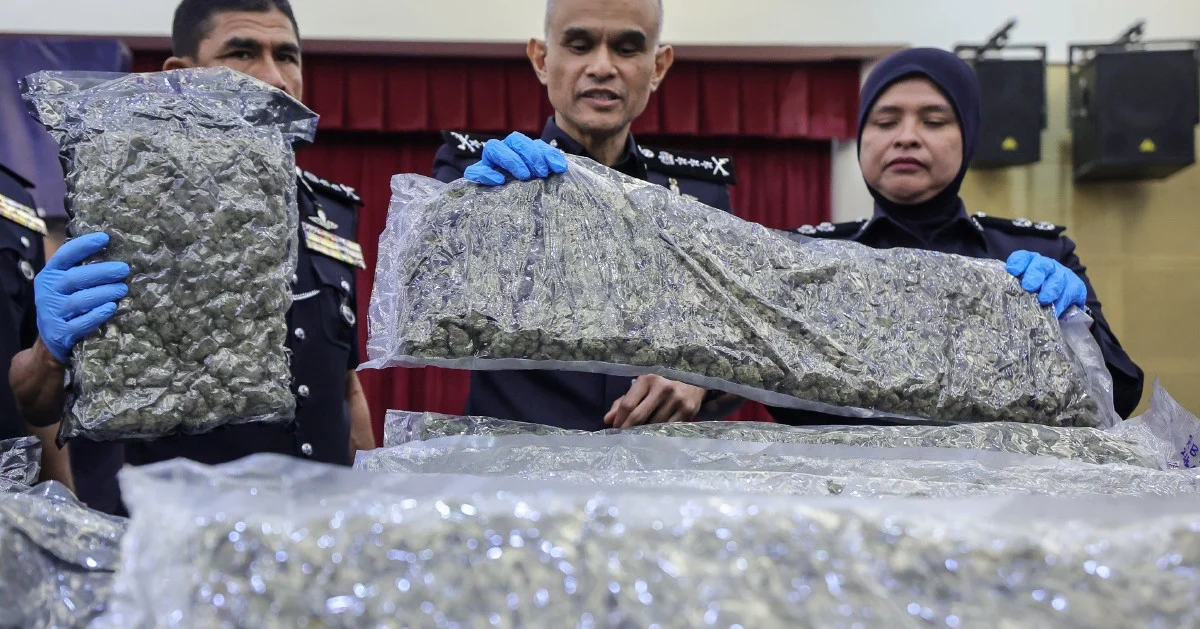
Malaysian police have uncovered a substantial drug trafficking operation centred at Kuala Lumpur International Airport, resulting in the seizure of more than 650 kilograms of cannabis buds and the arrest of 38 suspects since the beginning of the year. The operation demonstrates the persistent challenges that law enforcement agencies face in combating the movement of controlled substances through one of Southeast Asia's busiest aviation hubs, where both conventional and creative smuggling methods continue to challenge detection systems.
The scale of the seizure underscores the critical importance of KLIA as a focal point for international drug smuggling networks seeking to distribute narcotics throughout the region and beyond. As a major international airport connecting Malaysia to global markets, KLIA serves as both a transit point and distribution centre for criminal organisations attempting to move illicit substances into the country and across borders. The sustained law enforcement presence at the airport reflects authorities' understanding that vigilance at border control points remains essential to disrupting supply chains that fuel drug abuse and related criminal activity throughout Malaysia and neighbouring countries.
The involvement of foreign nationals among those arrested indicates that the trafficking network extends beyond domestic criminal elements, suggesting international coordination in procurement, transportation, and distribution operations. This international dimension complicates law enforcement efforts, as it requires coordination between Malaysian authorities and overseas agencies to trace the origins of seized drugs and dismantle the networks at their source. The presence of foreign participants also raises questions about the route the cannabis took before arriving in Malaysia, whether it originated from established cultivation regions in Southeast Asia or came from more distant sources.
Cannabis trafficking has become increasingly sophisticated in recent years, with criminal organisations employing advanced concealment techniques and exploiting vulnerabilities in cargo handling systems. The cannabis buds recovered at KLIA were likely concealed in luggage, freight shipments, or hidden compartments designed to evade detection by customs and police scanning equipment. The fact that 650 kilograms were intercepted suggests that significant quantities continue to slip through undetected, highlighting the resource challenges facing border security agencies managing the enormous volume of passenger and cargo traffic flowing through the airport daily.
From a public health perspective, the continued availability of cannabis in Malaysia perpetuates a consumer market that authorities have worked to suppress through enforcement and education campaigns. While global attitudes toward cannabis have shifted in some jurisdictions, Malaysia maintains strict drug laws that classify cannabis as a controlled substance, reflecting concerns about its health impacts and potential as a gateway to harder drug use. The seizure and subsequent criminal prosecutions send an important deterrent message to would-be traffickers while also addressing supply-side pressures that drive domestic consumption.
The arrest of 38 individuals represents significant manpower investment by law enforcement agencies in investigating the trafficking network and building criminal cases against those involved. Police must not only secure the initial seizure at the airport but also conduct follow-up investigations to identify the full scope of the operation, locate additional hidden caches, and trace financial transactions and communications between suspects. These investigations often reveal connections to broader organised crime networks involved in multiple illicit activities beyond drug trafficking.
The timing of the announcement coincides with ongoing regional efforts to intensify border security and counter narcotics trafficking, reflecting a broader commitment among Southeast Asian governments to address the drug problem systematically. Malaysia has positioned itself as an active participant in regional cooperation frameworks aimed at disrupting transnational crime, and operations like the KLIA cannabis seizure contribute to demonstrating progress on this front. However, law enforcement officials acknowledge that such seizures represent only a fraction of drugs in transit, and the volume intercepted serves as a sobering indicator of the scale of trafficking attempts.
The method of concealment, route analysis, and distribution network uncovered through the investigation will provide valuable intelligence for law enforcement agencies seeking to anticipate future smuggling attempts. Each successful seizure generates forensic data and investigative leads that help authorities understand evolving criminal tactics and refine detection strategies. Collaboration between airport security personnel, customs officers, and police narcotics units has proven effective in disrupting this particular operation and will continue to form the backbone of Malaysia's airport security apparatus.
Looking forward, the case highlights the need for sustained investment in detection technology, personnel training, and intelligence-sharing infrastructure at border control points. As trafficking organisations adapt their methods to circumvent existing security measures, law enforcement must continuously evolve its approach. The seizure of 650 kilograms at KLIA since January demonstrates that this adaptation is occurring, though much work remains to fully stem the flow of illicit drugs into Malaysian society and prevent their further distribution throughout the region.

