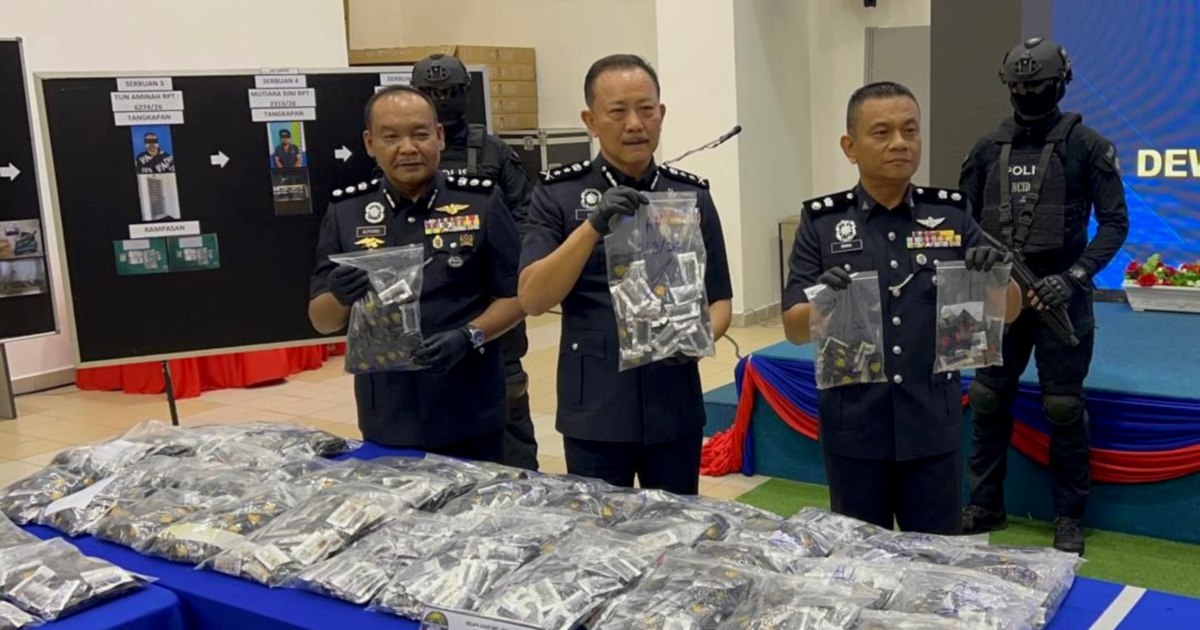
A substantial drug smuggling network centred on the production and sale of narcotic-infused vape cartridges has been dismantled following a coordinated law enforcement operation across Johor. The takedown on Sunday resulted in the apprehension of seven suspects and the seizure of contraband estimated at RM10.68 million, marking a significant blow against organised narcotics distribution in the state.
The operation unfolded through five simultaneous raids executed by police units across different locations in Johor, a strategy designed to prevent suspects from alerting associates or disposing of evidence. This coordinated approach has become standard practice for Malaysian law enforcement when targeting transnational criminal networks that operate across multiple sites. The scale of the seizure underscores how lucrative the illicit vape market has become in Malaysia, where the popularity of electronic smoking devices has created opportunities for organised crime syndicates to mask drug trafficking.
Drug-laced vape cartridges represent an evolution in how narcotics are distributed in Southeast Asia. Unlike traditional pills or powders, these modified devices appeal particularly to younger consumers who may perceive vaping as less harmful than conventional drug use. The cartridges can be filled with various controlled substances—commonly synthetic cannabinoids, amphetamines, or other designer drugs—making them difficult for authorities to detect at first glance. When mixed with legitimate vaping liquid, the presence of narcotics becomes nearly invisible to casual observation.
The monetary value assigned to the seized materials reflects both the volume and the profit margins involved in this trade. Each cartridge can retail for prices ranging from RM20 to RM50 on the street market, depending on the specific substance involved and local demand fluctuations. When multiplied across thousands of units, the economics become compelling for criminal organisations, particularly when the legal risks remain lower than traditional drug trafficking due to enforcement gaps and the relative novelty of regulation in this sector.
Johor's vulnerability to such operations stems from its strategic location as Malaysia's most southerly state and its proximity to Singapore, one of Asia's largest consumer markets where vaping products are increasingly popular. The state's extensive coastline and land borders create multiple entry points for smuggled goods, whilst its industrial zones provide cover for clandestine manufacturing operations. Criminal networks have long exploited Johor's geography to distribute contraband throughout Malaysia and across the Strait of Johor into Singapore.
The syndicate's operational model likely involved importing or procuring blank vape cartridges, filling them with drug-laced solutions in clandestine locations, and then distributing the finished products through street-level dealers. This multi-stage approach allows different members to specialise in procurement, processing, quality control, and distribution, creating compartmentalisation that makes disruption of one element difficult for authorities. The seven arrests suggest police successfully penetrated this structure and identified individuals operating at different levels of the supply chain.
The investigation leading to Sunday's operation presumably involved extended surveillance, intelligence gathering, and cooperation between state and federal law enforcement agencies. Malaysian police have increasingly invested in narcotics intelligence units capable of tracking chemical procurement patterns and identifying manufacturing sites before large-scale production occurs. The coordination required to execute five simultaneous raids demands sophisticated logistical planning and real-time communication between teams deployed across the state.
This bust reflects broader regional concerns about synthetic drug consumption among young people in Malaysia and Southeast Asia. Vape-based narcotics particularly appeal to consumers aged 15 to 35, a demographic that authorities have struggled to reach through conventional anti-drug messaging. The devices' portability and discreteness make them ideal for concealment, whether in vehicles, school bags, or personal pockets. Parents, educators, and public health officials have expressed growing alarm about the difficulty of detecting vape-based drug use compared to smoking or injection.
For Malaysian law enforcement, the case also highlights the need for enhanced regulation of vape products themselves. Many neighbouring countries have implemented stricter licensing requirements for vape retailers, mandatory registration of cartridge sales, and chemical composition tracking systems. Malaysia currently lacks such comprehensive oversight, creating gaps that criminal entrepreneurs readily exploit. Without stronger regulatory frameworks, police must rely on reactive enforcement rather than preventive measures.
The seven arrested suspects now face drug trafficking charges, which in Malaysia carry severe penalties including lengthy prison sentences and, in cases involving large quantities, potential capital punishment. However, conviction typically requires demonstrating that individuals knowingly participated in the enterprise, a legal threshold that can be challenging when dealing with compartmentalised criminal organisations where members claim ignorance of their role in the larger operation.
The seizure is likely to disrupt supplies in several local markets, at least temporarily. Street prices for drug-laced cartridges will probably increase in affected areas as retailers face scarcity, which may accelerate demand for alternative delivery methods. Criminal syndicates will simultaneously begin rebuilding operational capacity, recruiting replacements for arrested members, and refining security protocols to avoid future police detection. This cycle of disruption and reconstitution has characterised drug enforcement throughout Malaysia and the region for decades.
The success of this particular operation demonstrates that Malaysian authorities possess capability to identify and dismantle large-scale narcotics networks. However, sustained effort and resource commitment remain necessary to address the underlying factors driving syndicate operations—including demand from Malaysian and regional markets, profit incentives, and the relatively low risk of detection when operations remain compartmentalised. Without complementary efforts in regulation, education, and treatment provision, enforcement victories will likely prove temporary.

