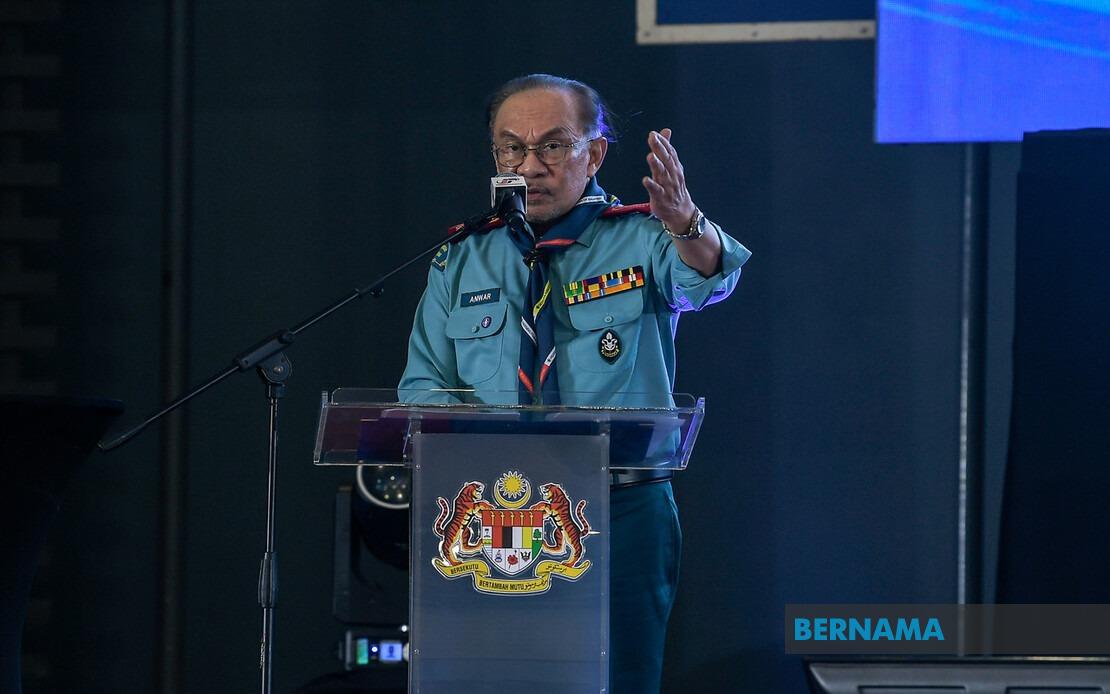
Prime Minister Datuk Seri Anwar Ibrahim has moved to dispel concerns that championing Malay as the national language represents a threat to other languages spoken across Malaysia. Speaking at an event in Permatang Pauh on Thursday, he articulated a vision of linguistic complementarity rather than competition, suggesting that citizens can simultaneously master Malay while developing competence in globally important tongues.
The framing of this position carries particular significance in Malaysia's ongoing language policy debates. For decades, tensions have simmered beneath discussions about linguistic priorities in education and public discourse, with different communities holding divergent views on how prominently Malay should feature relative to English and regional languages. Anwar's remarks attempt to reposition the question as one not of replacement but of addition, a rhetorical shift that could influence how future language policies are shaped and debated.
Central to the Prime Minister's argument is the premise that multilingualism strengthens rather than weakens individual prospects and national competitiveness. He emphasised that all Malaysian citizens, irrespective of ethnic origin, should develop strong proficiency in Malay, the country's constitutional official language. Yet this foundational commitment need not preclude excellence in other languages, he suggested, particularly those with significant regional and global economic weight.
Anwar placed particular emphasis on English, acknowledging its evolution into a lingua franca that transcends borders and sectors. Rather than viewing English as a competitor to Malay, he proposed that educational systems should embrace both, with English functioning as a complementary tool rather than a replacement for the national language. This distinction matters considerably in Malaysian education policy, where debates about the balance between Malay-medium and English-medium instruction remain contentious.
The Prime Minister also highlighted Mandarin Chinese as increasingly vital to Malaysia's economic future. Given the prominence of Chinese-speaking markets throughout Southeast Asia and beyond, proficiency in Mandarin represents what Anwar termed an economic imperative. This acknowledgment reflects pragmatic recognition of regional trade patterns and investment flows, where linguistic capability often determines competitive advantage. For Malaysian businesses and professionals, Mandarin proficiency can unlock opportunities in one of the world's largest economic zones.
Tamil language preservation featured in Anwar's remarks as well, reflecting Malaysian society's linguistic diversity and the cultural heritage of the Indian community. His suggestion that Malaysians should deepen engagement with Tamil indicates government sensitivity to the aspirations of non-majority communities to maintain linguistic and cultural connections while remaining fully integrated into national life.
Fundamentally, Anwar reframed multilingualism as a non-zero-sum proposition, rejecting the notion that mastery of one language necessarily diminishes competence in others. Instead, he presented language learning as an additive process that expands individual capability and creates broader opportunities across education and commerce. This perspective counters traditional framing in Malaysian public discourse, where language choices have sometimes been portrayed as either-or decisions fraught with cultural and political significance.
Beyond linguistics, Anwar's address touched on racial harmony and national cohesion, themes that resonate throughout Malaysian political discourse. He cautioned against sowing discord among communities and stressed that Malaysia's multicultural stability cannot be assumed permanent without deliberate effort to nurture shared values. The connection between language policy and social unity runs deep in Malaysia's national narrative, with language choices often carrying implications for intercommunal relations.
The Prime Minister advocated for cultivation of what he termed a spirit of sharing, caring, and mutual support among all Malaysians. This framing situates language policy within a broader framework of inclusive development, where citizens of all backgrounds benefit equitably from national progress. Such language carries particular weight given Malaysia's historical experience with communal tensions and the ongoing challenge of building genuinely inclusive prosperity.
For Malaysian policymakers and educators, Anwar's remarks provide political cover for pursuing multilingual approaches in schools and universities. By positioning language diversity as complementary rather than threatening, the government signals openness to international educational standards that typically emphasise proficiency in multiple languages. This alignment with global best practices in education could influence curriculum development and resource allocation across Malaysia's school system.
The timing of these comments matters as well. They emerge amid ongoing discussions about Malaysia's competitiveness in regional and global markets, where language capabilities increasingly determine workforce readiness and economic opportunity. By endorsing multilingualism enthusiastically, Anwar positions the government as forward-thinking and pragmatic rather than culturally defensive about national language priorities.
For different constituencies, these remarks offer different reassurances. To those concerned about Malay language maintenance, Anwar affirms government commitment to strengthening the national language. To those advocating expanded English instruction and international perspectives, he acknowledges English's indispensable role in modern education and commerce. To speakers of Chinese and Indian languages, he validates the importance of linguistic heritage and cultural connection.
The challenge for policymakers now lies in translating this multilingual vision into concrete educational and professional policies that genuinely support proficiency across multiple languages without creating systems so fragmented that students master none comprehensively. Achieving this balance while respecting Malaysia's constitutional commitment to Malay as the official language represents an ongoing tension that Anwar's remarks illuminate without fully resolving.

